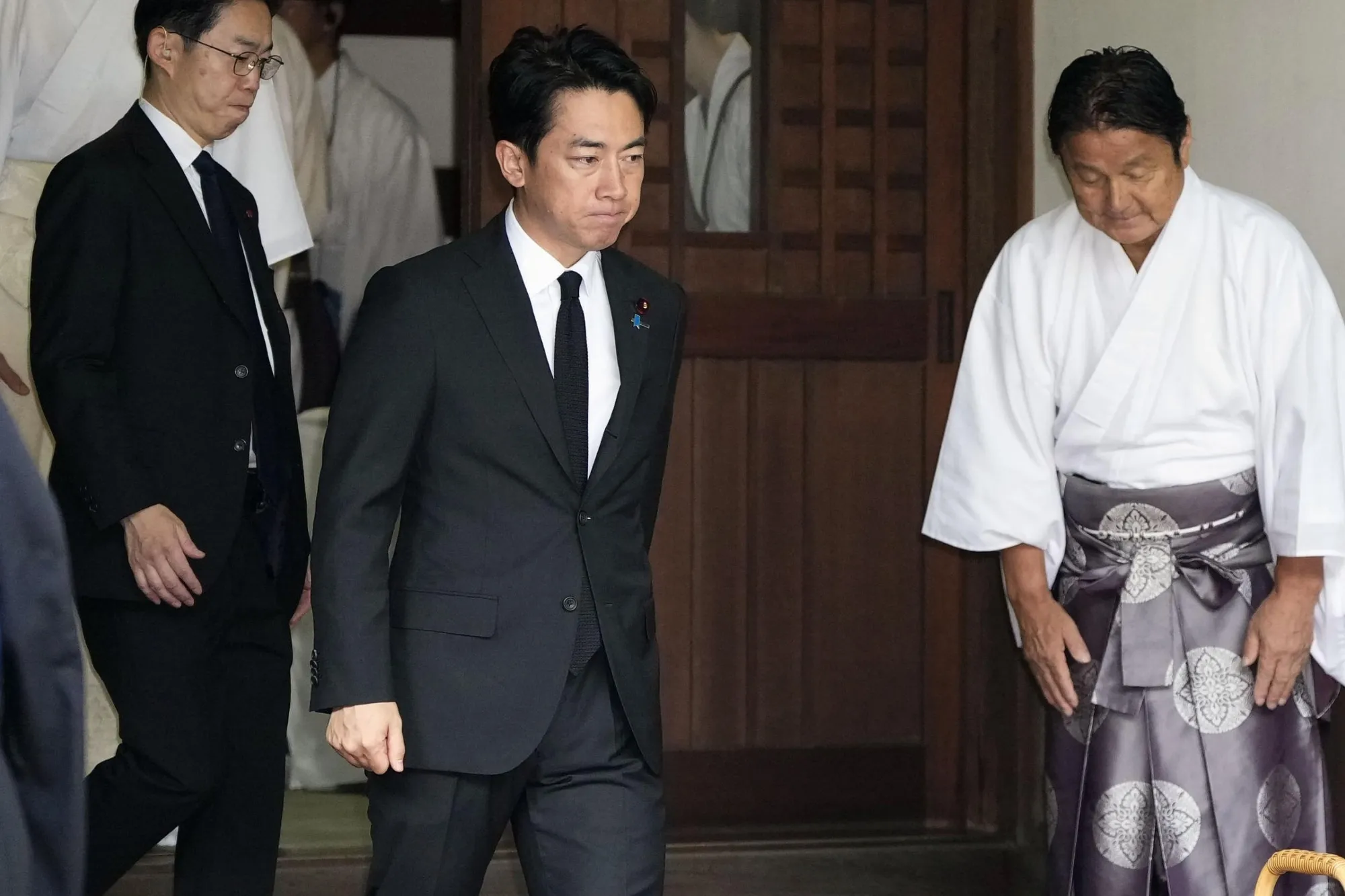
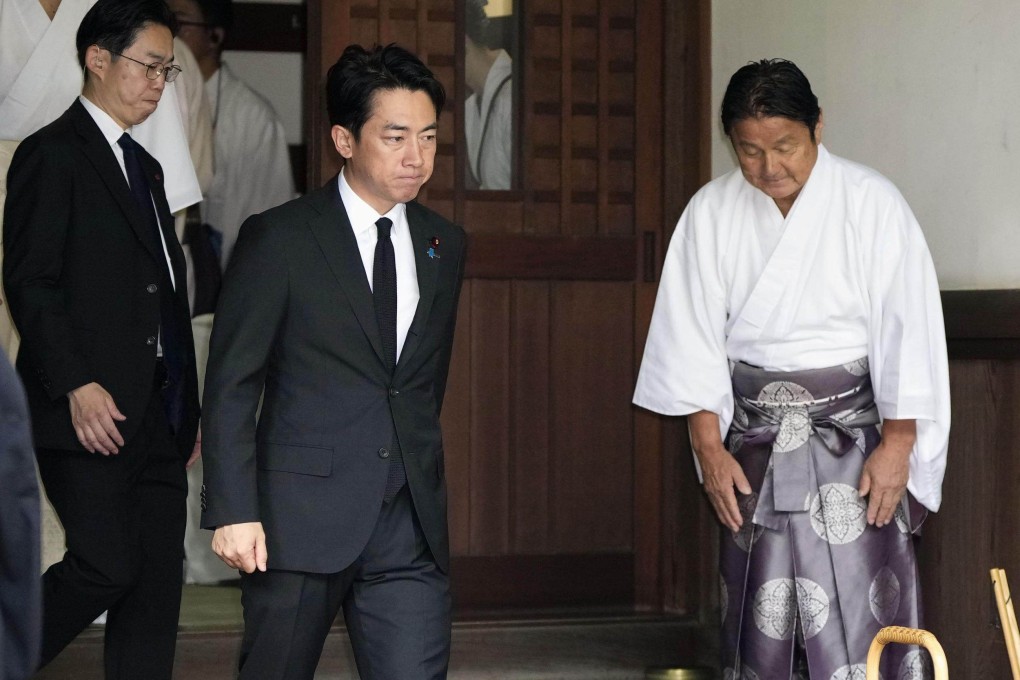
- Koizumi, a regular visitor, left without answering reporters and later said on Instagram he visited to offer his sincere condolences to the heroic spirits who sacrificed their precious lives for the nation and reaffirmed Japan’s postwar path as a peaceful nation.
- China's Ministry of Foreign Affairs said it strongly condemns Koizumi’s visit and has lodged strong protests with Japan.
- South Korea’s Ministry of Foreign Affairs expressed deep regret over the 'anachronistic' actions and urged Japan’s leaders to show humble reflection and sincere remorse through actions.
Japan's Defense Minister Shinjiro Koizumi visited Yasukuni Shrine on Saturday, marking the 81st anniversary of Japan's surrender in World War II. The shrine honors 2.5 million war dead, including 14 convicted war criminals, and has long been criticized by Japan's neighbors for its association with wartime atrocities.123
Koizumi, a regular visitor to the shrine, stated on Instagram that he visited to offer his sincere condolences to the heroic spirits who sacrificed their precious lives for the nation. He emphasized Japan's commitment to peace, saying, “Along with our vow to renounce war, I reaffirmed our determination to continue fulfilling our responsibility to uphold Japan’s postwar path as a peaceful nation.”
China's Ministry of Foreign Affairs condemned the visit, asserting that they have lodged “strong protests with the Japanese side.” South Korea's Ministry of Foreign Affairs expressed “deep regret” over what it termed the “anachronistic” actions of Japanese leaders, urging them to demonstrate “humble reflection and sincere remorse” for the past.456
Local media reported that Prime Minister Sanae Takaichi, who has also visited the shrine, sent an offering but did not attend. The last sitting Japanese prime minister to visit was Shinzo Abe, whose visit drew disappointment from the Obama administration.
“China's foreign ministry said it 'strongly condemns' the visit and has lodged 'strong protests' with Japan. South Korea expressed 'deep regret' over the 'anachronistic' actions, urging Japanese leaders to show 'humble reflection and sincere remorse' through actions.”