- Scientists confirmed that the flowering plant Saxifraga candelabrum is carnivorous, validating Charles Darwin's hypothesis from 1875.
- In 1875, Darwin hypothesized that Saxifraga species with sticky hairs could be carnivorous, but he could not prove their ability to digest or absorb nutrients.
- A recent study utilized chemical, isotope, and genetic analysis to confirm the carnivorous nature of *S. candelabrum*.
- Researchers demonstrated that *S. candelabrum* attracts and digests insects, using an enzyme called phosphatase.
- Isotope labeling revealed the transfer of nitrogen from insect prey to the plants, indicating digestion.
- Genetic analysis showed that *S. candelabrum* shares genes with other carnivorous plants related to prey attraction and digestion.
- Darwin's original hypothesis suggested that Saxifraga species could be insect-eaters based on their sticky glandular trichomes.
- Darwin's experiments were inconclusive in proving that Saxifraga plants digested their prey, which is essential for confirming carnivory.
- Modern research has shown that carnivory may be more widespread among flowering plants than previously recognized.
Scientists have confirmed Charles Darwin's 150-year-old hypothesis that certain Saxifraga plants, specifically *Saxifraga candelabrum*, are carnivorous. This flowering plant, found in the nutrient-poor alpine regions of China, captures and digests insects, showcasing an evolutionary adaptation to its harsh environment.1
Darwin proposed in 1875 that *S. rotundifolia* and *S. umbrosa* might be insect-eaters based on their sticky glandular trichomes, but he lacked conclusive evidence. More than a century later, researchers tested *S. candelabrum* and found it attracted tiny gnats with enticing odors and digested them using the enzyme phosphatase.
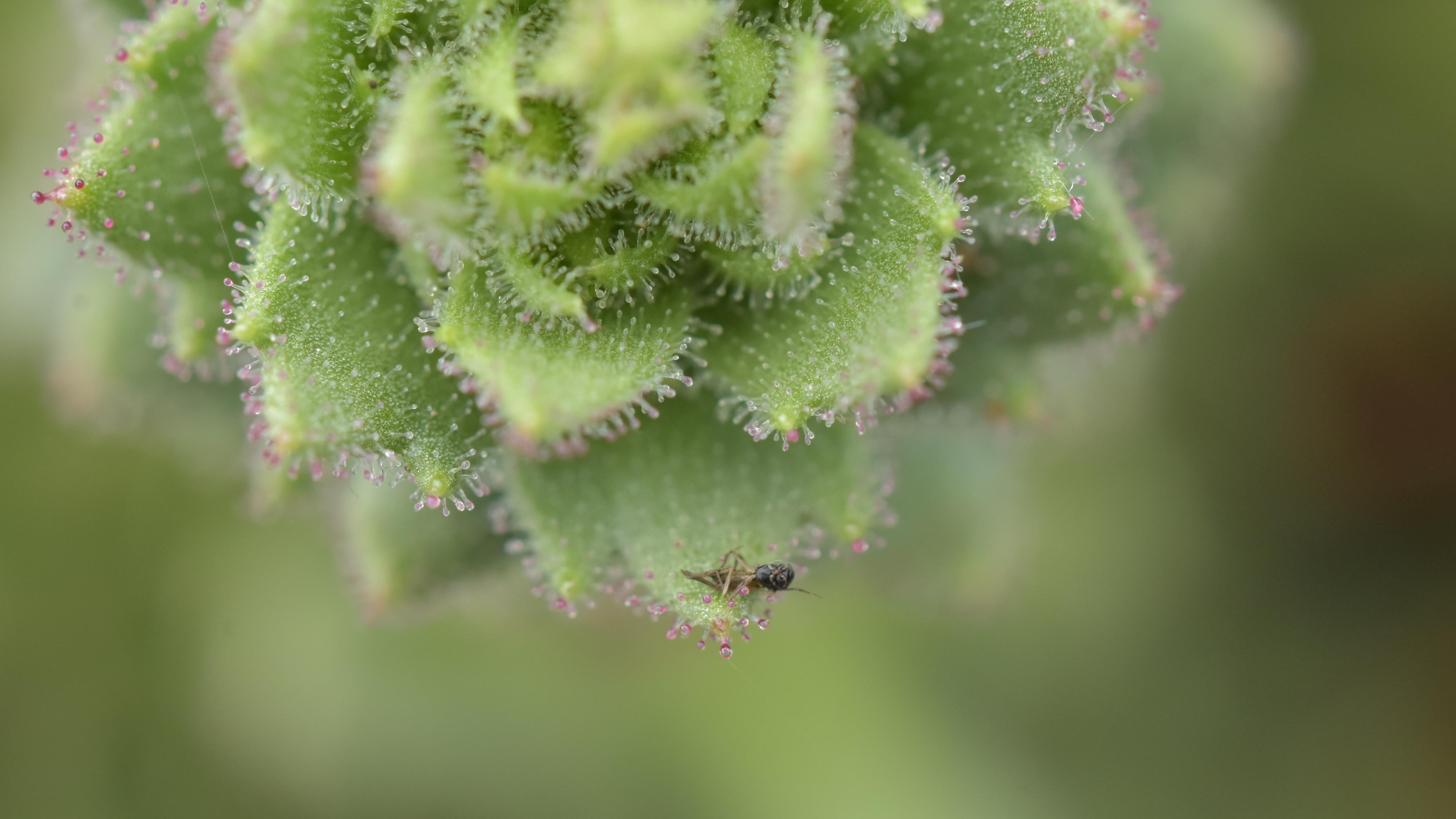
Using isotope labeling, scientists demonstrated the transfer of nitrogen-15 from the insects to the plants, confirming nutrient absorption. Genetic analysis revealed shared genes with other carnivorous plants, indicating a broader distribution of carnivory among flowering plants than previously recognized.56

The study's findings suggest that *S. candelabrum* evolved its carnivorous traits to survive in rocky, dry soils at elevations of 8,200 to 10,800 feet (2,500 to 3,300 meters). Researchers observed that mature plants captured an average of 71 insects, with some branches trapping up to 70 gnats.
This research not only validates Darwin's insights but also opens the door to discovering new carnivorous plant lineages. “Carnivory may therefore be far more widespread among flowering plants than previously recognized,” said a study co-author, emphasizing the significance of this discovery in understanding plant evolution.
“Native to dry alpine ridges 8,200–10,800 feet up in the Hengduan Mountains, S. candelabrum lures tiny gnats with tempting odors and digests them using enzyme phosphatase; isotope labeling traced nitrogen-15 from prey into plant tissue. Herbarium surveys found insects on 43 of 45 specimens, making this the first confirmed carnivore in the saxifrage plant group.”




