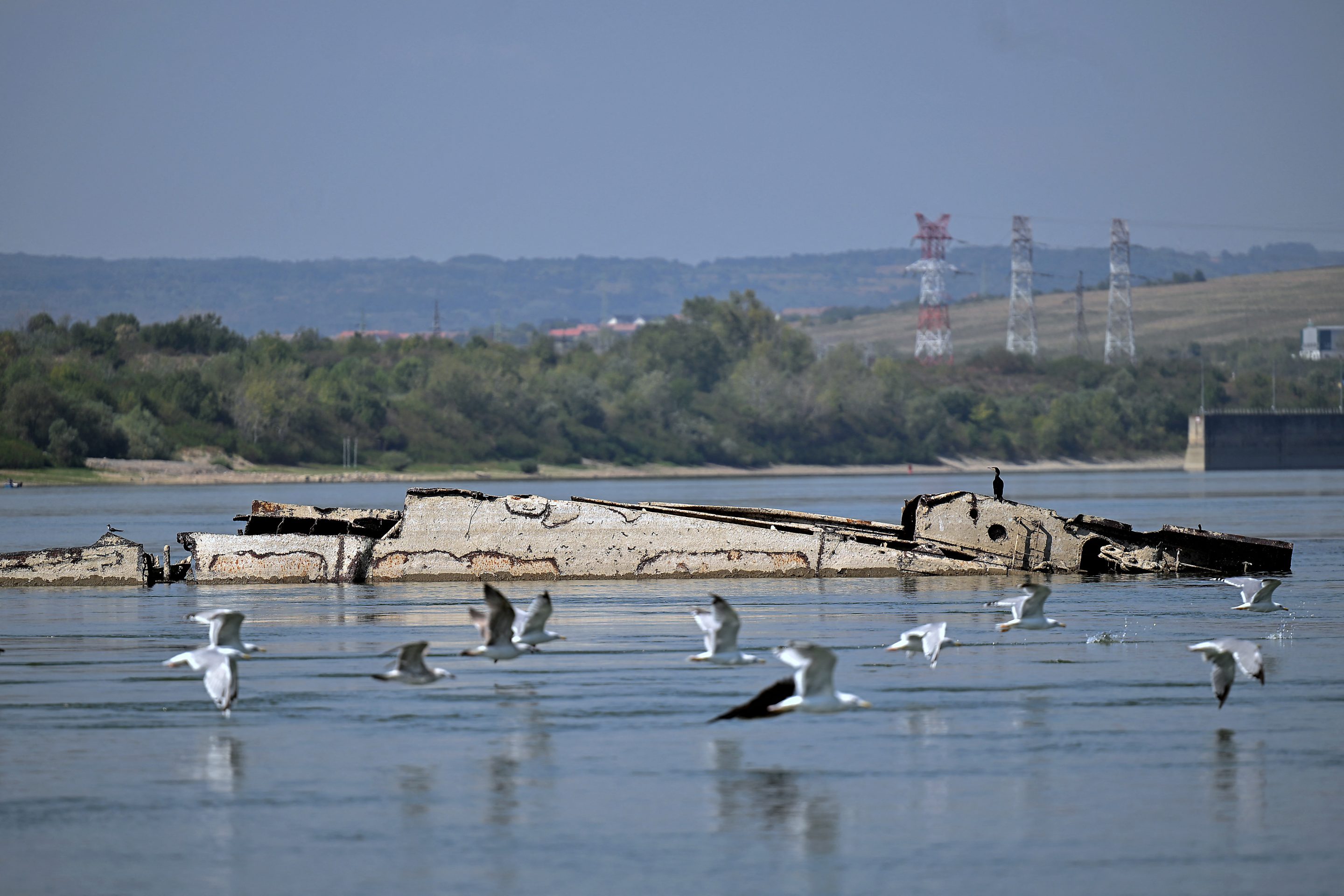
- Water levels on the Danube River have dropped so low because of drought that the hulks of dozens of World War II German battleships are emerging into view.
- Authorities are trying to keep traffic flowing on the Danube, which flows through 10 nations, as the dropping water levels create dangerous conditions.
- At least 20 World War II wrecks of various sizes are now visible to the naked eye from the banks of Prahovo.
- Falling water levels in the Danube unveiled bones of a mammoth in Bulgaria, according to a local museum director.
- The ships, some still laden with weapons, belonged to Nazi Germany’s Black Sea fleet that the Germans deliberately sank as they retreated from Romania.
- Historians say up to 200 German warships were scuttled in September 1944 near Prahovo in the Danube gorge as they came under Soviet fire.
- Krsta Brandic, a Prahovo resident, said the low water levels have almost stopped ship traffic: “As you can see, the (big) ships can’t pass anymore.”
- The bones are an important discovery because they are well preserved and indicate that they all belonged to the same animal, according to Nikolay Nenov, director of the Regional Historical Museum.
Drought conditions have drastically reduced the Danube River's water levels, exposing the hulks of at least 20 World War II German battleships near Prahovo, Serbia. These ships, part of Nazi Germany's Black Sea fleet, were deliberately sunk in September 1944 to slow the Soviet advance.
As the river's water levels continue to drop, authorities are facing significant challenges in maintaining navigation. Krsta Brandic, a local resident, noted, "As you can see, the (big) ships can't pass anymore." This situation has led to a near halt in ship traffic, impacting trade and transportation across the region.27
The Danube River flows through 10 nations, and the current conditions have forced power plants to the brink of shutting down, prompting governments in Central and Eastern Europe to implement measures to conserve electricity. Experts attribute the unusually low water levels to global warming and other environmental factors.
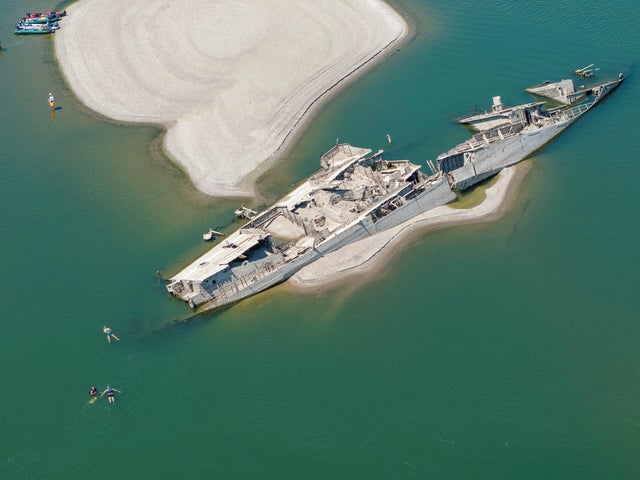
The sight of the old warships serves as a stark reminder of the past, with historians estimating that up to 200 German warships were scuttled in the Danube gorge during World War II. While some wrecks have been removed, many remain due to the explosives they carry. The Serbian government, with EU support, has long sought to address this issue.6
In addition to the warships, the drought has also revealed ancient remains, including bones of a woolly mammoth in Bulgaria, highlighting the river's historical significance.
“The Danube's record-low water levels have revealed at least 20 WWII wrecks near Prahovo, with some still laden with weapons. Additionally, the low water levels have nearly halted ship traffic, prompting local resident Krsta Brandic to note, 'As you can see, the (big) ships can't pass anymore.'”


 CBS News



