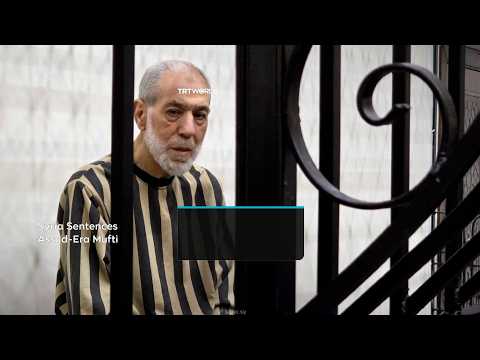
- Ahmad Badreddine Hassoun was sentenced to life imprisonment on August 24, 2026, for inciting violence and justifying murder as part of ongoing trials of Assad-era officials.
- Several senior Assad-era officials, including Assad and his brother Maher, have been sentenced to death in absentia in recent weeks.
- Hassoun served as grand mufti from 2005 to 2021, when the position was abolished.
- Hassoun was present in court when the sentence was delivered.
- Mass anti-government protests broke out in Syria in 2011, leading to a nearly 14-year civil war that resulted in about half a million deaths and displaced more than half of Syria's pre-war population of 23 million.
- The war ended with Assad's ouster in a lightning offensive by Islamist-led insurgents in December 2024.
A Damascus court sentenced former grand mufti Ahmad Badreddine Hassoun to life imprisonment on August 24, 2026, for inciting violence and justifying murder. This ruling is part of a broader effort to hold accountable officials from the regime of ex-President Bashar Assad, who himself, along with his brother Maher, received death sentences in absentia.123

Hassoun, who served as mufti from 2005 until the position's abolition in 2021, was present in court during the sentencing. Judge Fakhreddine al-Aryan stated that the religious establishment under Assad had “justified the use of barrel bombs that targeted civilian areas and caused widespread destruction”, violating international humanitarian law.
The trials of Assad-era officials have sparked mixed reactions. While some human rights groups argue that the proceedings are rushed and potentially unfair, many Syrians have welcomed the sentences, expressing frustration over the previous government's inaction against former regime figures. Mass anti-government protests erupted in Syria in 2011, leading to a brutal crackdown and a civil war that resulted in approximately half a million deaths and the displacement of more than half of Syria's pre-war population of 23 million.6

The ongoing trials signify a critical moment in Syria's post-conflict landscape, as the country grapples with the legacy of a devastating war that ended with Assad's ouster in December 2024.
“Judge Fakhreddine al-Aryan said the religious establishment under Assad justified barrel bombs that targeted civilians, violating international humanitarian law. Human rights groups worry the trials are rushed, but many Syrians welcome the sentences after frustration over slow justice.”


 Arab News