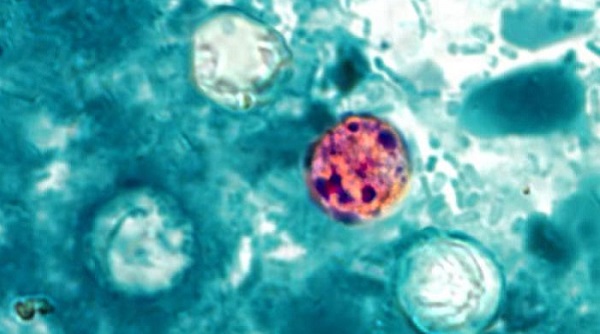
- Cyclosporiasis outbreak reported with an unknown source affecting at least four midwestern states, including Michigan, Ohio, West Virginia, and Kentucky.
- The CDC has identified 1,645 lab-confirmed cases of the parasite, with 145 hospitalizations reported.
- Health officials expect the outbreaks of cyclospora, which causes watery, explosive diarrhea, to continue through August as investigations are ongoing.
- Investigations are ongoing to identify the source, but a specific food item has not yet been confirmed.
- Past outbreaks of cyclosporiasis have been linked to bagged salads, herbs, raspberries, and lettuce.
- Cyclosporiasis is a parasitic infection caused by the single-cell protozoa cyclospora, typically transmitted through contaminated food or water.
- The parasite has a long incubation period, making it difficult to track infections.
A multistate outbreak of cyclosporiasis has been reported in at least four midwestern states, with over 400 confirmed cases as of July 13, according to the CDC. The outbreak, which began in late June, is linked to ongoing investigations into potential food sources, particularly lettuce.8
The Centers for Disease Control and Prevention (CDC) has identified 1,645 lab-confirmed cases and reported 145 hospitalizations. They also noted a backlog of 5,100 cases requiring further analysis. “The true number of infections is almost certainly higher, because many people with mild illness recover,” said Gwen Biggerstaff, deputy director of the CDC’s division of foodborne, waterborne, and environmental diseases.3
Health officials are concerned about the increase in cases since May, with symptoms reported on or after June 22. Investigations are ongoing to identify the source of the outbreak, with lettuce at Taco Bell locations in Michigan being scrutinized. “We’re seeing an unusually high number of cyclosporiasis cases this summer,” Biggerstaff added.4
Cyclosporiasis is caused by the parasite cyclospora, typically transmitted through contaminated food or water. The parasite's long incubation period complicates tracking, as symptoms can take days to weeks to appear. Health officials continue to advocate for testing, as cyclosporiasis may not be included in standard stool panels.9
“The CDC has confirmed 1,645 cases and 145 hospitalizations across four Midwest states, with a backlog of 5,100 cases. Deputy director Gwen Biggerstaff warned the true infection count is 'almost certainly higher,' as mild cases often go undiagnosed; investigations focus on lettuce at Taco Bell in Michigan.”

 Centers for Disease Control and Prevention | CDC (.gov)
 The Guardian



