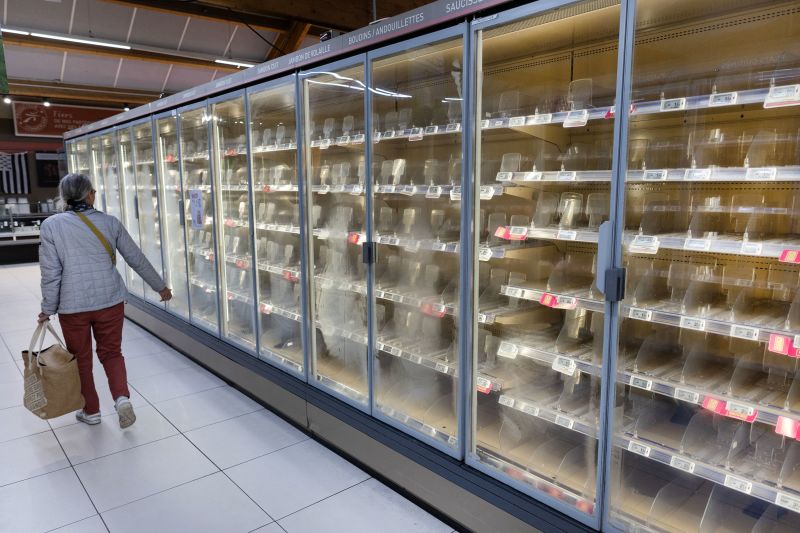
- A cyberattack hit refrigeration equipment in up to 700 French supermarkets, causing extreme temperature swings, food waste, and fires.
- The following day, retailers in 11 European countries reported refrigeration problems.
- The Paris prosecutor identified the Iranian group Shahid Kaveh and opened an investigation, with French officials blaming Iran.
- Kaja Kallas, the head of foreign affairs for the EU, indicated a strong response was possible if the attacks were attributed to Iran.
- French officials have blamed Iran for the attacks, but the lack of specialized hacking tools leaves no obvious signature.
- Beccuau opened an investigation against the head of Shahid Kaveh and his deputies on charges of fraudulent attacks on an automated data processing system.

Cyberattacks linked to Iran have wreaked havoc on refrigeration systems in France, impacting up to 700 supermarkets and resulting in millions of euros in spoiled food. The attacks, which occurred on October 11 and 12, raised temperatures in freezers to 122°F, leading to significant food waste and operational disruptions.12
French officials have attributed the attacks to the Islamic Revolutionary Guards Corps, describing them as an act of “unprecedented scale and unprecedented aggression”. French Foreign Minister Jean-Noël Barrot announced plans for “Europe-wide sanctions” against those responsible, emphasizing that the attacks constituted a major violation of national interests.
The Paris public prosecutor, Laure Beccuau, noted that investigators identified a modus operandi characteristic of the Iranian cyber warfare unit Shahid Kaveh, including the use of Farsi and IP addresses traced back to Iran. Beccuau stated that an investigation has been opened against the unit's leadership for “fraudulent attacks on an automated data processing system”.458
The fallout from these cyberattacks extended beyond France, with retailers in 11 European countries reporting similar refrigeration issues. Kaja Kallas, head of foreign affairs for the EU, indicated that these incidents, if confirmed as Iranian actions, would necessitate a strong response from Europe.6
As the EU weighs its options, the incident underscores the vulnerabilities in internet-facing systems that attackers exploited, raising alarms about the security of critical infrastructure across the continent.
“The attacks exploited weak internet-facing controllers, not new cyberweapons, according to threat intelligence. Paris prosecutor Laure Beccuau identified Iranian group Shahid Kaveh, linked to the IRGC, and opened an investigation on charges including aggravated attacks serving a foreign power.”
The Guardian