
- North Pole Dome has been confirmed as Earth's oldest known impact crater, dated to 3 billion years ago by researchers at Curtin University.
- The findings resolve a longstanding question about the timing of the impact, with evidence coming from zircon crystals that record the event.
- This discovery pushes Earth's impact record deeper into geological time than any previously well-dated crater, offering a rare glimpse of the violent processes that shaped the early Earth.
- The North Pole Dome structure is the only recognized example from the Archean eon, a time when the planet's earliest continents were forming.
- The North Pole Dome, located about 1,600 kilometres north of Perth, was previously reported as the oldest in the world, a claim that was later debunked by another group of scientists.
- Advanced techniques were used to calculate the time of the asteroid impact, including the analysis of shatter cones and the age of zircon crystals.
- The age of these zircon crystals was measured using an Australian-designed instrument called the Sensitive High-Resolution Ion MicroProbe.
Curtin University researchers have confirmed that the North Pole Dome in Western Australia is Earth's oldest known impact crater, dating back approximately 3 billion years. This finding provides significant insights into the planet's early history and the violent meteorite impacts that shaped its formation.12
Using advanced mineral dating techniques, the researchers analyzed zircon crystals, which are resilient minerals that can preserve geological time. The study revealed that these crystals recorded an event about 3 billion years ago, marking the North Pole Dome as the only recognized example from the Archean eon, a period when Earth's earliest continents were forming.346
Professor Chris Kirkland, lead author of the study, stated, "It is quite enthralling, and the fact that you can look at the chemistry of these mineral grains to say something about an event that happened in a split second three billion years ago is really amazing." The research also highlighted that Earth was predominantly a “water world” at the time of the impact, with minimal continental crust.
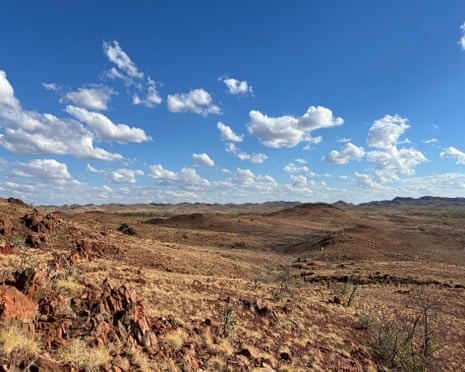
The findings push Earth's impact record deeper into geological time than any previously well-dated crater, offering a rare glimpse of the violent processes that shaped the early Earth. Associate professor Bruce Schaefer noted that the combination of zircon and apatite growth resulting from the collision serves as a “smoking gun” for the age of the event.
This discovery not only confirms the North Pole Dome's status as the oldest impact crater but also enhances our understanding of the planet's formative years, which were characterized by frequent meteorite impacts.
“Curtin University researchers have dated the North Pole Dome as the oldest known impact crater on Earth, occurring around 3 billion years ago. This discovery provides significant insight into the violent processes that shaped the early Earth.”
 Australian Broadcasting Corporation
 The Guardian