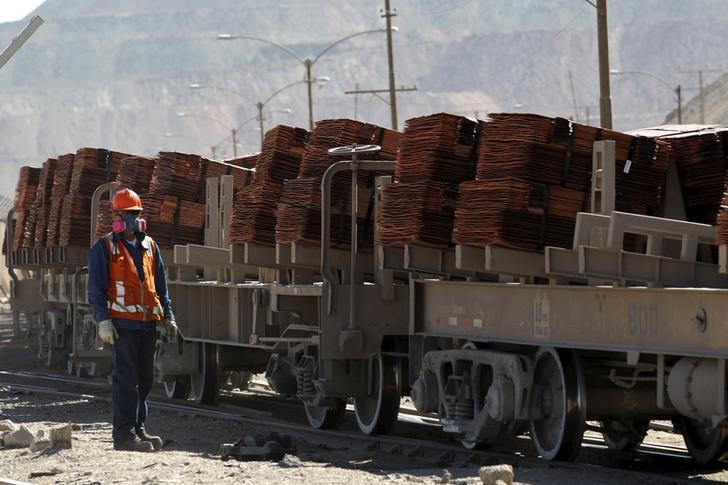
- Copper futures climbed to around $6.90 a pound Thursday, extending a rally in a metal used for construction, electronics, transportation and even AI applications.
- Copper hit a record high, but the rally appears to reflect tight supply and disruptions more than a broad acceleration in global growth.
- Demand from data centers, power grids, and electrification are supporting the surge, but supply constraints and mine development delays are key drivers.
- Michael Widmer, Bank of America's head of metals research, noted that the move wasn't really driven by copper demand but really driven by copper supply, with limited mine supply growth and supply disruptions creating additional constraints.
- The price surge is also due to its limited supply and the fact that mining it is an expensive business, with setting up new mines taking about 10 years.
- William Osnato, Barchart director of commodity data research, stated that the underpinning story of elevated copper prices has been data center and power grid demand to support the rapid AI industry expansion.
- Instead of simply indicating stronger global growth, today's record price could be reflecting a combination of constrained supply, heavy grid investment, uncertainty around U.S. tariffs, and rising demand for electrification.
Copper prices have surged to a record high of nearly $6.90 a pound, primarily driven by supply constraints and increasing demand from electrification and AI infrastructure rather than broad economic growth.138
Experts indicate that this rally reflects tight supply and disruptions in mining operations.2
"The underpinning story of elevated copper prices has been data center and power grid demand to support the rapid AI industry expansion," said William Osnato, Barchart director of commodity data research and analysis. He noted that the surge in copper demand is "more acute and not the traditional broad economic growth that supports copper."7
Additionally, Michael Widmer, Bank of America's head of metals research, emphasized that the price increase is not driven by copper demand but rather by limited supply. He stated, "There is not a lot of mine supply growth and supply disruptions have been creating additional constraints."456
The mining of copper is an expensive endeavor, and establishing new mines can take about 10 years, further complicating supply issues.
Overall, while copper's price surge is notable, it may not serve as a reliable indicator of economic health this time around, as it is influenced more by specific sector demands and supply challenges than by general economic trends.
“Analysts say the surge is more about constrained supply than demand, with new mines taking about 10 years to develop. William Osnato of Barchart notes data center and power grid demand is "more acute" than traditional growth, while Bank of America's Michael Widmer points to supply disruptions.”
 CNBC
CNBC