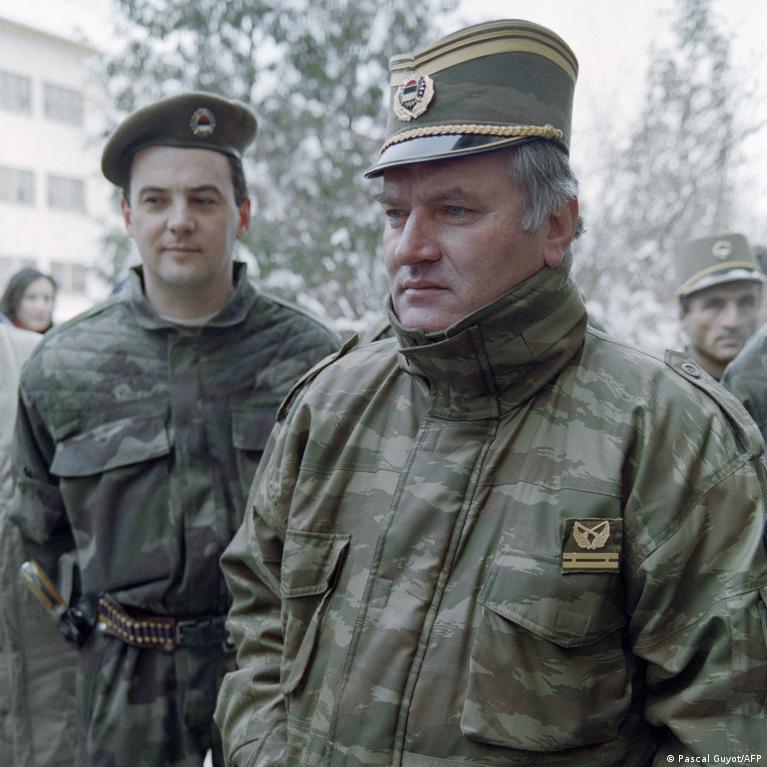
- Ratko Mladic, former Bosnian Serb army commander, died on August 27, 2026, in a prison hospital in The Hague.
- Serbia's justice minister announced a funeral with the highest state and military honors for Mladic.
- Officials in Republika Srpska called for candlelight gatherings for the salvation of Mladic's soul.
- Bosnia's foreign minister criticized Serbia's choice to treat Mladic as a hero, stating it was a conscious decision.
- The European Commission warned that glorifying convicted war criminals is contrary to European values.
- Mladic's legacy remains controversial, as he is viewed by some as a hero and symbol of the Serbian people despite being a convicted war criminal.
- In Banja Luka, the de facto capital of Republika Srpska, Mayor Drasko Stanivukovic expressed condolences and stated that Mladic is seen as a symbol of "a time and a struggle."
- The European Movement in Serbia warned that a state funeral would amount to institutional glorification and urged the government to abandon the plan.
- Bosnia-Herzegovina has laws that criminalize the glorification of persons convicted of genocide, but enforcement remains uneven.
- In contrast, Serbia has no such laws and public authorities openly embrace Mladic's legacy.
Ratko Mladic, the former commander of the Bosnian Serb army, died on August 27, 2026, in a prison hospital in The Hague, where he was serving a life sentence for war crimes, including the 1995 Srebrenica massacre.1
His death has sparked controversy, particularly in Serbia, where officials plan a state funeral with the highest honors. Serbia's justice minister confirmed the arrangements, while former Interior Minister Aleksandar Vulin referred to Mladic as a national hero, linking him to historical figures like Gavrilo Princip.6
In contrast, Bosnia's foreign minister, Elmedin Konakovic, criticized Serbia's decision, stating, "No one is forcing Serbia to treat Mladic as a hero, nor to attribute his crimes to it. Serbia is choosing this itself." The European Commission echoed these sentiments, condemning the glorification of war criminals as contrary to European values.45
The European Movement in Serbia warned that a state funeral would represent "institutional glorification" and a serious moral and political affront to the country. This situation highlights the ongoing tensions in the region, where Mladic is viewed by some as a symbol of struggle, while others remember him for his role in atrocities during the Bosnian War.8
The 1995 Dayton Accords ended the war in Bosnia-Herzegovina, creating a complex political structure that has been criticized for its inefficiency and inability to foster common citizenship among the diverse population.
“Mladic's death reignites a deep societal divide: Republika Srpska officials call for candlelight vigils, while Bosnia's foreign minister says Serbia is choosing to honor a criminal. The European Commission warns that glorifying convicted war criminals contradicts basic European values, and the European Movement in Serbia calls the funeral a 'serious moral, legal and political attack.'”
 DW.com