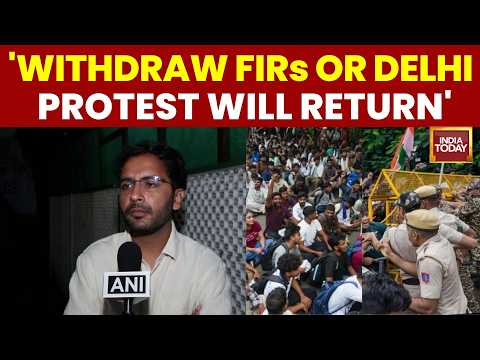
- Demonstrations in the Indian capital turned violent on 20 July when huge crowds attempted to march towards parliament from the Jantar Mantar protest site.
- Tens of thousands of protesters, mainly students, rallied last week in New Delhi and other cities, demanding Pradhan’s resignation and broader reforms of the examination system.
- At least 100 people have been arrested across the country, many on stringent non-bailable charges, according to the CJP.
- The police announced the immediate release of those arrested or detained in connection to the protests in Bihar state.
- The chief justice of India called for an independent investigation after a petition was filed in the supreme court alleging police brutality.
- The CJP accused the government of backtracking after authorities had assured them that no punitive action would be taken against protesters.
- A CJP spokesperson, Ashutosh Ranka, stated, “If the government does not honour the agreement and release everyone detained or arrested, we will be compelled to resume the protest.”
- The CJP has gained millions of followers on social media since it was founded by Abhijeet Dipke, a 30-year-old public relations graduate.
- Surya Kant stated, “The right to peaceful, lawful protest is absolutely guaranteed” under the Indian constitution.
The Cockroach Janta Party (CJP) is demanding the withdrawal of cases against protesters, claiming the government has reneged on its promises.
A CJP spokesperson, Ashutosh Ranka, stated, “If the government does not honour the agreement and release everyone detained or arrested, we will be compelled to resume the protest.”7
Reports indicate that over 100 individuals have been arrested across India, many facing stringent non-bailable charges.
The CJP has accused the government of backtracking after assurances were made that no punitive actions would be taken against protesters.
Demonstrations erupted last week, primarily involving students, who rallied in New Delhi and other cities, demanding the resignation of Prime Minister Pradhan and broader reforms in the examination system.2
The protests turned violent on July 20 when large crowds attempted to march towards parliament from the Jantar Mantar protest site.1
In response to the unrest, the chief justice of India has called for an independent investigation into allegations of police brutality.5
“The right to peaceful, lawful protest is absolutely guaranteed” under the Indian constitution, local media reported, quoting Justice Surya Kant.
The CJP, founded by 30-year-old public relations graduate Abhijeet Dipke, has gained millions of followers on social media, amplifying its influence in the ongoing protests.8
“A CJP spokesperson, Ashutosh Ranka, warned that if the government does not release all detained individuals, protests will resume. The chief justice of India has called for an independent investigation into allegations of police brutality during the protests.”
 The Guardian




