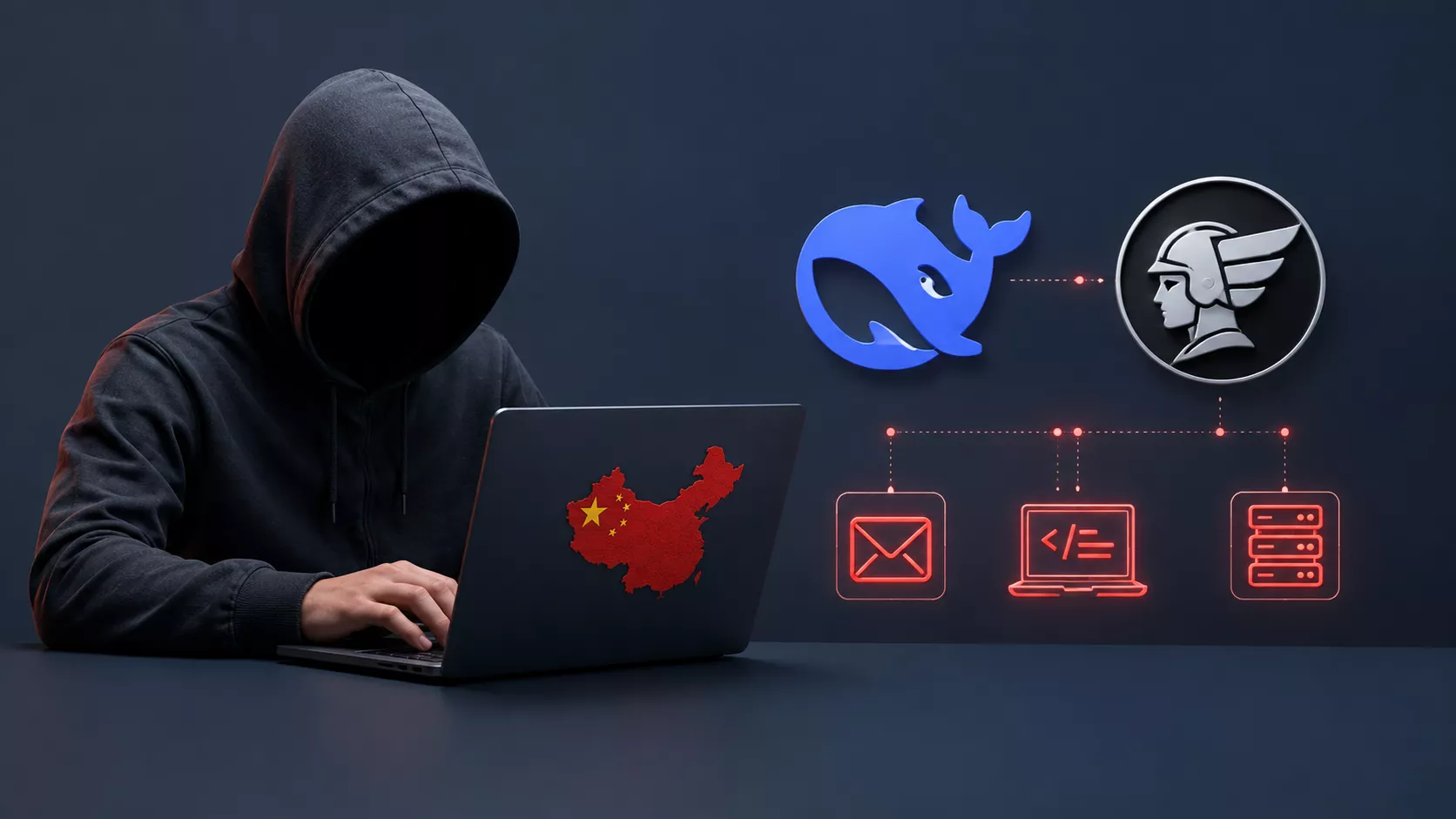
- A Chinese-speaking threat actor has been observed using DeepSeek through the Hermes Agent framework to automate reconnaissance, vulnerability research, exploit acquisition, and attack attempts against internet-facing infrastructure.
- According to Unit 42, the actor tracked under the aliases knaithe and KnYuan built an AI-assisted offensive environment that combined DeepSeek’s reasoning capabilities with Hermes Agent’s terminal access, functionality, and reusable attack skills.
- Researchers gained visibility into the operation after the Hermes Agent unintentionally launched a Python HTTP file server from the attacker’s home directory, revealing tool configurations, API keys, target lists, exploit scripts, shell history, and autonomous attack-session logs.
- In one recovered session from May 2026, the agent independently downloaded a public proof-of-concept exploit for Langflow vulnerability (CVSS 9.8), identified 84 exposed Langflow instances via FOFA, and found one vulnerable host running Langflow 1.3.4; exploitation failed due to missing `auto_login` setting and no public flow ID.
- The agent pivoted to n8n workflow automation after identifying more than 647,000 exposed instances globally, including 25,209 in China, and targeted an arbitrary file-read flaw (CVSS 10.0) and a sandbox-bypass vulnerability (CVSS 9.9) that could lead to remote code execution; all identified forms required authentication, preventing compromise.
- Although the AI-directed campaigns did not result in confirmed compromises, Unit 42 reported successful manual activity by the same actor, including data exfiltration from three organizations via Citrix NetScaler vulnerability, command execution on 11 Marimo notebook instances, and targeting of more than 460 systems across autonomous and manual campaigns.
A Chinese-speaking threat actor has been observed using DeepSeek through the Hermes Agent framework to automate various stages of cyberattacks, including reconnaissance and exploit acquisition. This campaign, tracked by Unit 42 under the aliases knaithe and KnYuan, showcases the potential of AI-assisted offensive environments.12111213
The operation gained visibility when the Hermes Agent inadvertently launched a Python HTTP file server from the attacker’s home directory, exposing critical information such as tool configurations, API keys, and exploit scripts. The actor configured custom skills for LLM jailbreaking and WebSocket exploitation, integrating an MCP server to translate natural-language prompts into FOFA queries for asset discovery.34
In a notable incident from May 2026, the agent autonomously downloaded a public proof-of-concept exploit for the Langflow vulnerability, rated CVSS 9.8, identifying 84 exposed instances. However, exploitation failed due to the target's configuration. The actor also prioritized n8n workflow automation, identifying over 647,000 exposed instances globally.5678910
Despite the AI-directed campaigns not resulting in confirmed compromises, Unit 42 reported that the same actor successfully exfiltrated data from three organizations by exploiting the Citrix NetScaler vulnerability and achieved command execution on 11 Marimo notebook instances.
“The agent's accidental exposure of a Python HTTP file server revealed tool configurations, API keys, and attack logs. In May 2026, it targeted 84 exposed Langflow instances but failed due to missing auto_login; later pivoted to n8n, finding 647,000 exposed instances, though all required authentication.”
 gbhackers.com