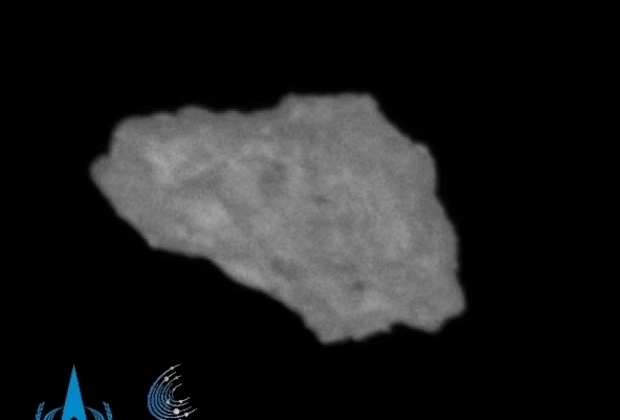
- China's Tianwen-2 probe reached its target asteroid 2016HO3 and began scientific exploration, as shown by an image taken from about 20 kilometers on July 2, 2026.
- Tianwen-2 has arrived at a distance of 20 kilometers from asteroid 2016HO3, enabling it to begin scientific exploration after an approximately 400-day journey of about 1 billion kilometers, as announced by the China National Space Administration (CNSA).
- An image of 2016 HO3 was captured by Tianwen-2 from a distance of about 20 kilometers on July 2, 2026.
China's Tianwen-2 probe has successfully reached asteroid 2016 HO3, marking a significant milestone in its first asteroid sample-return mission. Launched on May 29, 2025, the probe traveled approximately 1 billion kilometers over 400 days to arrive at a distance of 20 kilometers from the asteroid.1234
The China National Space Administration (CNSA) announced that the probe began its scientific exploration after achieving its first detection of the asteroid on June 6, 2026. Following this, it entered a coplanar trajectory with the asteroid on June 7 and approached within 2,000 kilometers by June 19.
During the approach phase, the Tianwen-2 probe captured imagery of the asteroid, which helped refine its ephemeris, reducing positional uncertainty from hundreds of kilometers to the kilometer scale. The mission aims to collect samples from 2016 HO3 and explore the main-belt comet 311P, which is more distant than Mars.
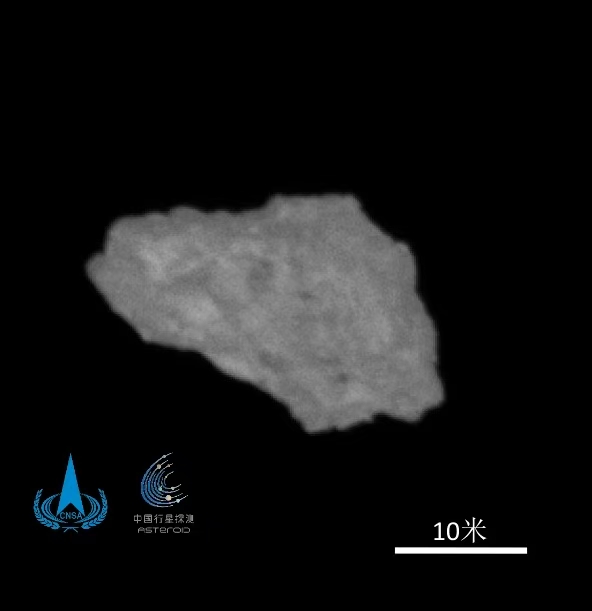
The CNSA stated that the probe will conduct detailed scientific exploration to gather data on the asteroid's morphology, material composition, and internal structure, laying the groundwork for future sample collection operations.
This mission represents a significant step in China's space exploration efforts, showcasing advancements in technology and international collaboration in the field of planetary science.
“The Tianwen-2 probe's 1-billion-kilometer journey to Kamoʻoalewa took 400 days, culminating in its arrival at 20 kilometers from the asteroid on July 2, 2026. The CNSA released an image taken from that distance, and the probe will now begin scientific exploration of the asteroid.”
 Big News Network.com
 news.cgtn.com



