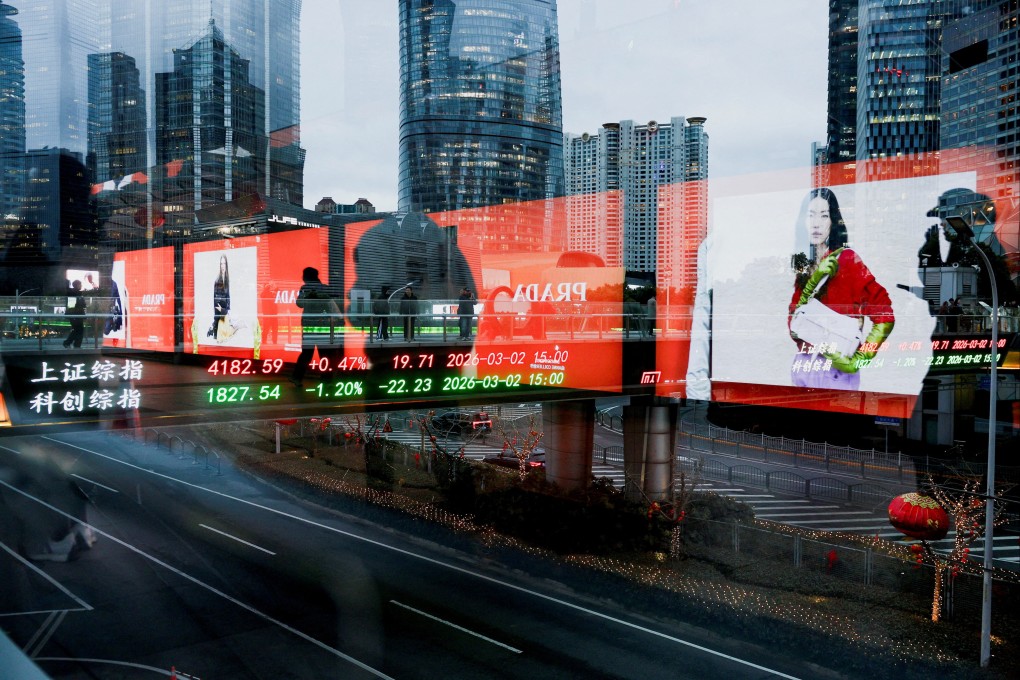
- China is shifting household savings from bank deposits to equity markets to fund tech ambitions, as illustrated by the US$9.8 billion IPO of ChangXin Memory Technologies (CXMT).
- Beijing is reshaping state-led industrial policy into a hybrid model that combines state-directed priorities with market-mobilised capital.
- The government continues to prioritize sectors like semiconductors, AI, robotics, and advanced manufacturing, relying on equity markets for risk capital.
- A new development chain channels household savings directly into strategic technology companies for industrial upgrading and self-reliance.
- Even a modest shift of household wealth from property and deposits into mutual funds, pension products, and tech IPOs could mobilise enormous resources.
- The old financing chain of savings flowing into bank deposits and property is being replaced by one where savings flow into capital markets then technology and advanced manufacturing.
China's tech funding landscape is evolving as the government pivots from traditional financing methods to harnessing household savings for technological advancements.
The recent $9.8 billion IPO of ChangXin Memory Technologies (CXMT) exemplifies this shift, indicating a growing reliance on equity markets rather than conventional bank deposits.12
This strategy reflects a hybrid model where state-directed priorities are combined with market-mobilised capital, particularly in sectors like semiconductors, artificial intelligence, and advanced manufacturing.
The government aims to achieve technological self-reliance by redirecting household wealth from property and bank deposits into capital markets.
Analysts suggest that even a modest shift in household savings could mobilize significant financial resources, enabling strategic technology companies to pursue industrial upgrading.
This transformation in financing is crucial for China to compete at the technological frontier, as the traditional model of savings flowing into bank deposits is gradually being replaced by investments in technology and advanced manufacturing.
As the nation seeks to bolster its tech ambitions, the role of retail investors in financing these initiatives is becoming increasingly vital.
“Beijing's hybrid model combines state-directed priorities with market-mobilised capital to fuel semiconductors, AI, robotics, and advanced manufacturing. The US$9.8 billion IPO of ChangXin Memory Technologies, snapped up by retail investors, exemplifies this strategy in action.”
 South China Morning Post




