- China cut its holdings of US Treasuries to a nearly 18-year low in June, as Beijing continued to diversify its foreign exchange reserves amid heightened geopolitical tensions and growing uncertainty over the policy outlook in the United States.
- Holdings fell to US$633.4 billion in June from US$659.3 billion in May, data released by the Treasury Department of the United States showed on Monday.
- The amount in June marked the lowest level since September 2008, when holdings fell to US$618.2 billion according to Chinese financial data provider Wind.
- US-Iran hostilities reignited in June before a tentative ceasefire eased fears of a wider regional conflict, with investors closely watching the risk of renewed fighting, disruptions to oil supplies and their implications for global growth and inflation.
- Chinese military researchers are soaking in everything they can from the conflict in Iran in order to measure those concepts against battlefield reality.
- The takeaway seems clear: For the PLA, Iran has reinforced many of the ideas already driving China’s modernization around 'intelligentized' and systems-oriented warfare.
- In an article, PLA Academy of Military Science (AMS) War Research Institute academics described the conflict as a transition from 'force-on-force confrontation' toward 'systems competition.'
- Rather than match an opponent platform for platform, they prioritize the disruption of the networks that allow advanced platforms to generate combat power.
- Military theorists at China’s National University of Defense Technology explicitly focused on the US use of the Maven Smart System in Iran to extend that argument to intelligence fusion, target prioritization, route planning, autonomous attacks and manned-unmanned teaming.
- The conflict has also sharpened Chinese attention to the economics of air and missile defense.
- Academics highlighted Iran’s use of inexpensive unmanned systems to consume far more costly interceptors.
- Chinese analysts have also drawn a parallel lesson about survivability from the Iran war, which has provided a practical example of that problem.
- In an April 12 article, academics identified operationally significant targets whose loss can degrade the wider combat system, including airfields, ports, warehouses, pipelines, power infrastructure and data centers.
- These publications do not prove that the PLA has formally converted Iran’s lessons into doctrine, force structure, or procurement decisions.
China's People's Liberation Army (PLA) is closely analyzing the recent conflict in Iran to refine its military strategies, emphasizing 'systems competition' over traditional 'force-on-force confrontation.' This shift aligns with China's broader modernization efforts and comes as the country reduces its holdings of US Treasuries to a near 18-year low.
In June, China's US Treasury holdings fell to US$633.4 billion, the lowest since September 2008, reflecting Beijing's strategy to diversify its foreign exchange reserves amid escalating geopolitical tensions and uncertainty regarding US policies.23
Military researchers from the PLA Academy of Military Science have noted that the Iran conflict illustrates a transition towards prioritizing the disruption of enemy networks rather than direct platform-to-platform engagement. They argue that this approach is essential for modern warfare, as it allows for more effective use of resources and technology.
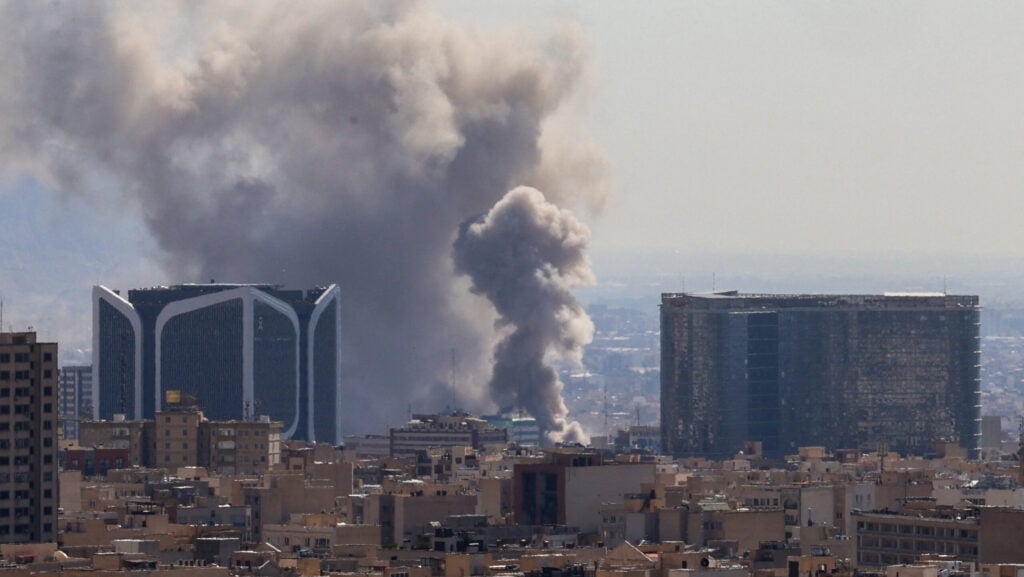
The PLA's focus on 'intelligentized' warfare is evident in their analysis of Iran's use of inexpensive unmanned systems, which effectively consumed costly interceptors, highlighting the importance of economic considerations in air and missile defense.611
Furthermore, Chinese analysts have drawn parallels between the kill chain and supply chain in modern conflict, identifying critical infrastructure as significant targets that can degrade overall combat effectiveness. This evolving military doctrine reflects a strategic pivot in response to contemporary warfare dynamics.
While these insights do not confirm a formal adoption of new doctrines or procurement strategies, they indicate a significant shift in the PLA's approach to modern military challenges.
“China's Treasury holdings fell to $633.4 billion in June, the lowest since September 2008, as geopolitical tensions rise. PLA researchers are focusing on lessons from Iran, particularly the shift towards systems-oriented warfare and the economic implications of air and missile defense.”
 South China Morning Post