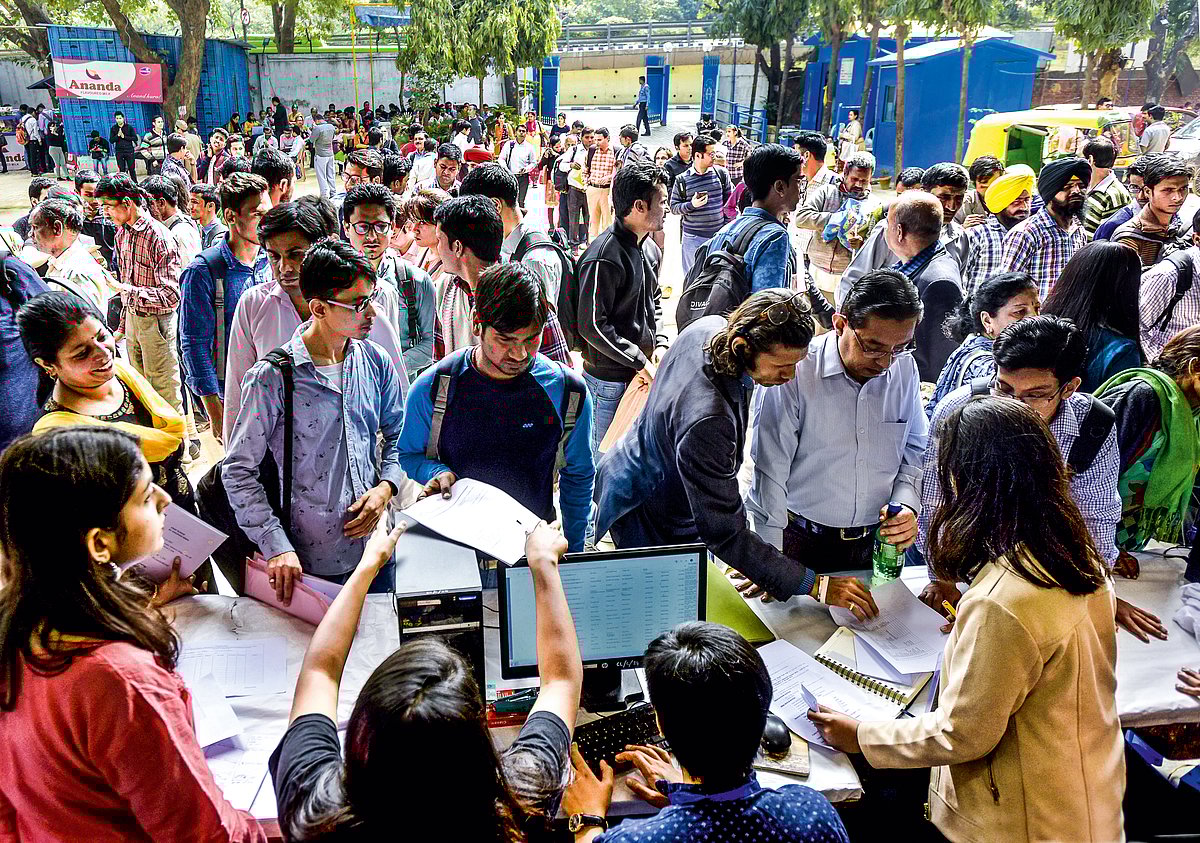
- Beijing deleted 12,200 undergraduate programs and introduced 10,200 new ones between 2021 and 2025, focusing on emerging fields to address the degree-to-job mismatch.
- In July 2025, Ding Yuanzhao's story highlighted the degree-to-job mismatch, as he, a scientist with multiple advanced degrees, resorted to delivering food for Meituan after failing to secure a job.
- China's unemployment crisis deepened in 2026, with estimates indicating that 48 million people are unemployed, as top economist Li Daokiu reported a real unemployment rate of 10.2%.
- China's youth unemployment remains high, with 12.7 million graduates entering the labor market in 2026, prompting the need for educational reforms.
- India faces a similar employability challenge, producing over 10 million higher education graduates annually, yet only 54.8% are considered employable according to the Skills Report 2025.
- Critics warn of long-term consequences of China's educational reforms, suggesting that the focus on technical skills may undermine critical thinking and adaptability in the workforce.
China's unemployment rate stands at 10.2%, with 48 million people out of work, a figure that includes 24 million long-term discouraged individuals. The Chinese government has revoked over 12,200 degrees to address a mismatch between education and job market needs, focusing on technical fields while cutting humanities programs.
In contrast, India produces more than 10 million graduates annually, yet only 54.8% are considered employable, highlighting a similar crisis. Critics argue that China's approach may stifle critical thinking and ethical reasoning, essential in an AI-driven economy. Li Daokiu, a prominent economist, warns that the current growth sectors may not be sufficient to uplift the economy.
India must learn from China's mistakes by measuring outcomes rather than inputs, building hybrid graduates, and creating multiple pathways to success. Only 4% of Indians of working age have received formal vocational training, indicating a need for a national apprenticeship mission to enhance employability. The lessons from advanced economies, such as Germany and Switzerland's apprenticeship systems, could provide valuable insights for India's educational reforms.
As both nations grapple with their respective employment crises, the need for strategic reforms in higher education and vocational training becomes increasingly urgent.
“A top Chinese economist calculates the real unemployment rate at 10.2%, double the official figure, representing about 48 million people—with 24 million long-term discouraged workers no longer counted in official statistics. Separately, a 39-year-old scientist with degrees from Tsinghua, Oxford, and Peking University now delivers food for Meituan after failing to secure a job.”




