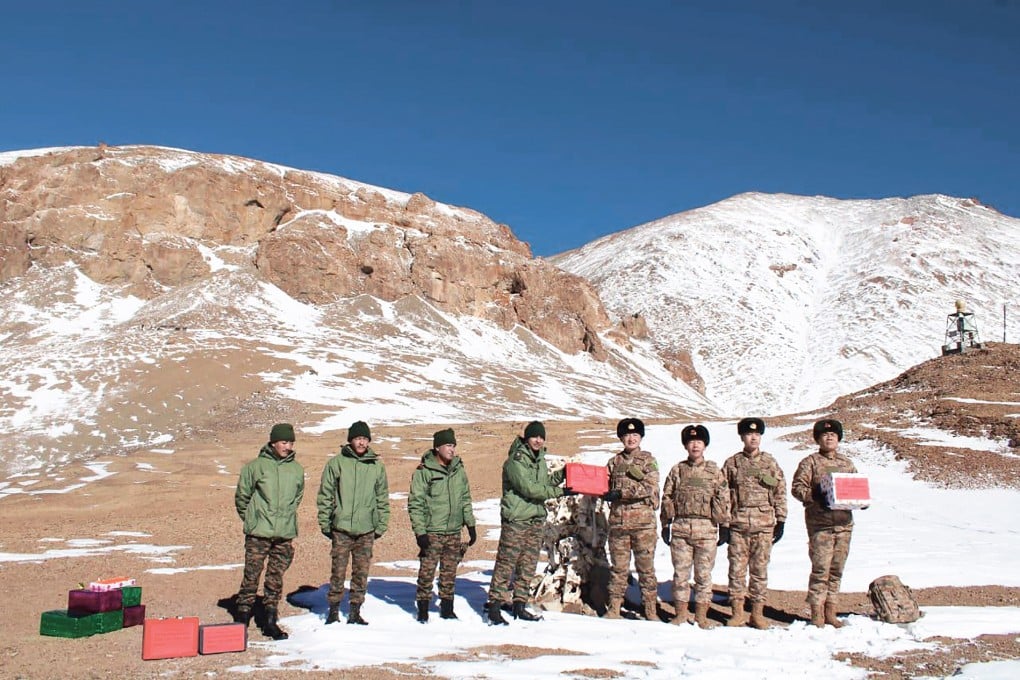
- China and India reaffirmed their commitment to maintain peace and tranquility in the border areas as they seek a "fair, reasonable and mutually acceptable settlement," according to China's foreign ministry after high-level boundary talks in Beijing.
- The two sides agreed on an eight-point consensus, including new military hotlines and working groups on boundary delimitation, marking an expansion of communication channels between the two nuclear powers.
- China's Foreign Minister Wang Yi met India's National Security Adviser Ajit Doval on Tuesday and had "comprehensive, in-depth, friendly and candid" discussions on border affairs and bilateral ties.
- They agreed to add two meeting points for commander-level talks and establish two new military hotlines in the eastern and central sectors of the border.
- Both sides pledged to hold a new round of expert-level talks on trans-border rivers in September and remain in contact on hydrological data sharing.
- They agreed to boost cooperation in border trade and pilgrimages and to advance discussions on an 'Early and Substantial Harvest of boundary delimitation'.
- India and China have agreed to advance discussions on an Early and Substantial Harvest of boundary delimitation, according to an eight-point outcome document released by both countries on Wednesday (August 26, 2026).
- The Expert Group on Boundary Delimitation and a Working Group on Border Management will advance discussions on an Early and Substantial Harvest of boundary delimitation and Border Management.
- A day after the 25th round of talks between the Special Representatives held in Beijing, India and China agreed to hold the next meeting of an expert-level mechanism on trans-border rivers in September.
- To improve border management, India and China agreed on two additional meeting points for the General Level or Senior Highest Military Commander meetings and two additional channels of border military hotlines.
- Both sides reaffirmed their commitment to uphold guidance from their leaders, maintain peace and tranquillity in border areas, and create an atmosphere for healthy and steady development of bilateral relations.
- Both sides underlined their commitment to advancing negotiations on a framework for settling the boundary question, in accordance with the Agreement on Political Parameters and Guiding Principles for Settlement of the India-China Boundary Question signed in 2005.
- On managing the border, both sides agreed that any situation on the ground would be addressed promptly through existing diplomatic and military channels, including the WMCC, local commander-level meetings, and other agreed mechanisms.
- Both sides noted recent progress on trans-border cooperation, including the reopening of three designated border trading points and an increase in the number of batches for the Kailash Manasarovar Yatra.
China and India have taken significant steps to enhance communication and cooperation regarding their long-disputed border, reaffirming their commitment to peace during high-level talks in Beijing.
The two nations agreed on an eight-point consensus that includes establishing new military hotlines and forming working groups focused on boundary delimitation.2
China's Foreign Minister Wang Yi and India's National Security Adviser Ajit Doval engaged in comprehensive discussions, emphasizing the need for a "fair, reasonable and mutually acceptable settlement" of border issues.
The agreement also includes the addition of two meeting points for commander-level talks and the establishment of two new military hotlines in the eastern and central sectors of the border.4
Both sides aim to advance discussions on an Early and Substantial Harvest of boundary delimitation and border management, as outlined in an outcome document released after the talks.

The Expert Group on Boundary Delimitation and a Working Group on Border Management will be tasked with making early progress on these issues.8
Additionally, both nations agreed to enhance cooperation in border trade and pilgrimages, fostering an atmosphere of dialogue and peace along the border.6
They also pledged to hold a new round of expert-level talks on trans-border rivers in September, focusing on hydrological data sharing.59
The joint statement emphasized the commitment to address any border situation promptly through existing diplomatic and military channels, aiming to avoid misunderstandings and miscalculations along the Line of Actual Control (LAC).
Overall, these developments mark a significant step towards stabilizing relations between the two nuclear powers and resolving longstanding border disputes.
“The eight-point consensus includes two new military hotlines and two additional commander-level meeting points, plus expert-level talks on trans-border rivers set for September. Both sides also noted progress on reopening three border trading points and increasing Kailash Manasarovar Yatra batches.”