- China is expanding its scientific collaboration with Iran into the strategically sensitive field of rare earths, including processing technologies that Beijing has increasingly sought to protect from overseas transfer.
- On Monday, the National Natural Science Foundation of China (NSFC) unveiled its latest joint workshop programme with the Iran National Science Foundation, listing the exploration and processing of rare earth elements among five areas selected for cooperation.
- The cooperation comes at a particularly sensitive time, with the US-Israel war on Iran unresolved.
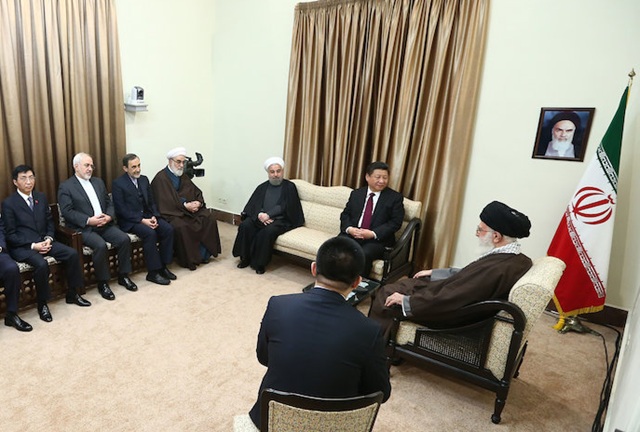
- The proposed cooperation builds on a relationship between the two national science foundations that dates to 2017, when they signed a memorandum of understanding (MOU) in Beijing.
- Their joint workshop programme was launched in 2024, initially covering fields including climate change, artificial intelligence, advanced materials and manufacturing.
- Iran’s own rare earth potential, by comparison, remains poorly understood but could be significant, with exploration identifying rare earth anomalies across about 7,000 sq km of central Iran.
- On Friday, the Trump administration announced US$3 billion of investments in critical-mineral and battery projects intended to replenish weapons stocks and reduce reliance on Chinese supply chains.
- China holds the world’s largest rare earth reserves and dominates global production and processing, making any processing-focused cooperation with Iran strategically sensitive.
China is expanding its scientific collaboration with Iran in the rare earth sector, focusing on processing technologies that are crucial for modern weaponry. This partnership, announced by the National Natural Science Foundation of China, aims to explore Iran's rare earth potential, which remains largely untapped.1
The joint workshop program includes 30,000 yuan (US$4,200) for each workshop, covering various expenses. The cooperation is particularly sensitive given the ongoing US-Israel tensions regarding Iran. Rare earths, essential for missiles and electronic equipment, are dominated by China, which holds the largest reserves globally.
The Iran National Science Foundation will facilitate international travel for Iranian participants, while the Chinese side will cover domestic travel for their researchers. This collaboration builds on a relationship established in 2017, when both nations signed a memorandum of understanding.4
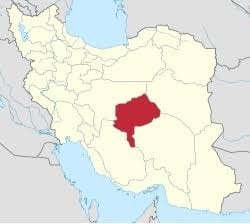
Exploration has identified rare earth anomalies across 7,000 sq km of central Iran, with significant deposits in the Bafq iron metallogenic belt. However, the economic viability of these resources remains uncertain, as highlighted by Iran's recent claim of an 8.5-million-tonne lithium reserve, which was misleading.
As the US-China trade war continues, this partnership underscores China's strategic interest in securing rare earth resources before Western nations fully assess Iran's potential.
“Iran's rare earth potential is poorly understood but significant, with anomalies across 7,000 sq km of central Iran and favorable geology in the Bafq belt. However, extraction capabilities remain early-stage, and China's move comes amid US-Israel conflict and US efforts to reduce reliance on Chinese supply chains.”
 slguardian.org
 Rare Earth Exchanges