- Children who opened their first social media account aged 11 to 12 scored lower in mathematics and reading tests than those who waited a few years, with scores at age 16 differing by the equivalent of about six months of learning.
- The gap in performance persisted and widened for maths by ages 15 to 16, while there was no significant effect on English.
- The study was published in Nature Human Behaviour and led researchers to recommend delaying social media access.
- Researchers analyzed data on more than 5,000 Italian schoolchildren, linking their social media habits with standardized test results.
- Students who created social media accounts at ages 11 or 12 achieved significantly worse results in mathematics and Italian than those who waited until age 14.
- Negative effects did not dissipate with the duration of social media use and were sometimes more pronounced in later grades.
- 15 to 47 percent of the negative performance effect is directly attributable to mobile phone use during critical phases of the day.
A recent study from the Universities of Milano-Bicocca and Brescia indicates that children who open social media accounts before age 14 experience significant academic setbacks.
Researchers analyzed data from over 5,000 Italian students, linking social media habits to standardized test results in mathematics, Italian, and English.4
The findings show that students who created accounts at ages 11 to 12 scored lower in mathematics and reading tests compared to those who waited until at least 14. The performance gap was equivalent to about six months of learning.
“We speculate that one of the mechanisms is the continuous state of alert that social media used on a smartphone exerts on minors’ lives,” said Dr. Marco Gui, the study's lead author.
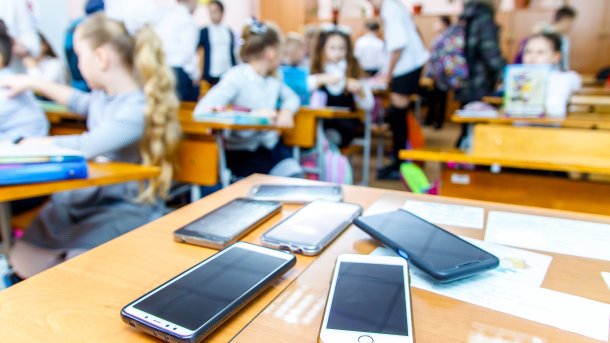
The research highlights that the constant need to check social media can distract students from their studies, leading to lower engagement in homework and learning activities.
Interestingly, while performance gaps were evident in mathematics and Italian, there was no significant impact on English, possibly due to the informal exposure to English-language content on social media.
The study suggests that 15 to 47 percent of the negative performance effect is linked to mobile phone use during critical times, such as homework or before sleep.7
Researchers advocate for delaying social media access until adolescents possess the cognitive maturity to handle its distractions, recommending policymakers enforce minimum ages and restrict attention-capturing algorithms on these platforms.
“Among more than 5,000 Italian schoolchildren, those who opened accounts by age 11–12 scored 0.22–0.27 standard deviations worse, roughly half a school year, with the gap persisting through grade 10. Researchers found no significant effect on English, attributing this to informal exposure to English-language content on platforms.”
 The Guardian



