- More than a month after an estimated 72,000 people crossed from Morocco into the Spanish territory of Ceuta, the city remains in chaos, with most having returned but about 140 people still unaccounted for.
- On 1 August, Sánchez reassured the EU that most arrivals had returned to Morocco, but official numbers show thousands remain; the Spanish government estimates 5,000 are still in Ceuta, while local government suggests it could be double that.
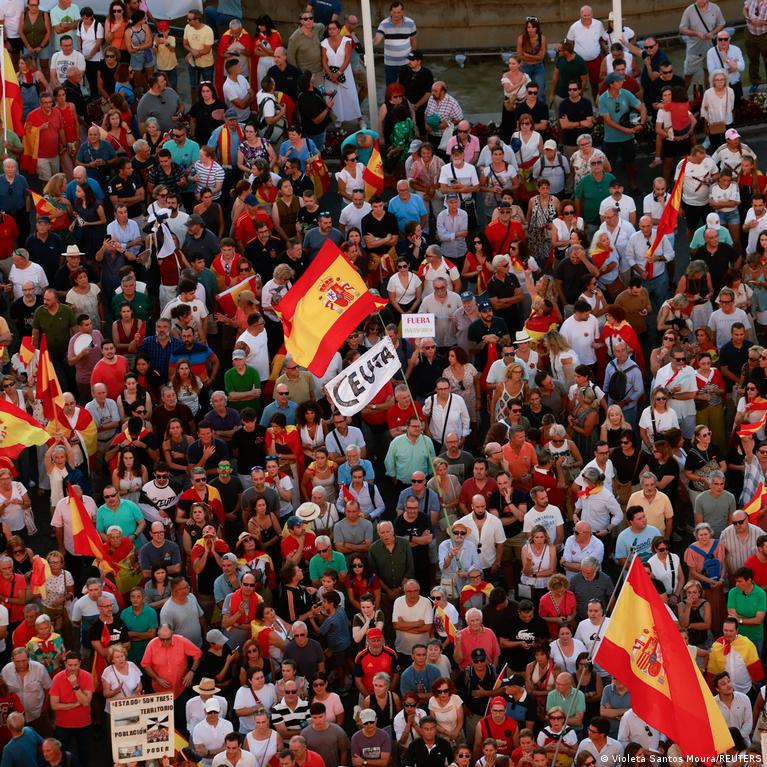
- Demonstrators carrying Spanish flags moved toward beachside migrant camps last week, destroying shelters and setting fires as police attempted to keep protesters and migrants apart, according to Spain's public broadcaster RTVE and news agency EFE.
- Violence continued for hours after the major protests ended, with gunshots and explosions audible throughout the night on Wednesday.
- Ceuta's regional leader, Juan Jesús Vivas, said: "What happened to us was not a migratory crisis. What happened was the violation of Spain's territorial integrity."
- Protesters bore signs reading, "A united Ceuta will never be defeated," "Sánchez to prison," and "Invaders go home!"
- For weeks there was no accommodation, with hundreds still camped on beaches or near overcrowded migrant centres; residents report fear and business closures, and many migrants survive on charity with little food, water and shelter.
- Tensions have led to constant protests, some violent, including an incident where protesters burned migrants' tents and at least 23 attacks against migrants have been reported, including nine.
- The Spanish government failed for weeks to appoint a coordinator, essential in Spain’s decentralised system, and only belatedly funnelled resources after the situation deteriorated dangerously.
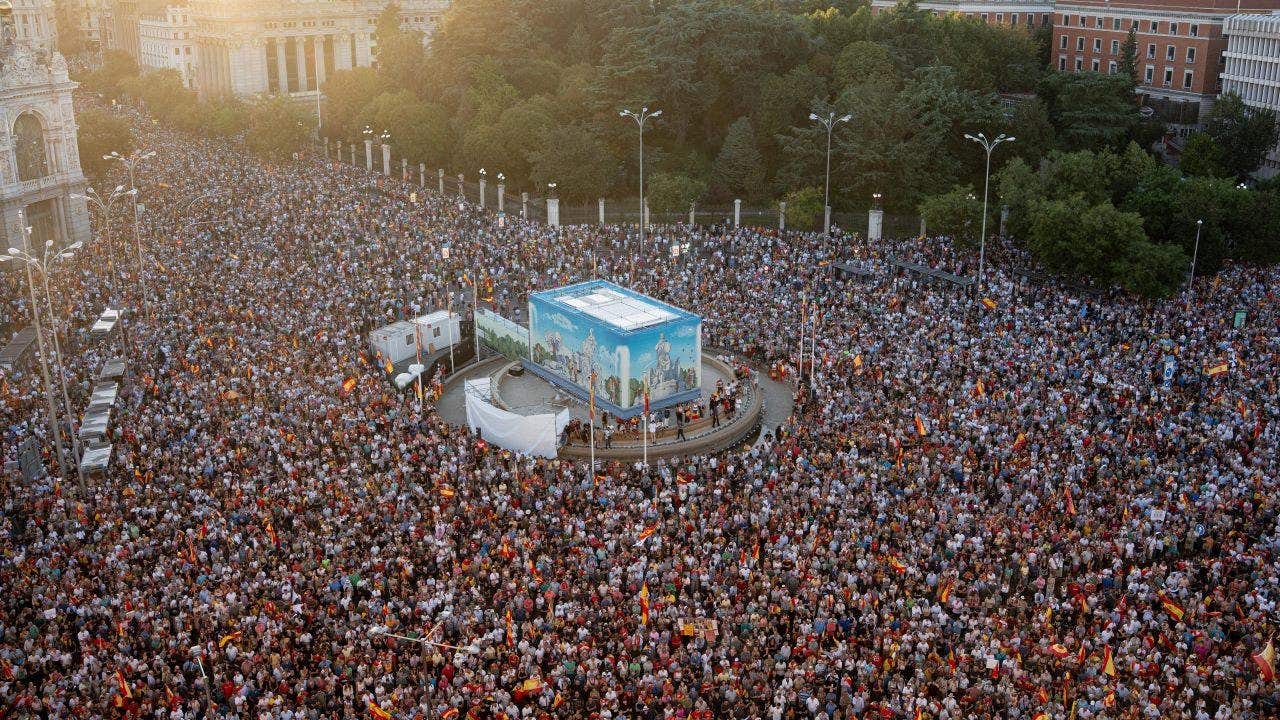
Tens of thousands of protesters took to the streets of Madrid, with authorities estimating 50,000 participants, expressing outrage over the government's handling of a migrant crisis in Ceuta. The protests were sparked by a mass crossing of 72,000 migrants from Morocco in July, which has left the city in chaos.12
Ceuta's regional leader, Juan Jesús Vivas, condemned the situation, stating, "What happened to us was not a migratory crisis; what happened was the violation of Spain's territorial integrity." Following the protests, violence erupted, with gunshots and explosions reported throughout the night.78
The Spanish government has faced criticism for its slow response to the crisis, with many migrants still living in dire conditions. Official estimates suggest that 5,000 migrants remain in Ceuta, while local authorities believe the number could be double that. Many are camped on beaches or in overcrowded centers, struggling for basic necessities.345
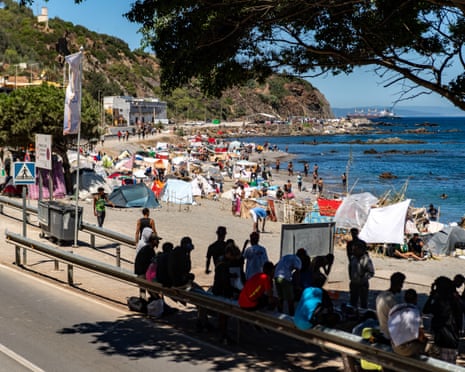
Local residents have expressed fear and frustration, with reports of 23 violent incidents against migrants, including police using teargas to disperse crowds. The situation has drawn international attention, with Prime Minister Pedro Sánchez blaming foreign disinformation for the crisis, a claim met with skepticism from other nations.
As tensions rise, the Spanish government is finally allocating resources to address the crisis, but critics argue that action came too late.
“The protests follow a month of chaos after an estimated 72,000 people crossed from Morocco, with about 140 still unaccounted for. Sánchez has blamed Russia and Israel for amplifying the crisis via social media, a claim dismissed by Moscow and labeled 'lying shamelessly' by Israel's foreign minister.”


 Fox News
 theguardian.com