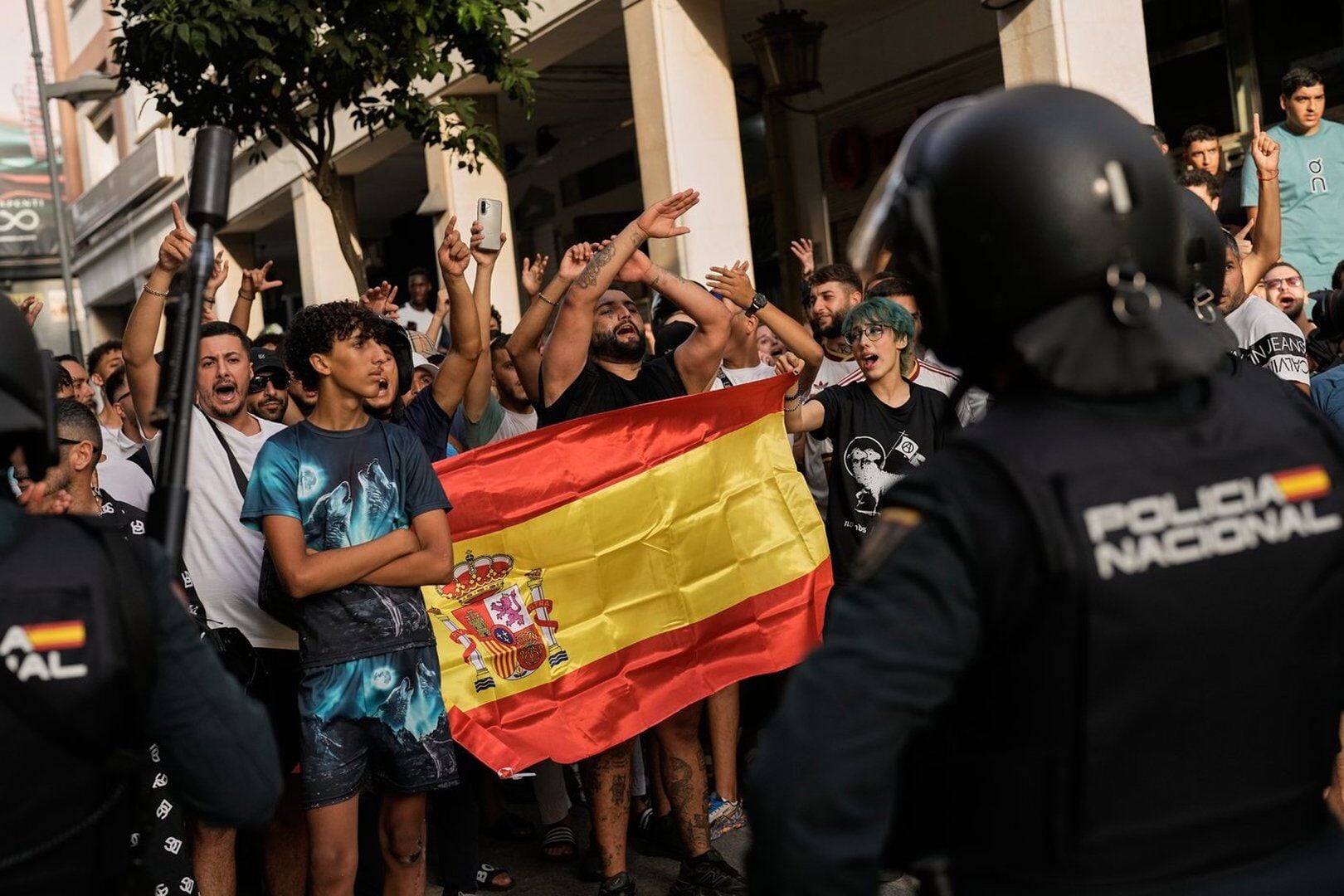
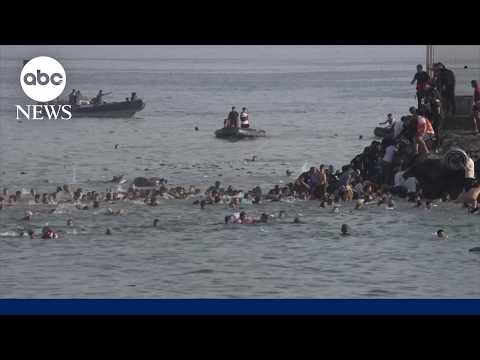
- Thousands of migrants surged from Morocco into the Spanish enclave of Ceuta, leading to a chaotic situation.
- The attempt proved deadly: dozens died in the waters around Ceuta, and police divers were still recovering bodies on Saturday evening.
- The episode was framed as a deadly 'game': migrants were 'told to come' via Instagram with promises of money and jobs in Spain.
- The Spanish government blamed criminal gangs and traffickers; opposition politicians blamed the left-wing Spanish government's immigration policies, with some calling the events 'an invasion'.
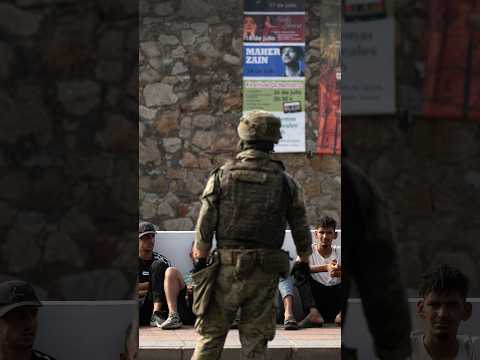
- On Saturday, hundreds of young men walked back to Morocco on foot under the eye of the Spanish military; by Saturday night, 90 percent of the estimated arrivals had returned.
- Abdelmajid said migrants came for 'the good life, humanity, safety, and all the things you need,' but upon arrival in Ceuta they found extreme heat, thirst and a very hostile reception.
- A Ceuta resident said residents were afraid: 'People were afraid; there were so many young men everywhere,' and noted that the city normally lives peacefully despite mixed Christian and Muslim identities.
- Far-right figures travelled to Ceuta to shape the narrative: MEP Alvise Perez of Se Acabo la Fiesta left the city centre under police protection.
- Among the counterprotesters was Noor Ahmed, a 20-year-old Ceuta student, who called figures like Pérez 'opportunistic' and said they wanted to take advantage of the humanitarian crisis.
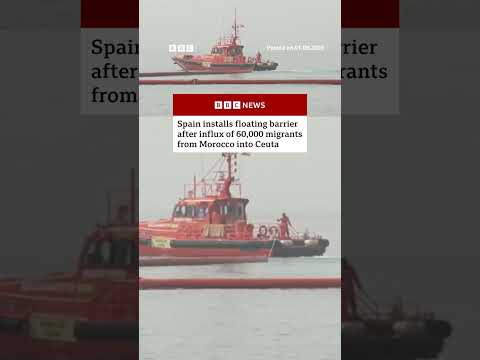
Ceuta, Spain, is grappling with the aftermath of a massive influx of migrants from Morocco, with estimates of 60,000 arriving in just over 24 hours.
While 90 percent returned to Morocco by Saturday night, the surge has left the city divided over responsibility.5
“If you open the border, of course everyone comes in,” said local waiter Mohamad Abdelkader Driss, emphasizing that the young men are not to blame.
Tragically, at least 72 migrants died during the attempt to reach Ceuta, with some drowning and others perishing in a stampede.
“People were afraid; there were so many young men everywhere,” a local resident noted, reflecting the fear that has gripped the community.7
The Spanish government attributes the crisis to criminal gangs, while opposition politicians criticize immigration policies, labeling the event an “invasion.”
Counterprotests erupted as far-right politicians visited Ceuta, with figures like Santiago Abascal condemning the government’s handling of the situation.
Pope Leo XIV expressed concern over the crisis, calling for peace and stability.
As Ceuta attempts to return to normalcy, the city’s residents remain split on the causes and solutions to this humanitarian crisis.
“Roughly 60,000 migrants reached Ceuta in 24 hours; 90 percent had returned by Saturday night, and police divers were still recovering dozens of bodies. Spain’s government blamed criminal gangs and traffickers, while far-right influencer Yusuf told his nearly 150,000 X followers that Ceuta was ‘the scene of the 60,000 strong invasion.’”


 The Globe and Mail