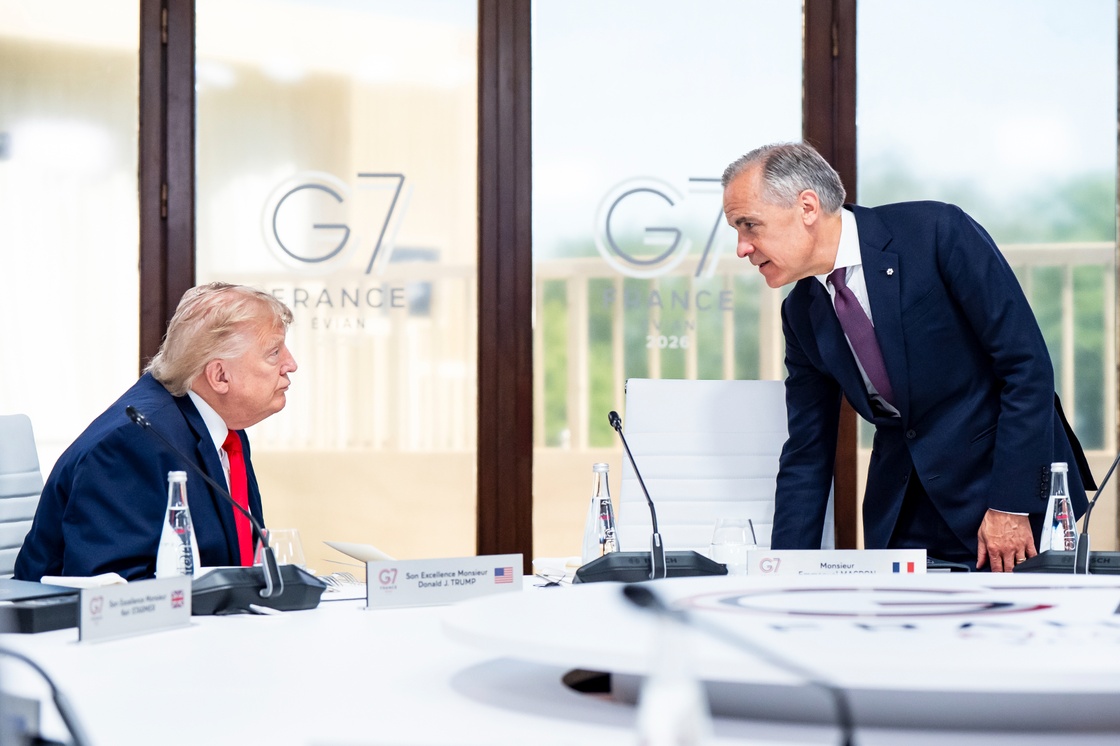
- Prime Minister Carney says he is 'not interested' in a narrow trade deal that does not address all of Donald Trump’s major tariffs on Canada, drawing a line in the sand amid negotiations.
- Speaking at an aluminum plant in Saguenay, Que., Mr. Carney said he hoped there would be a 'pathway' to a wide-ranging trade deal before Mr. Trump’s latest set of threatened tariffs is scheduled to take effect.
- Mr. Carney stated: 'We're not interested in a very targeted deal without connections to other sectors,' adding in English: 'We're interested in a more comprehensive deal, more global deal.'
- The pact must address autos, steel, aluminum, and forest products, all subject to punishing U.S. tariffs.
- Mr. Carney said: 'Will we get all that by the 19th of August? We'll see. But we want to have pathways in order to get that.'
- Canada’s chief trade negotiators, Dominic LeBlanc and Janice Charette, met with U.S. Trade Representative Jamieson Greer in Washington on Thursday; asked if a deal was possible by Aug. 19, Mr. LeBlanc replied: 'I hope so.'
- Mr. Greer wants Canada to satisfy U.S. demands on bilateral issues like dairy market access and retaliation by pulling U.S. alcohol off shelves before larger structural issues on auto content requirements; such sequencing is difficult for Canada, as lifting tariffs on autos, steel, and aluminum is Ottawa’s top priority.
Canadian Prime Minister Carney has firmly rejected the idea of a narrow trade deal with the U.S., stating, "We’re not interested in a very targeted deal without connections to other sectors." He is advocating for a comprehensive agreement that addresses all major tariffs, particularly on autos, steel, aluminum, and forest products.14
Carney's comments came during a visit to an aluminum plant in Saguenay, Quebec, where he expressed hope for a pathway to a wide-ranging trade deal before the August 19 deadline. He acknowledged the challenges posed by U.S. tariffs, which could impact US$20 billion worth of Canadian goods, including electronics and dairy products, with 50-percent levies set to take effect.
Intergovernmental Affairs Minister Dominic LeBlanc and chief trade negotiator Janice Charette met with U.S. Trade Representative Jamieson Greer to discuss the negotiations. LeBlanc expressed optimism, stating, "I hope so" when asked about the possibility of reaching a deal by the deadline. However, the U.S. demands for increased access to the Canadian dairy market complicate matters, as Canada prioritizes lifting tariffs on key sectors.6
As the trade war escalates, Carney's insistence on a comprehensive deal reflects Canada's strategy to address interconnected trade issues rather than settling for piecemeal agreements.
“Speaking at an aluminum plant in Saguenay, Que., Carney said the deal must address autos, steel, aluminum, and forest products. Canada's chief negotiators met with U.S. Trade Representative Jamieson Greer in Washington, where LeBlanc replied 'I hope so' when asked about a deal by Aug. 19.”
 The Globe and Mail