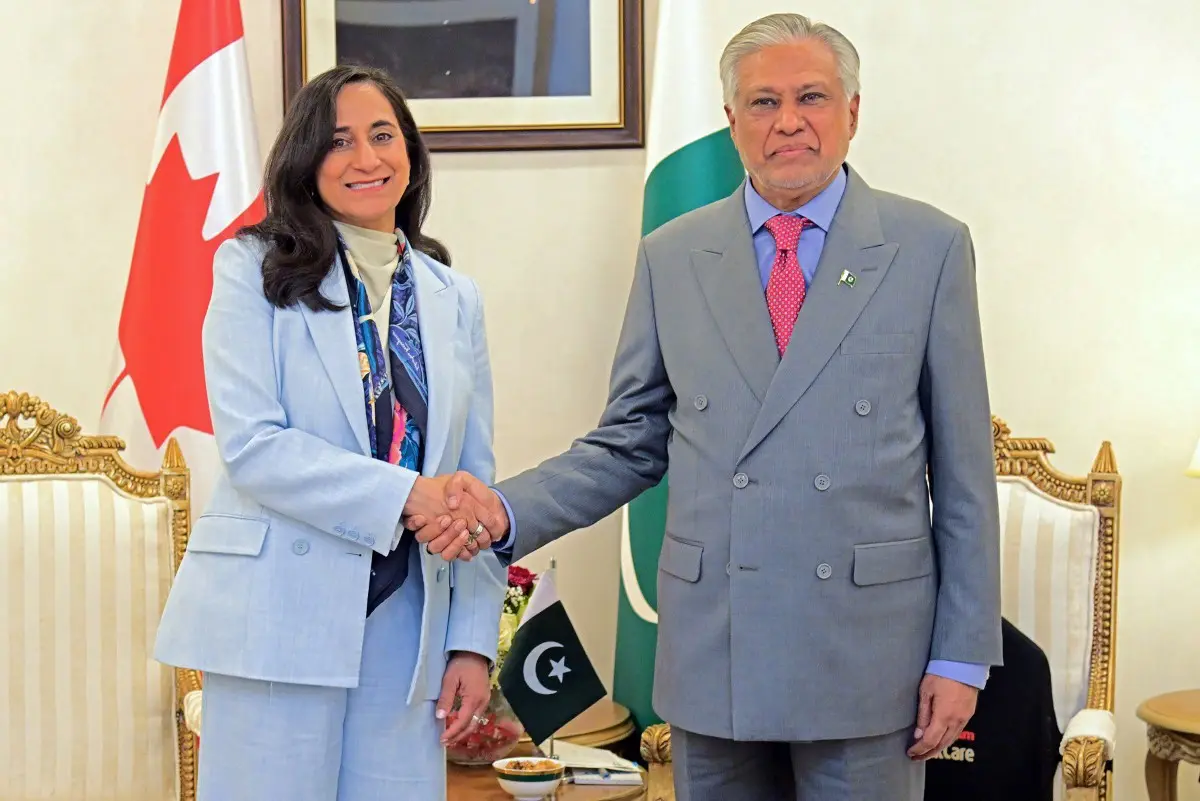
- Canadian Foreign Minister Anita Anand visited Pakistan for the first time in nearly 20 years, where she met with Pakistani officials in Islamabad.
- Pakistan urged Canada to support the restoration of the Indus Waters Treaty (IWT) during the visit.
- Canada did not provide any public endorsement for the IWT during the visit.
- The absence of public endorsement from Canada was seen as a setback for Pakistan, which has been seeking international support after India suspended the treaty.
- India suspended the Indus Waters Treaty in April 2025 following a terror attack, linking its continuation to Pakistan's actions against cross-border terrorism.
- The Indus Waters Treaty was signed in 1960 with the World Bank acting as a broker.
- Both nations discussed strengthening economic ties during Anand's visit, highlighting the growth of bilateral trade over the past two decades.
Canadian Foreign Minister Anita Anand's visit to Pakistan marked the first by a Canadian official in nearly two decades. During her visit, Pakistan's Deputy Prime Minister Ishaq Dar urged Anand to support the restoration of the Indus Waters Treaty (IWT), which India suspended in April 2025 following a terror attack.126
"We seek the support of our friendly countries, including Canada, towards India's immediate restoration of the IWT, ending the weaponisation of water, and upholding international law and treaty obligations," Dar stated during a joint press briefing.3
Anand, however, did not publicly address the treaty issue, and the official Canadian press release made no mention of it, indicating a lack of support for Pakistan's request.
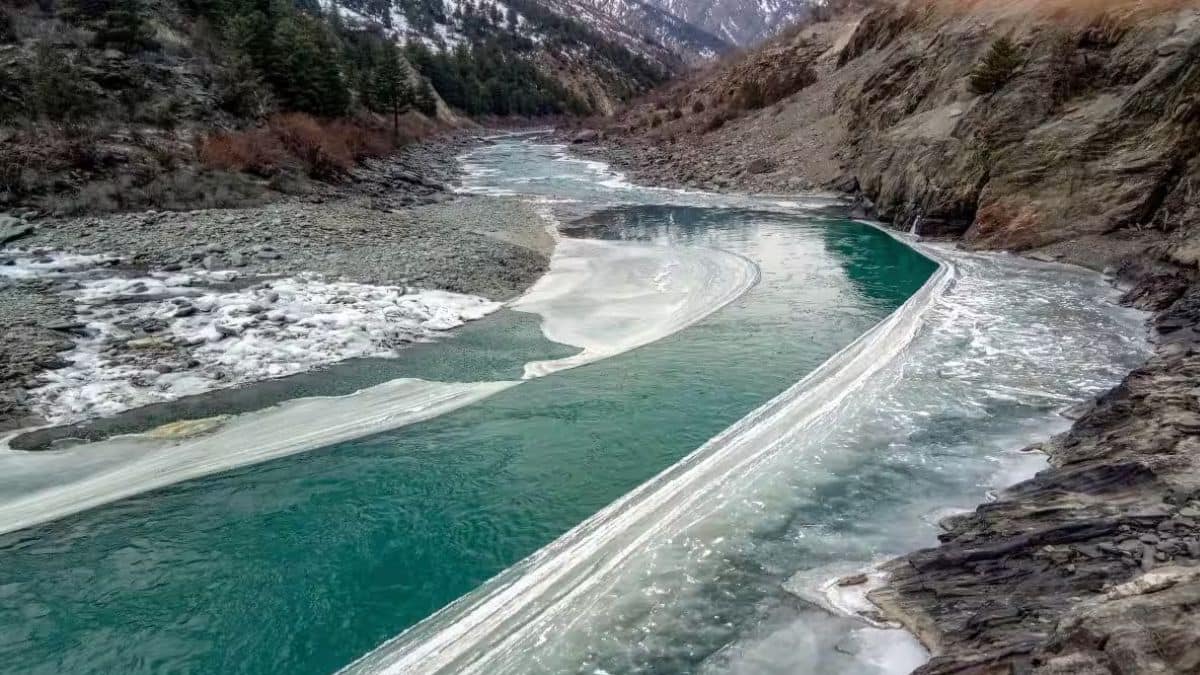
The treaty, signed in 1960 with the World Bank as a broker, has been a point of contention since India placed it in abeyance after the Pahalgam terror attack that killed 26 people. New Delhi has linked the treaty's survival to Pakistan's actions against cross-border terrorism.
"It would be accurate to say that the IWT in its present form will not function at all," an Indian official remarked, emphasizing that any reactivation would require a different approach.
Despite the setback regarding the treaty, Anand highlighted the growth in bilateral trade over the past 20 years, supported by a Pakistani-Canadian diaspora of over 300,000. Emerging opportunities for cooperation on economic growth and regional stability were also noted.
“India suspended the 1960 treaty after the April 2025 Pahalgam terror attack that killed 26 people, linking its restoration to Pakistan's action against cross-border terrorism. Instead, Anand emphasized trade ties, noting that the Pakistani-Canadian diaspora of over 300,000 supports bilateral economic growth.”
 Firstpost



