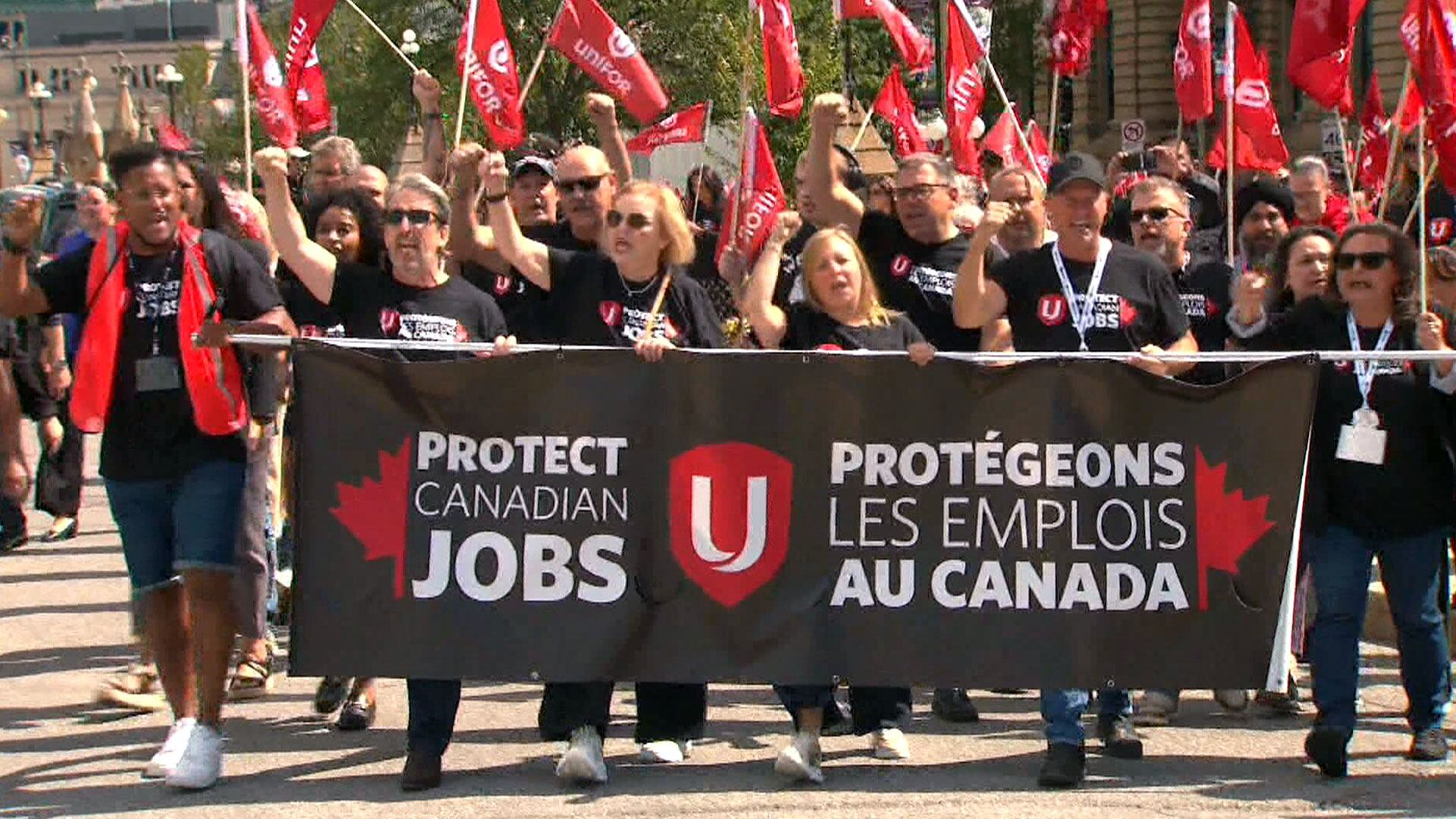
- In response to Mr. Trump’s imposition of 50-per-cent tariffs on $27.6-billion of Canadian goods, Ottawa has prepared a package of dollar-for-dollar countertariffs that goes into effect Sept. 8.
- Experts warn that escalation in trade negotiations is a minefield, with potential risks and outcomes that could affect the trading relationship.
- Wolfgang Alschner, a law professor at the University of Ottawa, stated that the U.S. is always in a position to hurt Canada more, and that creating supply lines that avoid the U.S. is a huge effort but the only way to reduce exposure.
- Gitane De Silva, founder of advisory firm GDStrategic, emphasized that escalation should be used only with confidence that the U.S. wouldn't retaliate in a way Canada couldn't handle.
- An unnamed source indicated that retaliation is unlikely to improve Trump's behavior toward Canada and may worsen it, as limited evidence suggests retaliation leads to higher tariffs.
- Another source noted that while standing up to the President may be emotionally satisfying, it ultimately makes life harder financially, with no guarantee of bilateral trade gains under the current administration.
Canada's countertariffs on $27.6 billion of U.S. goods, effective Sept. 8, are a direct response to President Trump's 50% tariffs.
Dan Ciuriak, an economist, noted that escalation can be appropriate under specific conditions, but warned, “We can’t treat these grievances credibly.”
Wolfgang Alschner, a law professor, emphasized that the U.S. holds a stronger position, stating, “The U.S. is always going to be in a position to hurt us more.”3
The countertariffs aim to create alternative supply lines for Canada, as “it’s a huge effort for the Canadian economy to create supply lines don’t go through the U.S.”
Gitane De Silva cautioned that retaliation may not yield positive results, asserting, “Retaliating is unlikely to get Trump to change his behaviour toward Canada for the better.”45
Experts agree that while countries seek economic gains from trade, “there’s no guarantee with this administration.”2
The situation remains precarious, with potential for further escalation in tariffs, impacting both economies significantly.
“Dan Ciuriak of the Centre for International Governance Innovation says escalation works only when the demand is limited and negotiable, while Wolfgang Alschner of the University of Ottawa notes the U.S. can always hurt Canada more. An unnamed source warns retaliation may worsen Trump's behavior, as limited evidence suggests it leads to higher tariffs.”
 The Globe and Mail