- The U.S. is set to impose a 50% tariff on some Canadian goods on Wednesday, raising concerns among politicians, industries, and the public.
- Canadian and U.S. officials are set to meet again Sunday with the new tariffs proposed by President Donald Trump set to take effect in just three days.
- Dominic LeBlanc is set to speak with U.S. Trade Representative Jamieson Greer at 4:30 p.m. Eastern.
- Canada’s goal remains reaching a deal before Wednesday to avoid new 50% tariffs on roughly $28 billion worth of Canadian goods from taking effect.
- The meeting is an opportunity to take stock of the work accomplished and the work ahead, as both sides seek a comprehensive deal, according to Gabriel Brunet, LeBlanc’s spokesperson.
- Conservative Leader Pierre Poilievre argued tariffs must be removed on Canadian goods in any trade deal, saying it is unacceptable for U.S. tariffs on Canadian lumber.
- The gap on potential relief for the softwood lumber industry seems unlikely, with sources saying the Americans are not interested in reducing softwood tariffs and duties, which currently sit at 45%.
- B.C. Premier David Eby criticized the tariffs, saying “We face higher tariffs than Russia” and that the U.S. is putting forest families out of work to prioritize lumber imports from Europe and Russia.
- Any deal the Trump administration is willing to sign will have some form of tariffs on steel, aluminum, autos, and lumber.
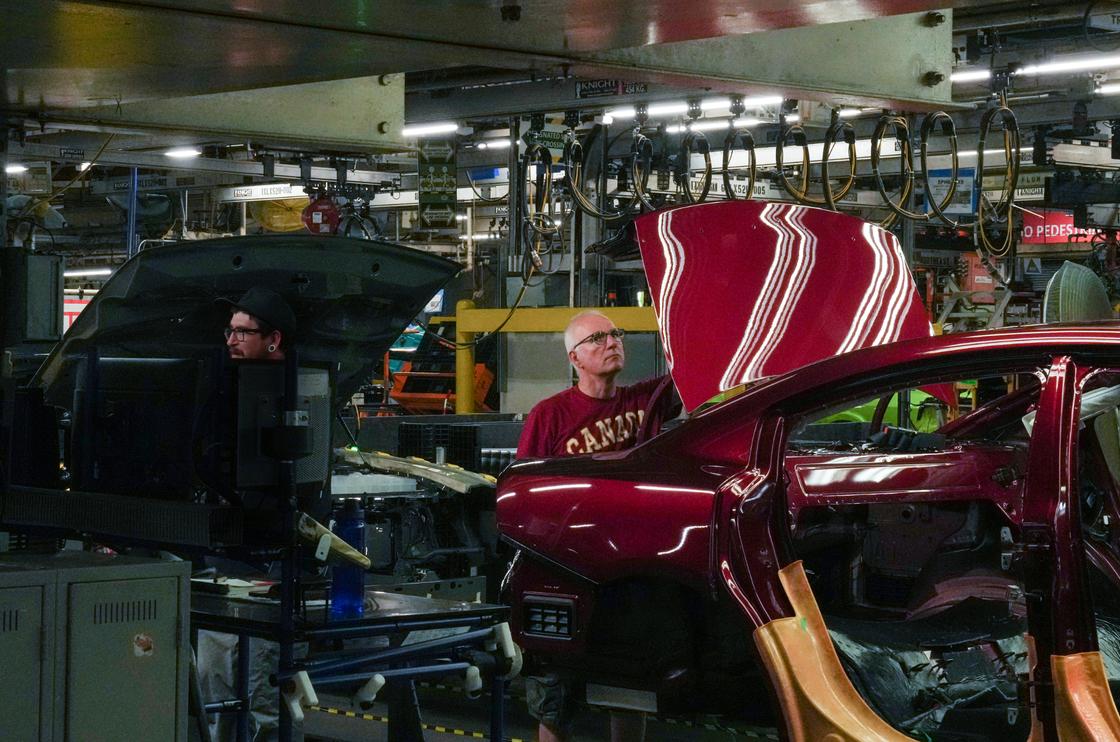
- If a deal is reached, tariffs on Canadian autos and parts compliant under the Canada-U.S.-Mexico Agreement (CUSMA) would remain in place, but expected to be reduced from the current 25% level.
- Auto industry leaders have criticized the move, while Brampton Mayor Patrick Brown said Saturday that “no deal is better than a bad deal” if the auto sector is not included in talks.
Canadian and U.S. officials are meeting again as a deadline approaches for new tariffs. Minister Dominic LeBlanc will speak with U.S. Trade Representative Jamieson Greer at 4:30 p.m. Eastern, just days before the U.S. is set to impose a 50% tariff on $28 billion worth of Canadian goods.34
The meeting aims to assess progress made by negotiating teams and the challenges ahead. Gabriel Brunet, LeBlanc’s spokesperson, emphasized the importance of reaching a comprehensive deal that benefits businesses and families on both sides of the border.5
Concerns are mounting as Conservative Leader Pierre Poilievre insists that tariffs on Canadian lumber must be removed. “It is unacceptable for there to be U.S. tariffs on Canadian lumber,” he stated, urging for a fair negotiation.
B.C. Premier David Eby highlighted the disparity, noting, “We face higher tariffs than Russia,” criticizing U.S. policies that jeopardize local jobs in favor of imports from Europe and Russia.
While the U.S. is expected to maintain some tariffs on steel, aluminum, and autos, Canada hopes to negotiate a reduction on tariffs for CUSMA-compliant goods. Sources suggest a potential tariff rate of 10-15% on compliant autos and parts.
As the deadline looms, auto industry leaders have voiced their concerns, with Brampton Mayor Patrick Brown stating, “no deal is better than a bad deal” if the auto sector is excluded from negotiations.12
“The U.S. is set to impose 50% tariffs on roughly $28 billion worth of Canadian goods Wednesday, with softwood lumber duties currently at 45%. Conservative Leader Pierre Poilievre urged Mark Carney to keep his promise to negotiate a win and remove tariffs on Canadian lumber.”
 Global News