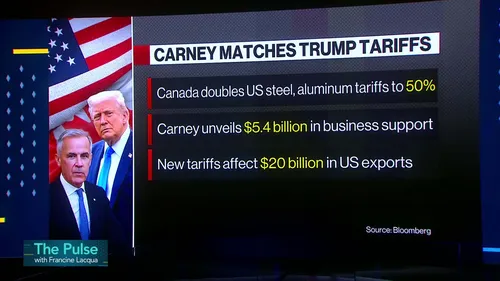
- Mark Carney's government is launching or increasing tariffs on nearly 600 U.S. products, including doubling tariffs on American steel and aluminum from 25 to 50 per cent, and imposing import taxes of 15, 25, and 50 per cent on American cheese, household appliances, machinery, and clothing as part of dollar-for-dollar retaliation against U.S. President Donald Trump’s latest duties on Canadian products.
- Nearly $28 billion in retaliatory tariffs on U.S. goods kick in today.
- The U.S. president has vowed to escalate in the new year, a move the prime minister said shows he wants to destroy Canadian industries.
- Canada’s trade war with the U.S. has injected uncertainty into the Toronto region fall real estate season, historically the second busiest time of the year after spring.
Canada has implemented nearly $28 billion in tariffs on 600 U.S. products, including a significant increase in duties on steel and aluminum from 25% to 50%. This action is part of a dollar-for-dollar retaliation against U.S. tariffs imposed on Canadian goods.12
The tariffs also target American cheese, household appliances, machinery, and clothing, with import taxes ranging from 15% to 50%. This escalation in trade tensions comes as President Trump has vowed to further escalate the situation in the new year, which Prime Minister Mark Carney claims aims to “destroy” Canadian industries.3
The ongoing trade war has created uncertainty in various sectors, particularly affecting the Toronto region's fall real estate market, which is typically the second busiest after spring. Experts are divided; some predict an increase in sales with only modest price drops, while others remain cautious. The consensus is clear: the rising tensions between Canada and the U.S. are a wild card impacting the market.
As the situation develops, both nations are bracing for potential further retaliatory measures, with the trade war showing no signs of abating.
“The $28 billion in new duties target American cheese, appliances, machinery, and clothing with rates of 15%, 25%, and 50%. The escalating conflict is also clouding the Toronto region's fall real estate season, historically the second busiest after spring.”