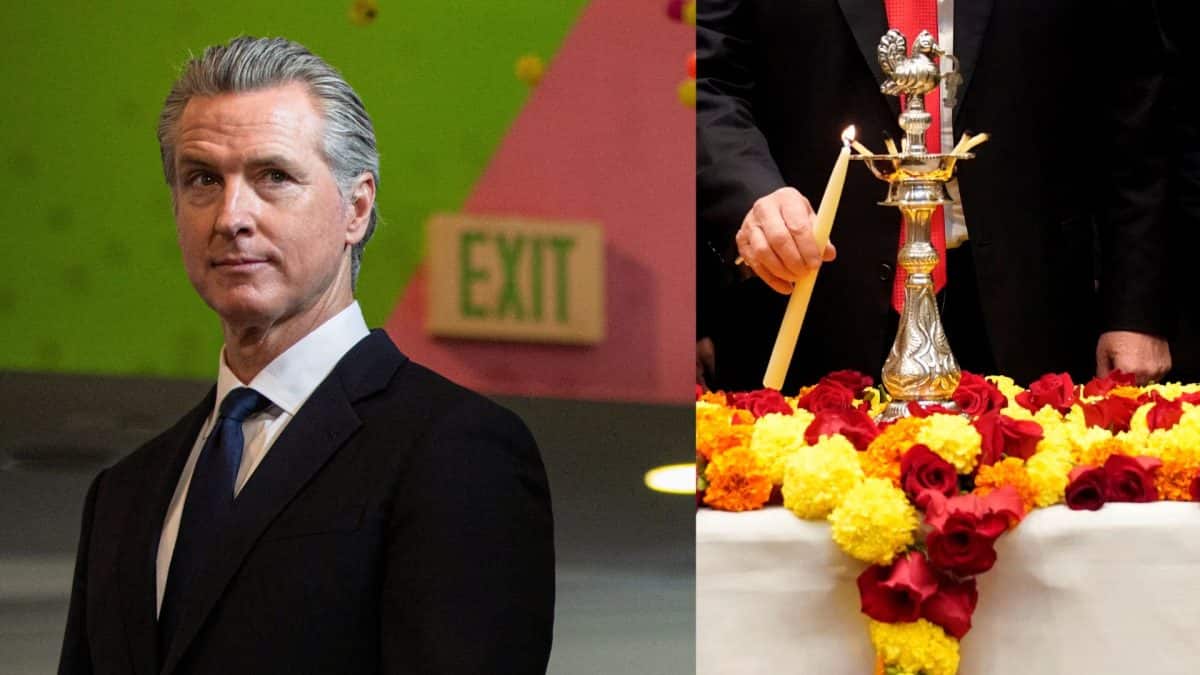
- California Governor Gavin Newsom signed Assembly Bill 268 into law last year, making Diwali the state's 12th recognized holiday, effective January 1 this year.
- The San Francisco Taxpayers Association filed a petition challenging the law, arguing it was costly and violated the US Constitution.
- Sacramento County Superior Court Judge Stephen Acquisto ruled in favor of the petition, striking down key provisions of AB 268 for violating the Establishment Clause.
- The ruling leaves the law on hold, with state employee leave policies paused and school districts facing legal ambiguity ahead of the fall term.
- Asian American legislative caucuses and the state's Department of Justice are evaluating whether to appeal or introduce revised, secularized legislation.
- The court determined that AB 268 provided preferential treatment to Diwali based explicitly on its religious significance without presenting a sufficient secular rationale.
- Legal experts noted that while Christmas is recognised as a federal and state holiday due to its long-standing secularised status under US case law, newer legislative recognitions of religious festivals face stricter judicial scrutiny regarding secular justification.
- The Hindu American Foundation (HAF) expressed deep concern over the judgement, arguing that the court prioritised textual phrasing over the practical, civil purpose of the law.
- HAF pointed out that the true intent of AB 268 was accommodation rather than endorsement, allowing students and employees to celebrate a central festival without incurring academic or professional penalties.
- California's legal challenge stands in contrast to a growing movement across the United States to recognise Diwali, driven by the expanding Indian American demographic.
California's Assembly Bill 268, which recognized Diwali as a state holiday, was struck down by Superior Court Judge Stephen Acquisto, who ruled it violated the Establishment Clause. The law, signed by Governor Gavin Newsom, aimed to accommodate California's growing Indian American population, now nearing one million.3
The court found that AB 268 provided preferential treatment to Diwali based on its religious significance without sufficient secular justification. “The Court finds that AB 268 violates several provisions of the federal and state constitutions by giving Diwali special treatment expressly based on its religious importance without any significant secular considerations,” Acquisto stated.
The ruling leaves public school districts and community colleges in a state of uncertainty regarding their academic calendars, as they had adjusted schedules to accommodate the holiday. Legal experts noted that newer legislative recognitions of religious festivals face stricter scrutiny compared to long-standing holidays like Christmas.7
The San Francisco Taxpayers Association, which filed the challenge, estimated the law could cost up to $68.8 million in administrative expenses. “If you’re not of that religion... that would suggest that Diwali is somehow getting better standing in our community and with the state government; that’s constitutionally problematic,” said petition lawyer Paul Scott.2
As lawmakers consider appealing the decision or revising the legislation, advocates argue that the law's intent was to allow celebration without penalties, emphasizing the cultural significance of Diwali in California.
The controversy highlights the ongoing debate over how non-Western cultural and religious traditions are recognized in American public life, with Asian American legislative caucuses evaluating next steps.5
“The San Francisco Taxpayers Association, which filed the challenge, estimated the law could cost up to $68.8 million in administrative expenses. The Hindu American Foundation argued the court prioritized textual phrasing over the law's civil purpose of accommodation, not endorsement.”
 Firstpost
 CNBC TV18



