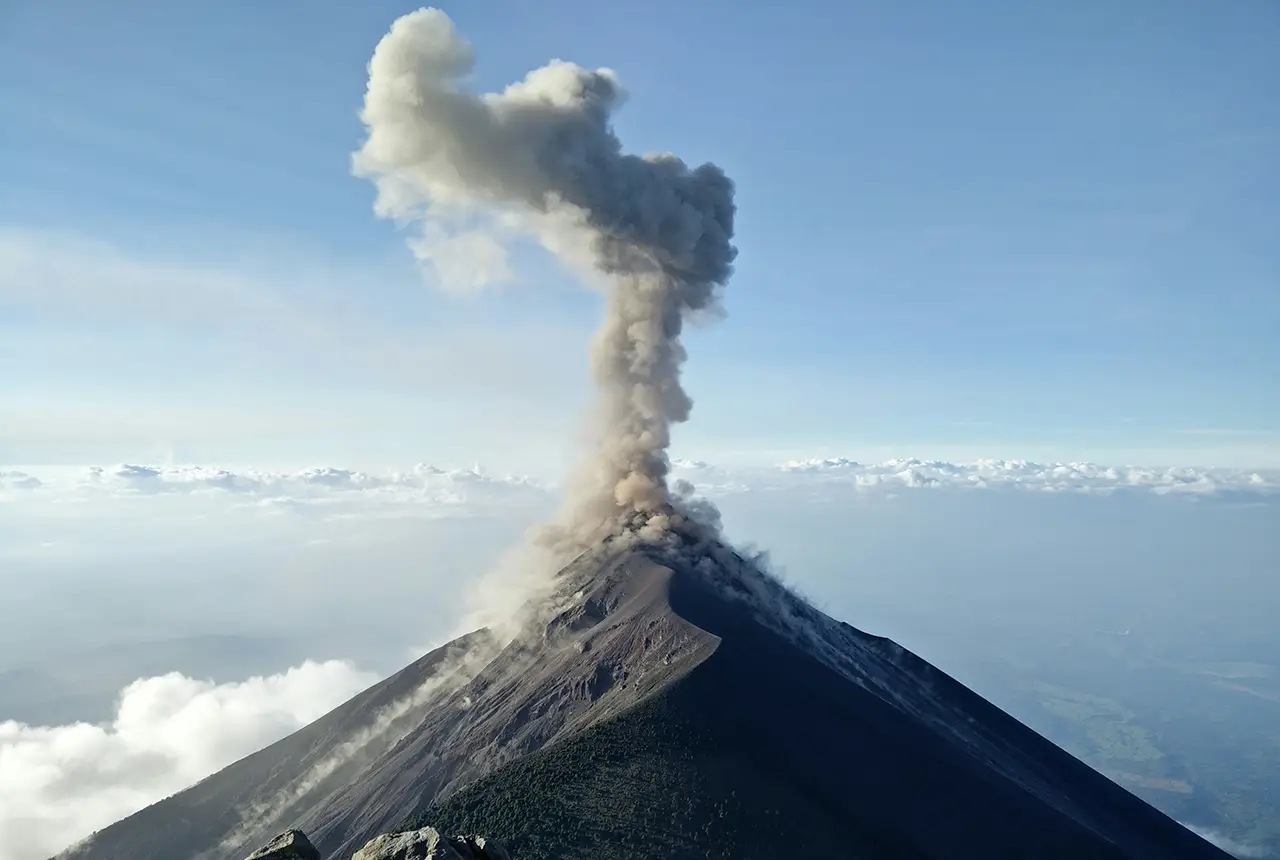
- British Geological Survey (BGS) has confirmed the discovery of a 454-million-year-old extinct supervolcano beneath The Wash, reshaping our understanding of England's geological past.
- The supervolcano was capable of producing one of the largest eruptions in Earth's history, with ash potentially spreading as far as Scandinavia.
- The confirmation of the supervolcano brings an end to decades of curiosity for Tim Pharaoh, the lead author of the research paper.
- The zircon crystals examined were dated to 454.4 million years ago, providing precise evidence of the supervolcano's eruption.
- Researchers at the University of East Anglia first became aware of granite under Spalding around 50 years ago, suggesting the possibility of a supervolcano.
- Tim Pharaoh examined the material 30 years ago, but the results were not 100% convincing at that time.
- The Covid pandemic led to changes in lab protocols, allowing scientists to re-examine archived samples, which contributed to the discovery.
The British Geological Survey (BGS) has confirmed the existence of a 454-million-year-old supervolcano beneath The Wash, an area in East Anglia, England. This discovery, made using advanced technology to analyze tiny zircon crystals, reveals that the supervolcano was responsible for one of the largest eruptions in Earth's history, with ash potentially reaching Scandinavia.12
The supervolcano, now extinct, was capable of producing eruptions thousands of times more powerful than Mount Etna. Tim Pharaoh, lead author of the research, expressed satisfaction at the confirmation of a theory he has held for 40 years, stating, “It is very satisfying to get really good results on a project which started 40 years ago.”36
The research indicates that the zircon crystals, which form in molten magma, were dated to approximately 454.4 million years ago. This aligns with findings from the University of Oslo, which identified a similar age for the Kinnekulle tephra found across northern Europe. The BGS noted that the ash from this supervolcano likely contributed to a significant layer of volcanic ash found in regions such as Norway and Sweden.4

Pharaoh emphasized the importance of this discovery, stating, “We believe that, thanks to cutting-edge analysis, we have been able to provide evidence that the source of the ash layer in Scandinavia originated from this supervolcano, reshaping our understanding of England’s deep geological past.”
This research not only sheds light on ancient geological events but also has potential implications for modern industries, such as horticulture, which could benefit from geothermal energy derived from the supervolcano's remnants.
“The supervolcano's eruption, dated to 454.4 million years ago, is linked to the Kinnekulle tephra found across Norway, Sweden, and the Baltic, solving a long-standing mystery. Tim Pharaoh, lead author, said the discovery could have practical implications for geothermal energy in horticulture.”
 The Times