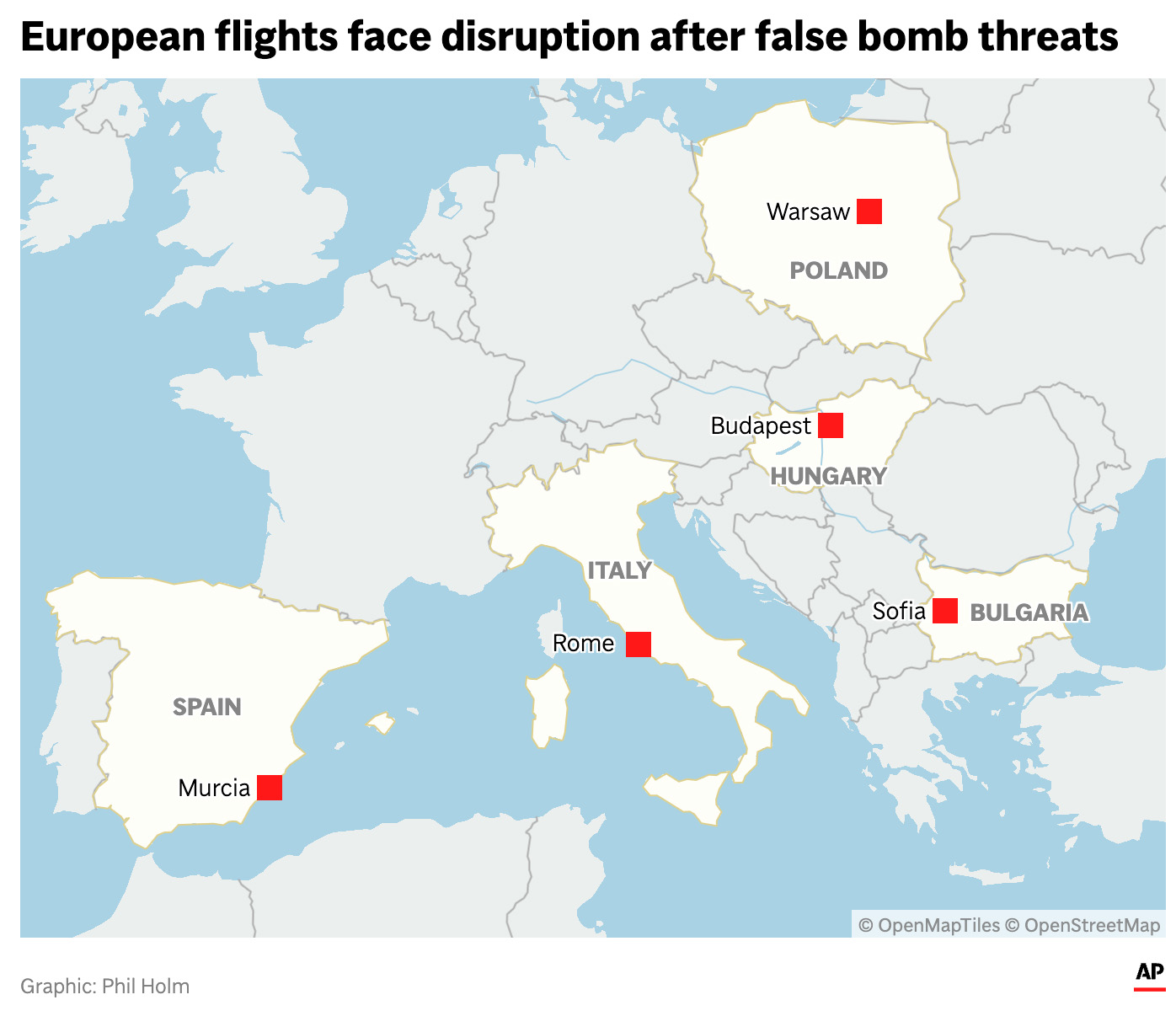
- Multiple flights in Europe were targeted by bomb threats on Thursday, forcing emergency landings, searches and military escorts to airports in France, Italy and Bulgaria.
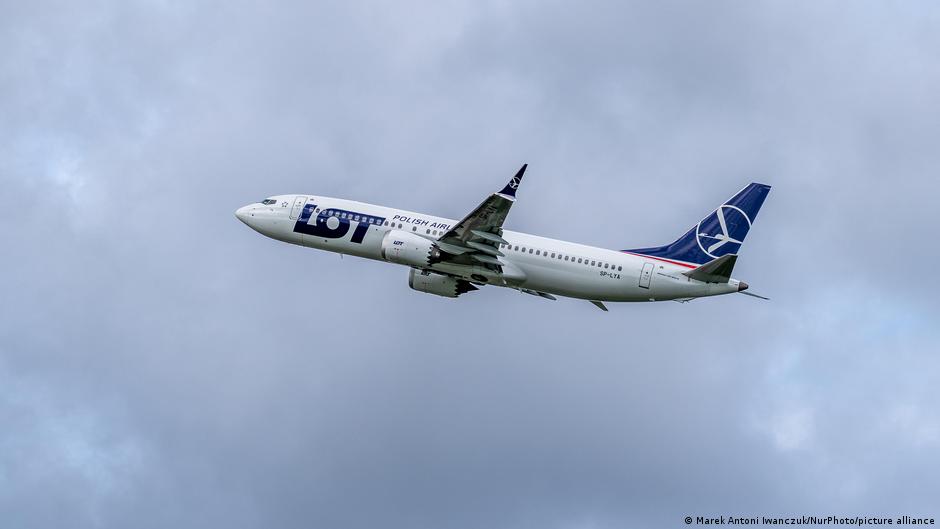
- More than a dozen flights from cities including Copenhagen, Dublin, Helsinki, Madrid, Milan and Warsaw were confirmed to have been targeted with bomb threats, most diverted to other airports for emergency landings while others landed safely at their destinations.
- Inspections have not turned up hazardous or suspicious materials, leading authorities to dismiss the threats as malicious hoaxes.
- European officials condemned the threats, stating that any threats against civilians are unacceptable, and noted ongoing investigations.
- Authorities were already aware of an earlier wave of hoax threats earlier this week, which set the stage for the recent incidents.
- These threats come amid increased geopolitical tensions and other disruptions, including drone incursions in Europe.

More than a dozen flights across Europe faced bomb threats on Thursday, leading to emergency landings and military escorts. The threats, labeled as malicious hoaxes by officials, affected flights from cities including Copenhagen, Dublin, Helsinki, Madrid, Milan, and Warsaw.2
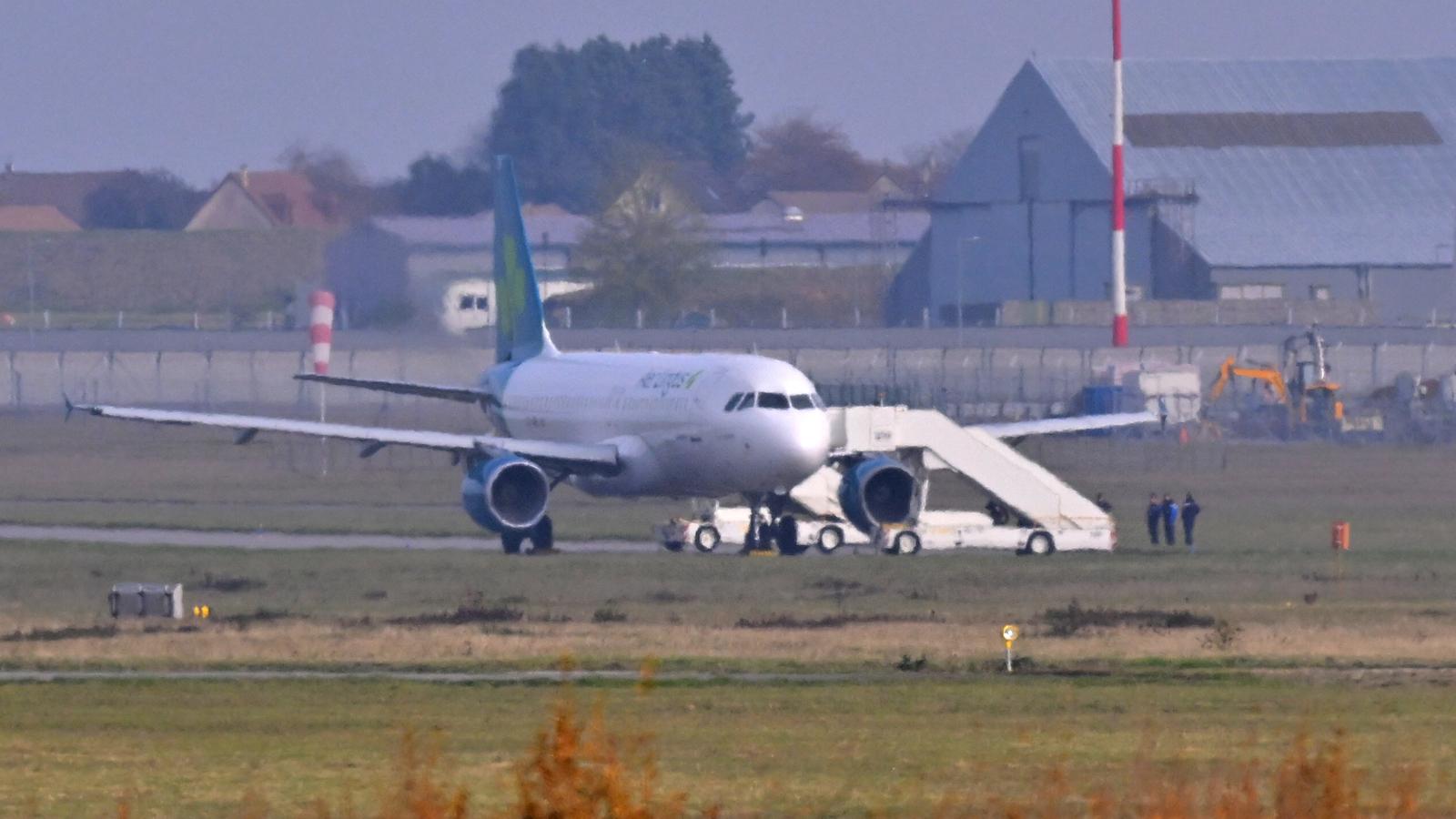
A flight from Dublin to Rome was diverted to a military air base in France after a bomb threat was reported. All 151 passengers and crew were safe, and military bomb disposal teams examined the aircraft. Similarly, Italian air force jets escorted a Finnair flight from Helsinki to Rome after an email threat was received, but no explosives were found.
The European Union's Transport Commissioner Apostolos Tzitzikostas condemned the threats, stating that “any threats against civilians are unacceptable.” He confirmed that investigations were ongoing and that an EU-level information-sharing mechanism on aviation security had been activated.
The incidents come amid rising geopolitical tensions, with some officials suspecting links to hybrid warfare tactics attributed to Russia. Eric Schouten, head of the aviation security group Dyami, noted that these threats could be part of a broader strategy to disrupt essential services across Europe.6
Despite the chaos, inspections revealed no hazardous materials on the affected flights, and operations resumed as normal after security protocols were implemented.3
“EU Transport Commissioner Apostolos Tzitzikostas said it is too early to draw conclusions on whether the incidents are linked, and national investigations remain ongoing. Authorities have not found hazardous materials, and the threats come amid heightened geopolitical tensions and accusations of Russian hybrid attacks.”


 KSL News