
- July 13 marked the beginning of escalating tensions when an Iranian Mahan Air flight carrying a high-ranking Houthi delegation attempted to land in Sanaa without prior approval from the Saudi-led coalition.
- In response to the flight, Saudi-backed Yemeni authorities proposed a compromise, offering to facilitate the delegation's travel on a non-Iranian airline, which the Houthis refused.
- The flight continued on Mahan Air, prompting Saudi Arabia to conduct an airstrike that disabled Sanaa airport's runway, preventing the aircraft from landing.
- Oman intervened to de-escalate the situation, leading the coalition to eventually allow the flight to land in Houthi-controlled Hodeida.
- Following the landing, the Houthis retaliated by attacking Abha airport in southwestern Saudi Arabia and announcing a blockade of Saudi shipping in the Red Sea.
- In response, the Saudi-led coalition struck Hodeida and Kamaran, while reinforcing troops along front lines in preparation for a possible ground offensive.
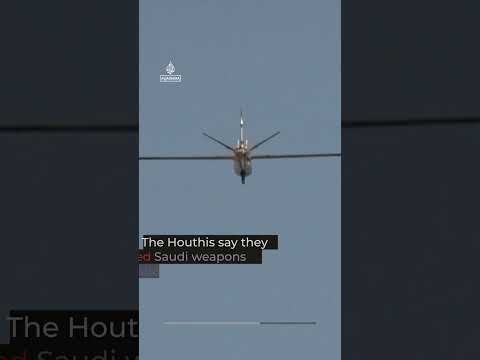
- The Houthis launched dozens of missiles and drones at military camps, resulting in numerous casualties, and also attacked the strategically important Mokha port.
- UN envoy Hans Grundberg warned that Yemen now faces a greater risk of renewed large-scale conflict than at any point since the UN-brokered truce of April 2022.
- The escalation has brought Yemen closer to full-scale conflict than at any time since a UN-brokered truce largely halted fighting in 2022.
- The conflict in Yemen has resulted in one of the world's worst humanitarian crises, with the situation deteriorating significantly since the Houthis took control of Sanaa in 2014.
- The 2022 truce had ended major fighting across the country and halted Houthi missile and drone attacks on Saudi Arabia and the UAE, which had previously been part of the coalition.
- The recent events reflect a broader shift in Houthi priorities, framing the conflict as one about Yemen's sovereignty over its airspace and territorial waters, complicating future compromises.
Yemen is facing a significant escalation in conflict following an Iranian Mahan Air flight's attempt to land in Sanaa without Saudi approval on July 13. This incident triggered a series of retaliatory attacks between the Iran-backed Houthis and the Saudi-led coalition, marking the most severe tensions since the UN-brokered truce in April 2022.1610
The Saudi-led coalition responded to the flight by striking Sanaa airport, disabling its runway and preventing the aircraft from landing. In retaliation, the Houthis launched attacks on Abha airport in Saudi Arabia and announced a blockade of Saudi shipping in the Red Sea. UN envoy Hans Grundberg warned that Yemen now faces a greater risk of renewed large-scale conflict than at any point since the truce.39
The Houthis have framed the conflict as a struggle for Yemen's sovereignty over its airspace and territorial waters, complicating any potential compromise. Analysts suggest that this shift in narrative allows the Houthis to present their actions as a continuation of Yemen's long-standing war against the Saudi blockade.
The situation has drawn in regional powers, with Oman intervening to prevent further escalation. However, the ongoing military preparations by both sides indicate a potential for a ground offensive, raising fears of a return to full-scale war in Yemen.4
“The escalation risks jeopardizing the gains of the 2022 truce,”12
As the conflict intensifies, the international community watches closely, concerned about the implications for regional stability and humanitarian conditions in Yemen.
“The escalation began July 13 when a Saudi airstrike disabled Sanaa airport's runway, preventing an Iranian Mahan Air flight carrying a Houthi delegation from landing. The Houthis then attacked Abha airport and announced a Red Sea shipping blockade, while the Saudi-led coalition struck Hodeida and Kamaran and reinforced troops for a possible ground offensive.”


 Gulf News
 AP News



