- Members of the Bank of Canada’s governing council were split over how sustainable a recent economic rebound could be, deliberations from the central bank’s rate decision earlier this month show.
- The Bank of Canada expects real gross domestic product to have risen 2.5 per cent on an annualized basis last quarter, forecasting modest growth to continue through the second half of the year and into 2027.
- Monetary policymakers were confident about the second-quarter rebound, but there was a range of views among governing council members about the sustainability of the rebound beyond the near term.
- The governing council noted that higher global oil prices and signs of a recovery in the housing market were supporting growth over the previous three months.
- The Bank of Canada held its benchmark interest rate steady at 2.25 per cent for a sixth straight time at its decision on July 15.
- The deliberations show officials were growing more confident in the economy during the second quarter following a year of flat growth.
- Though inflation ticked up to 3.2 per cent in May, there were few signs inflation was spreading beyond the gas pumps.
- More recent data showed the annual rate of inflation eased to 2.8 per cent in June as the prospect of peace between the United States and Iran helped cool price pressures.
- Members agreed they would need to monitor the data closely for signs that growth was broadening as projected in the July report.
- Council members noted several risks that could change their economic forecasts and determine whether the rebound in growth could be sustained long term.
Bank of Canada officials are divided over the sustainability of a recent economic rebound, with growth expected at 2.5% for the second quarter of 2026. The governing council noted that higher global oil prices and a recovering housing market have supported growth, but concerns linger about inflation risks.410

During deliberations, members expressed confidence in the economy's recovery, stating, 'there was a range of views among governing council members about the sustainability of the rebound beyond the near term.' Despite inflation rising to 3.2% in May, it eased to 2.8% in June, indicating that price pressures may be stabilizing.3
The council acknowledged that 'the trade-off facing monetary policy had diminished' as inflation pressures abated. However, they cautioned that if oil prices remain high, it could lead to broader inflation, necessitating a monetary policy response.
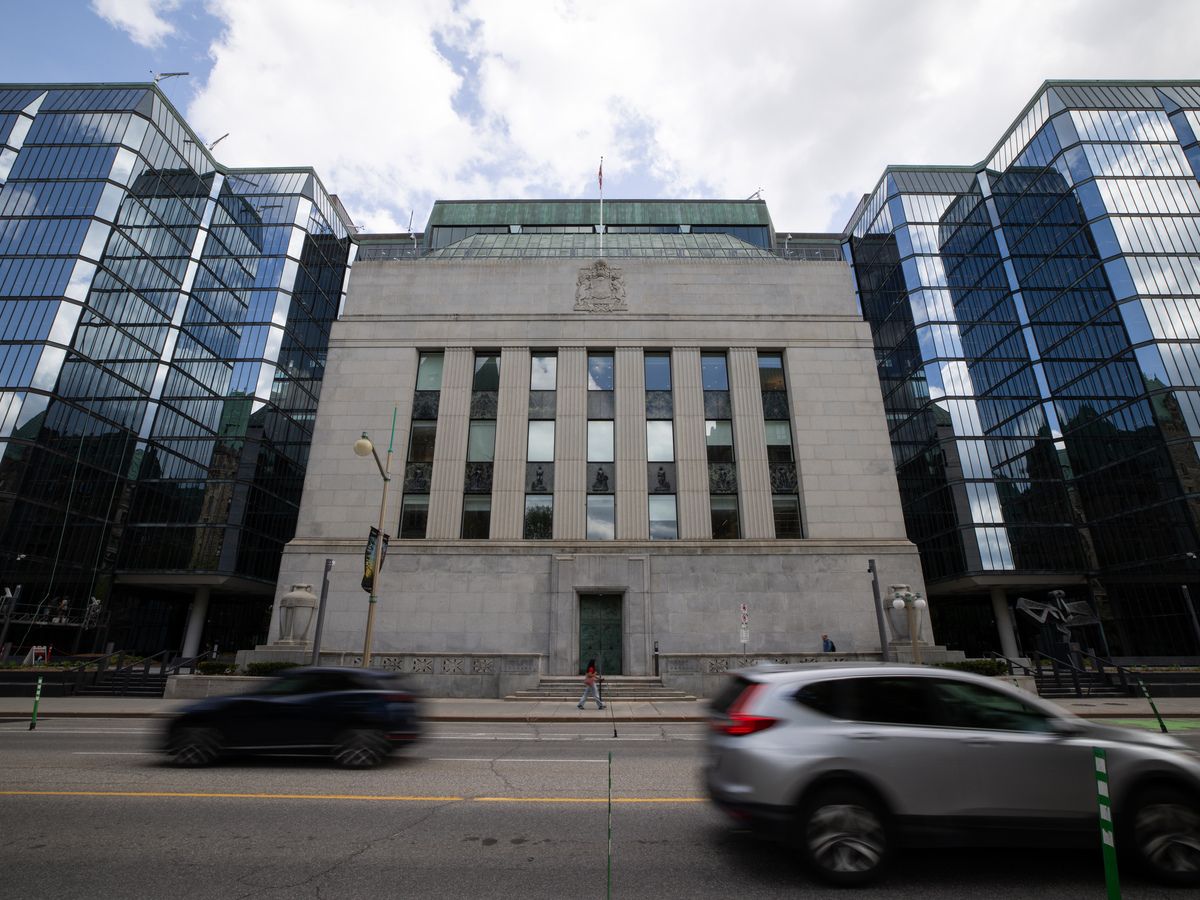
The Bank of Canada held its benchmark interest rate steady at 2.25% for the sixth consecutive time, reflecting a cautious approach amid ongoing geopolitical tensions, including potential U.S. tariffs on Canadian goods. 'The possibility of new U.S. tariffs was an ever-present downside risk to growth.' Overall, the economy is projected to grow modestly through 2027, with inflation expected to hover around 2% in the coming years.
Council members agreed to monitor economic data closely to ensure the recovery remains on track, emphasizing the need for vigilance in the face of potential risks.
“The Bank of Canada expects real GDP to rise 2.5% on an annualized basis for the second quarter, with inflation easing to 2.8% in June. However, officials noted that potential U.S. tariffs and geopolitical tensions could pose significant risks to the sustainability of this growth.”
 theglobeandmail.com



