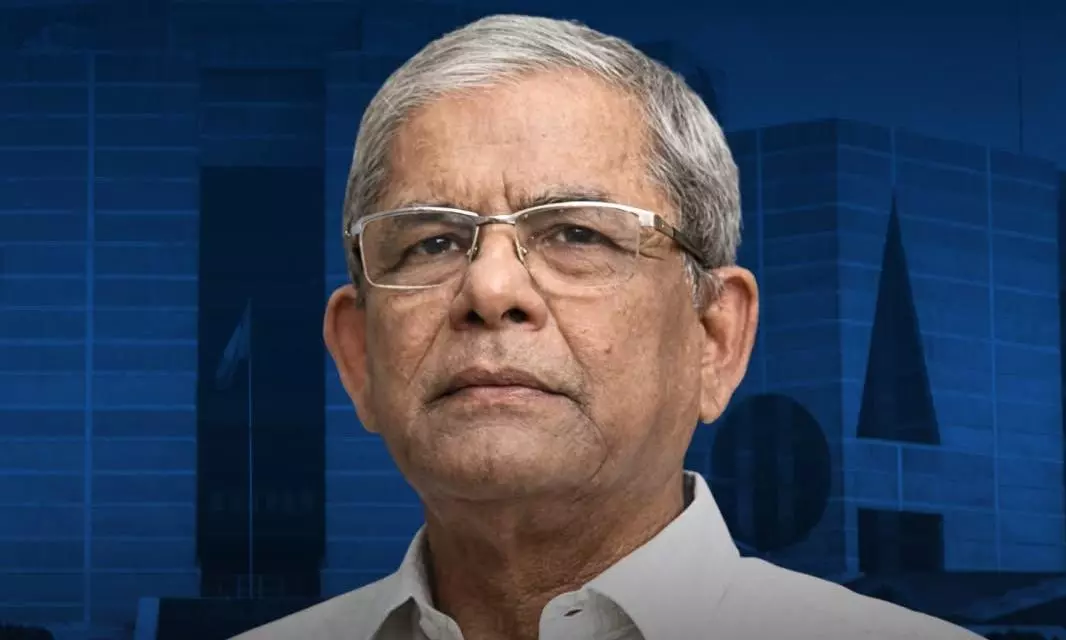
- Bangladesh is set to elect its new president on Thursday, with ruling Bangladesh Nationalist Party (BNP) stalwart Mirza Fakhrul Islam Alamgir emerging as the frontrunner.
- Alamgir faces one other candidate, Oli Ahmed, nominated by the opposition 11-party alliance led by Jamaat-e-Islami.
- The election is the first contested presidential poll in Bangladesh since 1991.
- Alamgir is expected to sweep the vote for the five-year post to become the 23rd president of the country of 170 million people.
- The vote follows the resignation in July of the previous president, Mohammed Shahabuddin, a close ally of Hasina who had faced pressure to quit.
- Thursday’s vote will be the first contested presidential election since October 1991, when BNP candidate Abdur Rahman Biswas defeated AL nominee Badrul Haider Chowdhury by 172 votes to 92.
- Of the 349 lawmakers eligible to vote, 247 belong to the BNP and 90 to the Jamaat-led opposition alliance, giving Alamgir a decisive numerical advantage.
- Oli Ahmed, Alamgir’s opponent, is a decorated veteran of Bangladesh’s 1971 Liberation War, chairman of the Liberal Democratic Party (LDP), and a six-time member of parliament.
- Despite Ahmed’s slim chances of winning, the opposition alliance has hailed him as an experienced and broadly acceptable candidate, ensuring that the presidency will be decided through a vote and not remain uncontested.
- Political analysts noted that the presidency could assume greater significance under the caretaker government system recently reintroduced to oversee general elections.
Bangladesh is poised for its first contested presidential election in 35 years on Thursday, with Mirza Fakhrul Islam Alamgir of the ruling Bangladesh Nationalist Party (BNP) facing retired Colonel Oli Ahmed, the opposition candidate.12468
Alamgir, 78, is expected to win decisively, backed by a two-thirds majority in Parliament, where 247 of the 349 lawmakers belong to the BNP. His opponent, Ahmed, 85, is a decorated veteran of the 1971 Liberation War and represents the Jamaat-e-Islami-led 11-party alliance.7

“I never thought that I would become the president -- it is the infinite grace of the party and almighty Allah,” Alamgir stated, reflecting on his unexpected rise to the position.
The election follows the resignation of former president Mohammed Shahabuddin, a close ally of Prime Minister Sheikh Hasina, who stepped down for health reasons. This election marks a significant shift from recent decades, where the presidency was often filled through consensus rather than contested votes.5
Political analysts, including Ali Riaz, emphasize that while the return to a contested election is a positive development, its practical significance may be limited. Riaz noted that reforms agreed upon after the 2024 uprising have altered the presidential election process, which is now conducted by members of both houses of parliament.
If elected, Alamgir will become Bangladesh's 23rd president, with the inauguration scheduled for Friday evening at the Darbar Hall of Bangabhaban.
“Mirza Alamgir, 78, is expected to secure the presidency with a strong majority, as 247 of the 349 lawmakers belong to his party, the BNP. Political analysts note that while the return of a contested election is significant, its practical implications may be limited under the caretaker government system.”
 deccanchronicle.com