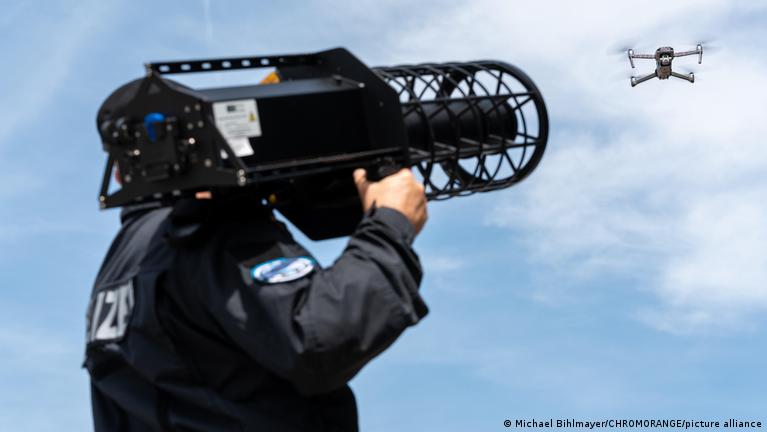
- German Interior Minister Alexander Dobrindt announced plans for a joint drone defence task force during a Baltic Sea summit in Flensburg, aimed at countering hybrid threats.
- Leaders from 10 European countries convened to discuss hybrid threats and agreed to enhance collective drone defense capabilities.
- Numerous incidents of possible sabotage affecting undersea cables and gas pipelines have been recorded in the Baltic Sea since 2022, with Russia suspected of involvement.
- A drone carrying explosives was discovered at Leipzig/Halle Airport, a significant military logistics hub, earlier this month.
Baltic Sea nations, including Germany, Denmark, and Sweden, are uniting to form a joint drone defense task force aimed at countering increasing hybrid threats. This initiative was announced during a meeting in Flensburg, where leaders discussed urgent security challenges facing the region.
German Interior Minister Alexander Dobrindt emphasized the need for enhanced collective defense capabilities, stating, "Foreign powers are trying to attack our security with hybrid measures, to destabilize our democracies, to weaken our economy." He highlighted the growing frequency of drone attacks, cyber attacks, and disinformation campaigns as significant threats.
The meeting brought together interior ministers and senior officials from 10 European countries, focusing on strategies for better intelligence, deterrence, and defense. Dobrindt noted that the goal is to transform the Baltic from a "collective risk area" into a "collective defensive area." He warned that the hybrid threat is "omnipresent" and could escalate in the coming months.
The urgency of this task force is underscored by recent incidents of possible sabotage affecting undersea cables and critical gas pipelines in the Baltic Sea, which have raised alarms since Russia's invasion of Ukraine in 2022. Dobrindt stated, "We must prepare ourselves for the hybrid threat situation continuing to intensify."
Germany has heightened its focus on drone threats following an incident at Leipzig/Halle Airport, where an explosive-laden drone was discovered, prompting concerns over national security and foreign interference.
“The meeting follows the discovery of a drone carrying explosives at Leipzig/Halle Airport, a key military logistics hub, earlier this month. German officials have not publicly blamed any country, though some lawmakers point to Russia, which dismissed the incident as 'fabricated provocation.'”
 dw.com