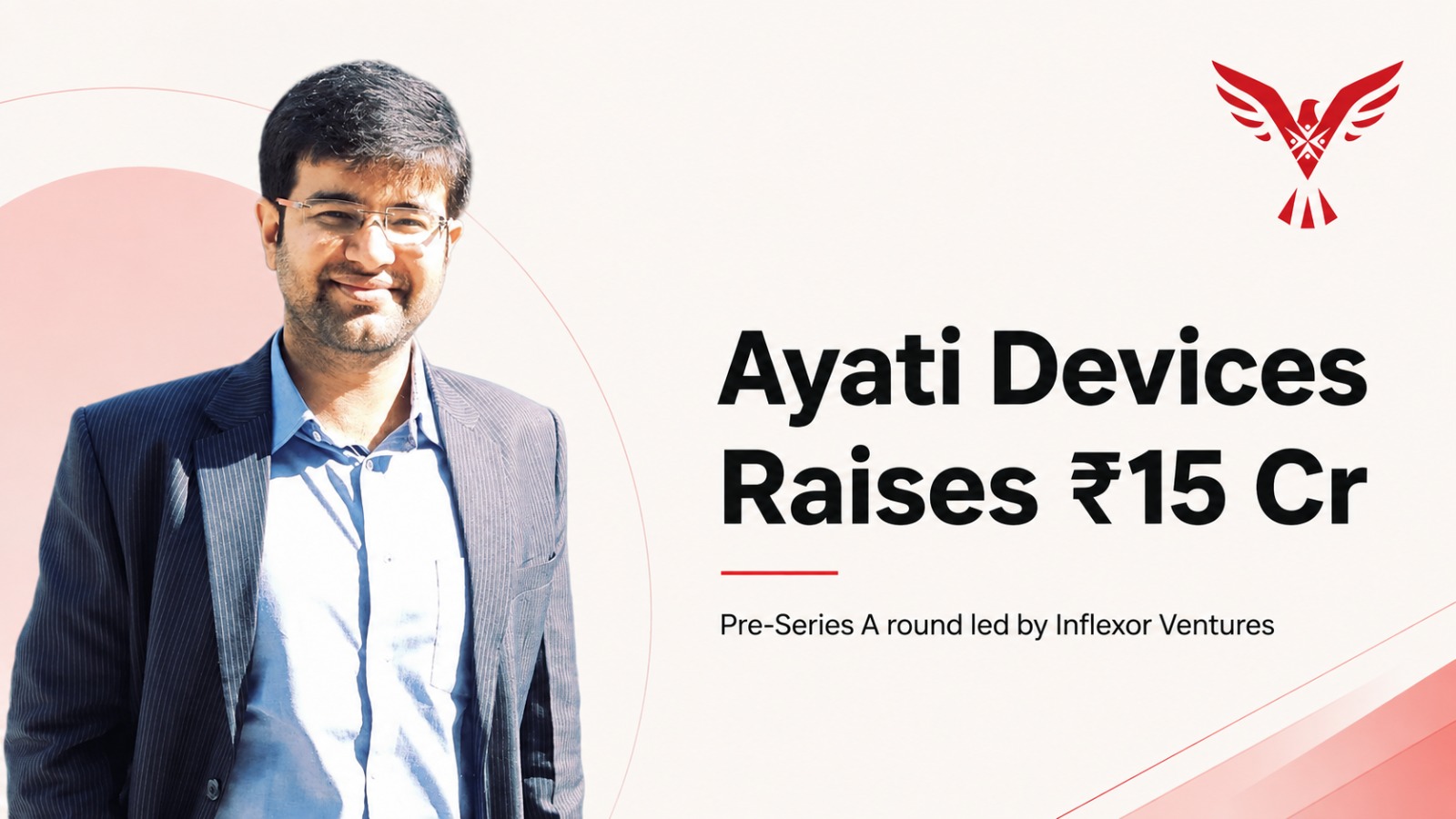
- Ayati Devices has raised ₹ 15 crore in a Pre-Series A round led by Inflexor Ventures.
- The company’s approach centres on portable, point-of-care diagnostic devices that can support early screening outside tertiary hospitals.
- Among its products are Vibrasense, a handheld device measuring vibration perception threshold; Vibrasense+T adding warm and cold perception testing; Vasosense for peripheral artery disease screening; Angiocam for real-time tissue perfusion imaging; and the PODIA Trolley as a pay-per-test screening model.
- A clinical study involving 562 people with type 2 diabetes found a strong positive correlation between Vibrasense measurements and standard biothesiometry, with sensitivity of 87.89% and specificity of 86.81% against the biothesiometer.
Ayati Devices, founded in 2019 and incubated at IIT Bombay's SINE, specializes in diagnostic technologies for diabetic foot complications and peripheral vascular disease. The recent ₹15 crore funding will accelerate commercialization and enhance manufacturing capabilities.1
The company develops portable, point-of-care devices, including Vibrasense, which measures vibration perception to screen for large-fibre peripheral neuropathy. Its product range also includes Vasosense for peripheral artery disease and Angiocam for real-time tissue perfusion imaging.3456789
Ayati's innovative PODIA Trolley offers a pay-per-test model, reducing upfront costs for healthcare providers. The company has deployed over 10,000 devices across 30 countries, facilitating more than 1 million screenings in collaboration with healthcare partners.
Clinical evaluations of Vibrasense show a sensitivity of 87.89% and specificity of 86.81% compared to standard biothesiometer measurements, indicating its effectiveness in diabetic patient assessments. The company aims to leverage this funding to strengthen its research and artificial intelligence investments, further enhancing its diagnostic capabilities.
“The company's portable point-of-care devices, including Vibrasense and Vasosense, target early screening outside tertiary hospitals. A clinical study of 562 diabetes patients showed Vibrasense achieved 87.89% sensitivity against a biothesiometer, supporting its screening accuracy.”
 ascendants.in
/indianstartupnews/media/media_files/2026/07/11/startup-funding-creative-isn-web-2026-07-11-17-58-38.jpeg)
/indianstartupnews/media/agency_attachments/ura2gdmHFSrOsjLBAi1Z.png)