
- NASA's Neil Gehrels Swift Observatory captured a wandering black hole as it devoured a star, marking a significant discovery in the study of black holes.
- UNC-Chapel Hill astronomers have detected one of the universe's rarest black hole events, providing new insights into black hole dynamics.
- Researchers identified TDE 2025abcr, the most distant tidal disruption event from a galaxy's center, occurring approximately 30,000 light-years away.
- Tidal disruption events (TDEs) are rare occurrences, happening on average once every 100,000 years in a given galaxy, and provide critical insights into black hole behavior.
- The black hole responsible for TDE 2025abcr is estimated to be about one million times the mass of the Sun.
- Finding wandering black holes can reveal information about the history and evolution of their host galaxies.
- Researchers propose two possible origins for the wandering black hole: it may be a remnant from a past galaxy merger or propelled outward by gravitational interactions.
Astronomers at the University of North Carolina at Chapel Hill have observed a rare wandering black hole, TDE 2025abcr, located approximately 30,000 light-years from its galaxy's center. This event, the most distant tidal disruption event (TDE) ever recorded, challenges the conventional understanding of black hole locations.35
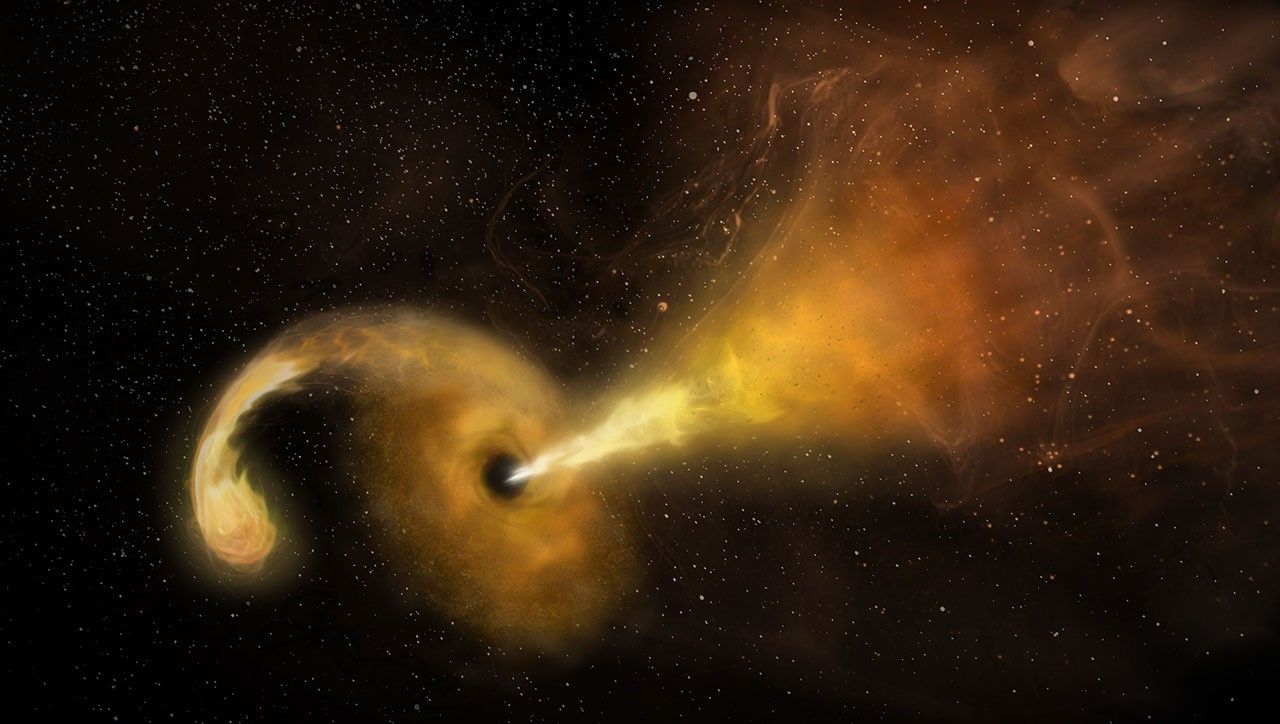
The black hole, estimated to be about one million times the mass of the Sun, was identified when it devoured a star, creating a powerful cosmic flare. "Almost every tidal disruption event we've ever observed has occurred at the center of a galaxy, right where we expect the biggest black holes to be," said Jonathan Carney, co-author of the study.
The discovery was made possible through a machine learning algorithm that flagged the event in data from the Zwicky Transient Facility (ZTF) in California. Follow-up observations confirmed the nature of the event using the 4.1-meter Southern Astrophysical Research (SOAR) Telescope in Chile.

TDEs are rare occurrences, happening on average once every 100,000 years in a given galaxy. The unusual distance of TDE 2025abcr suggests that the black hole is not anchored at the galaxy's nucleus but is instead wandering through it. Researchers propose two possible origins for this wandering black hole: it may be a remnant from a past galaxy merger or propelled outward by gravitational interactions with other massive black holes.7
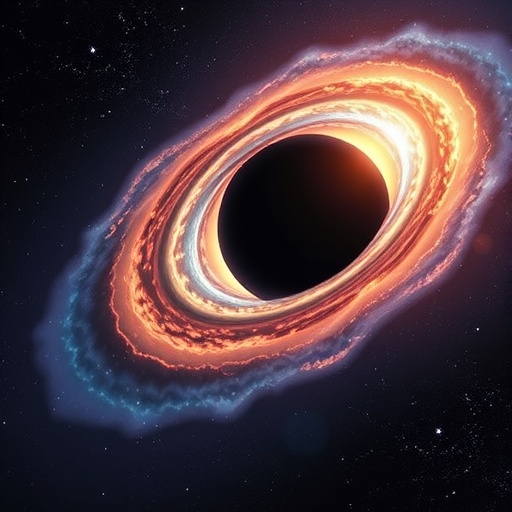
This finding opens new avenues for understanding black hole formation and migration, with future observatories expected to discover hundreds or even thousands of TDEs at greater distances. The study is published in The Astrophysical Journal Letters.
“The tidal disruption event, TDE 2025abcr, is the most distant ever observed, occurring 30,000 light-years from its galaxy's center. Researchers suggest this wandering black hole may have originated from a past galaxy merger or been propelled outward by gravitational interactions with other massive black holes.”
 Bioengineer.org



