
- Euclid telescope has discovered 31 ancient quasars from the early universe, providing new insights into the formation of supermassive black holes.
- The most distant quasar in this group, EUCL J172902.75+641018.1, has a redshift of 7.77, making it the earliest quasar ever observed.
- These quasars were already shining with the light of a trillion suns when the universe was only about 670 million years old.
- Euclid's findings challenge existing theories about how supermassive black holes could grow so quickly after the Big Bang.
- Fourteen of the newly discovered quasars have redshifts of 7 or higher, more than doubling the previously known number in that range.
Astronomers have identified 31 ancient quasars, providing unprecedented insight into the universe's early supermassive black holes. These quasars, observed when the universe was only about 670 million years old, challenge existing theories on black hole formation and growth.13
The findings, detailed in a paper by D. Yang and over 200 colleagues, reveal that the quasars have redshifts between 6.6 and 7.8, with the most distant, EUCL J172902.75+641018.1, at redshift 7.77. "These monsters — weighing billions of times the mass of our sun — somehow already existed when the universe was in its infancy," said a researcher, highlighting the mystery of their rapid growth.2
The discovery, made using data from the Euclid Wide Survey, more than doubles the previously known number of quasars at redshift 7 or higher, pushing into fainter territory than earlier searches. “Euclid is a true game-changer,” said Daming, emphasizing its efficiency in capturing fainter light across vast areas of the sky.5
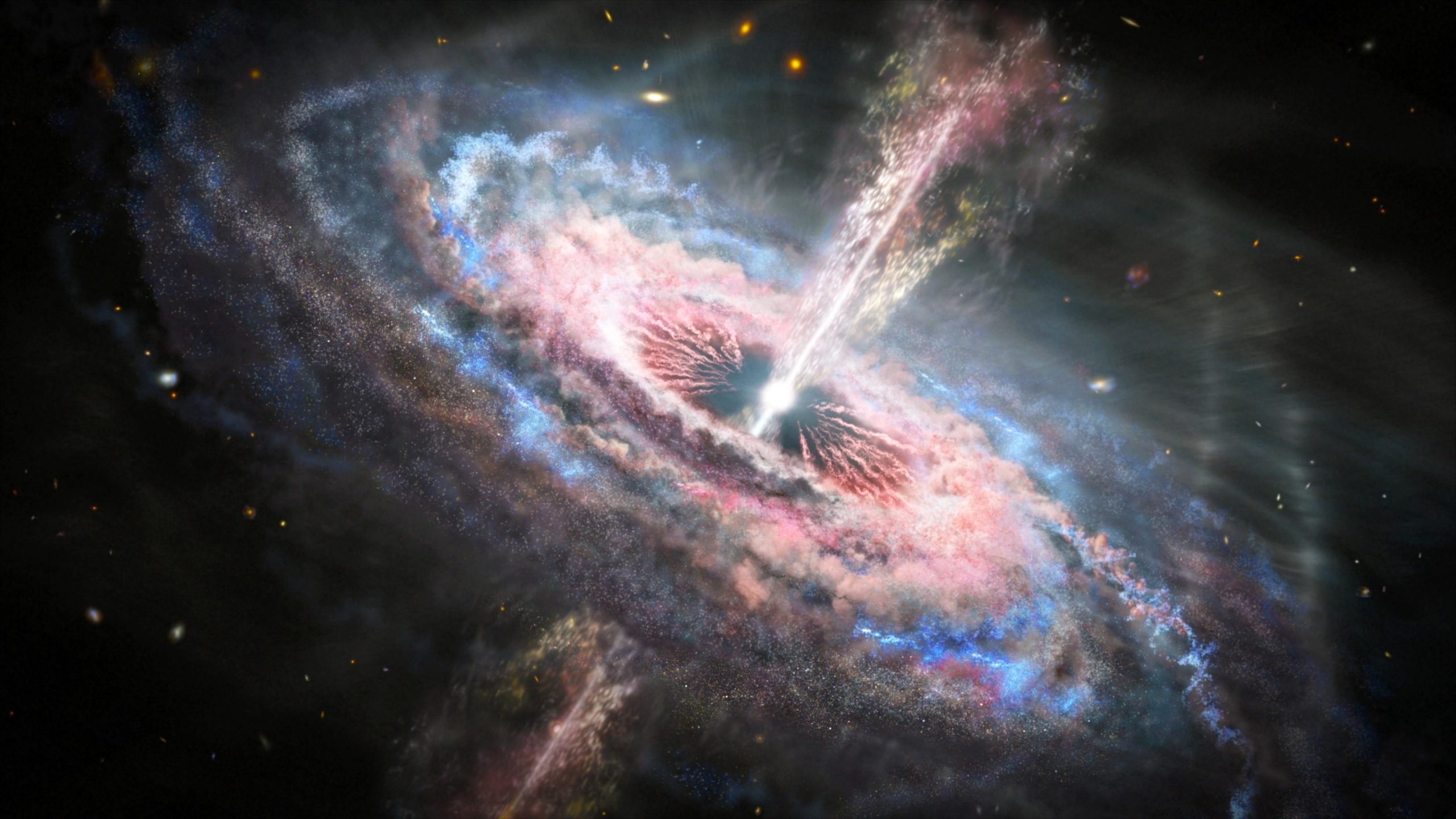
The existence of these quasars raises questions about how supermassive black holes formed so quickly after the Big Bang. “Every step further back in time makes the puzzle more perplexing: How did the Universe produce supermassive black holes so quickly?” remarked Hennawi, underscoring the ongoing challenges in understanding black hole evolution.
The research indicates that these quasars were already shining with the light of a trillion suns, suggesting that massive black holes were not rare during this early cosmic epoch. “These extraordinary objects were already blazing with the light of a trillion suns when the universe was only about 670 million years old,” the researchers noted, further complicating the narrative of black hole formation.
“The most distant quasar, EUCL J172902.75+641018.1 at redshift 7.77, is the farthest ever observed, seen as it was 670 million years after the Big Bang. Euclid has already more than doubled the previously known number of redshift 7+ quasars in a single year, a pace that previously took over a decade.”
 ScienceBlog.com



