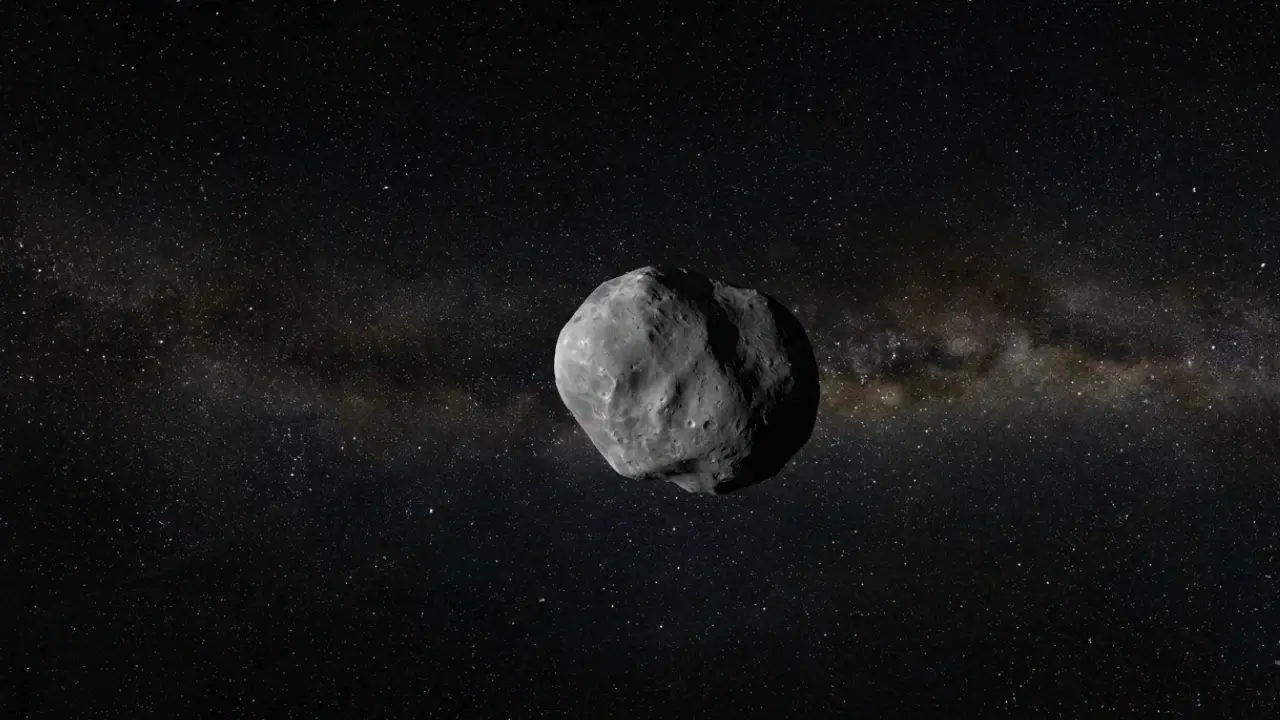
- 2026 QQ8 entered Earth's orbit in late April 2026.
- Hungarian astronomer Krisztián Sárneczky first spotted 2026 QQ8 on August 20, 2026, according to a statement from the Minor Planet Center on October 29, 2026.
- Minor Planet Center confirmed its natural origin as an asteroid on October 29, 2026.
- 2026 QQ8 is expected to remain gravitationally bound to Earth until December 2026, then escape.
- The mini-moon is extremely small, measuring approximately one metre across, and poses no threat to Earth.
- Astronomers initially debated whether 2026 QQ8 was a natural asteroid or a piece of human-made space debris.
- In the case of 2026 QQ8, the space rock crossed Earth's Hill sphere in April, allowing it to be captured by Earth's gravity.
- Orbital calculations suggest it passes relatively close to our planet approximately once every 10 years.

Earth has picked up a temporary visitor. A tiny asteroid, named 2026 QQ8, has been captured by our planet's gravity and is currently orbiting Earth as a mini-moon. The space rock is expected to remain with us until December 2026, before escaping Earth's gravitational hold and continuing its journey around the Sun.14
Hungarian astronomer Krisztián Sárneczky first spotted it on August 20, 2026, but it is believed to have entered Earth's gravitational neighborhood much earlier, around late April. Initially thought to be space debris, follow-up observations confirmed its natural origin as a small asteroid, measuring approximately one meter across.23
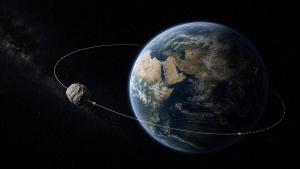
The asteroid follows a kidney-shaped loop around Earth, coming within about 0.0038 astronomical units (AU), roughly 1.5 times the distance between Earth and the Moon. It poses no threat; if it were to enter the atmosphere, its small size means it would burn up.
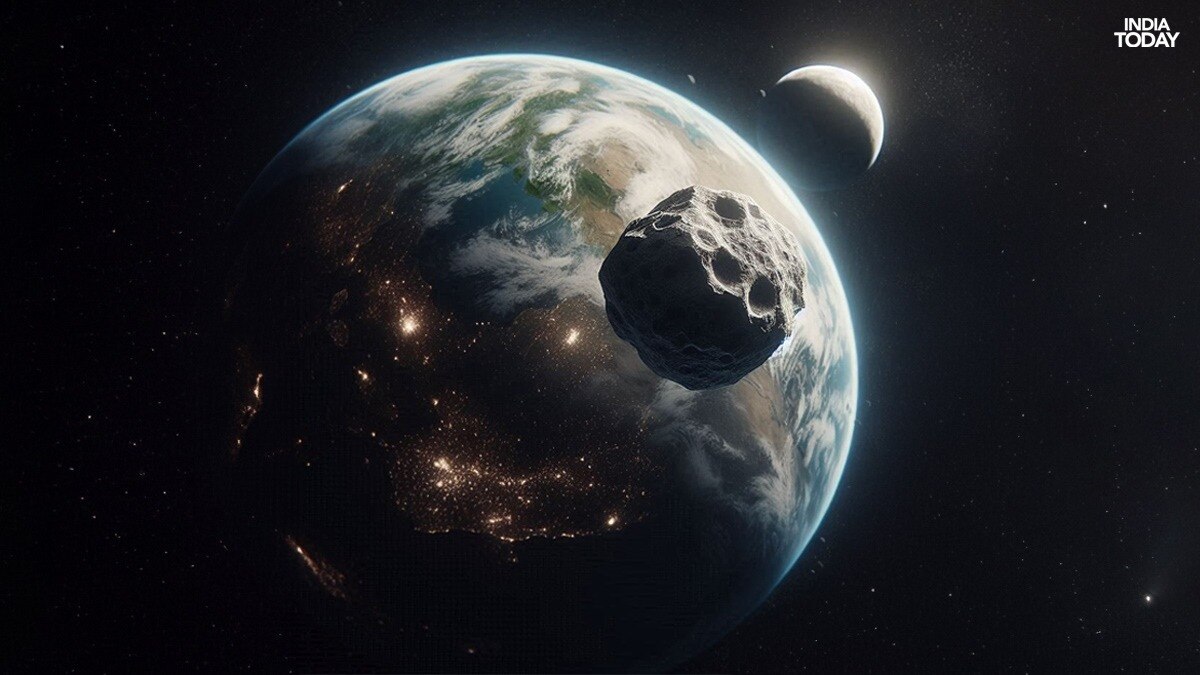
Orbital data indicates that 2026 QQ8 makes close approaches to Earth roughly every 10 years. It approached in 1965 but did not become a mini-moon then, and its next close encounter is predicted for 2058. This time, however, it managed to breach the Hill sphere, the region where Earth's gravity dominates.7
Earth has hosted other temporary visitors, including 2020 SO, 2020 CD3, and 2024 PT5, as well as quasi-moons like 2025 PN7, which orbit the Sun alongside our planet rather than being gravitationally bound to it.
“The object, about 1 metre across, follows a kidney-shaped loop and comes within 0.0038 AU of Earth, 1.5 times the Moon's distance. It poses no threat; if it entered the atmosphere, it would burn up, and it is not expected to be captured again in 2058.”
GK Today