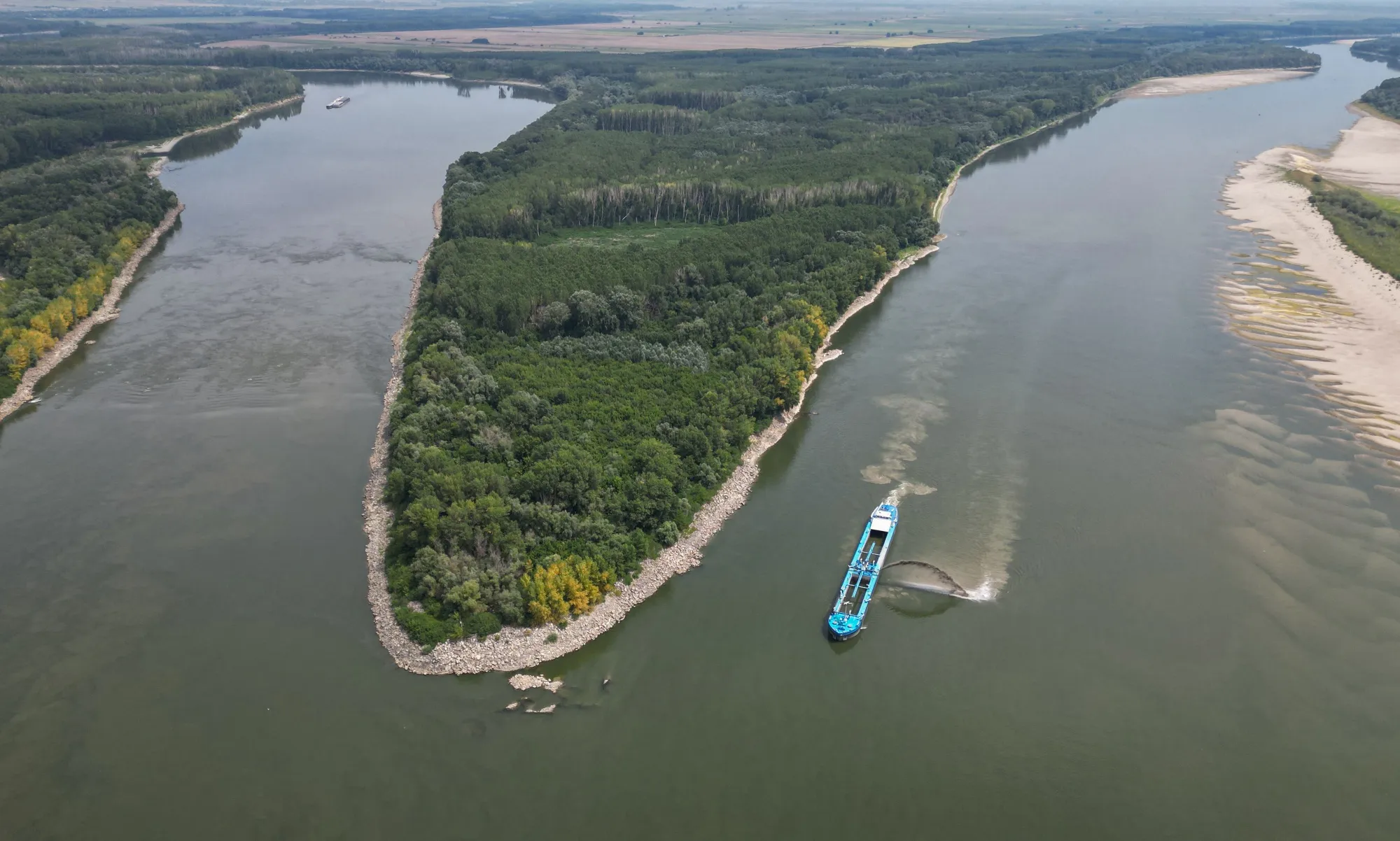
- The Danube has hit record-low water levels, disrupting trade and tourist cruises along its banks from Bratislava to Belgrade.
- As the water levels drop, sunken Nazi warships from World War II are emerging, with dozens of German battleships visible in Serbia.
- These ships belonged to Germany's Black Sea fleet and were deliberately sunk near the end of the conflict as Soviet forces advanced.
- In the Danube gorge, near the Serbian port of Prahovo, a rusty hull and broken mast of a sunken ship are now visible.
- Historians estimate that up to 200 German warships were scuttled in September 1944 near Prahovo as they came under Soviet fire.
- The low water levels are attributed to this summer's dry weather in Europe, prompting engineering efforts to raise the water level.
- In Romania, authorities are constructing a temporary dyke to divert water to the Cernavoda nuclear power plant, which relies on the Danube for cooling.
- The Paks nuclear plant in Hungary is also facing critical water level issues, with three of its four reactors shut down due to low water levels.
- Governments in both Romania and Hungary have urged households and businesses to limit power use to mitigate the impact of the crisis.
As the Danube River's water levels plummet to record lows due to an ongoing drought, historical Nazi warships from World War II have emerged, disrupting trade and tourism along its banks.1
The river's decline has forced authorities in Romania and Hungary to take urgent action to ensure the operation of nuclear power plants that rely on the Danube for cooling.
In Romania, engineers are constructing a temporary dyke to divert water towards the Cernavoda nuclear plant, which has already seen one of its reactors shut down due to low water levels.78
“Around 1.30am, we were only a few millimeters away from the full powering down of the Paks nuclear plant,” said Hungarian Prime Minister Peter Magyar, highlighting the critical nature of the situation.9
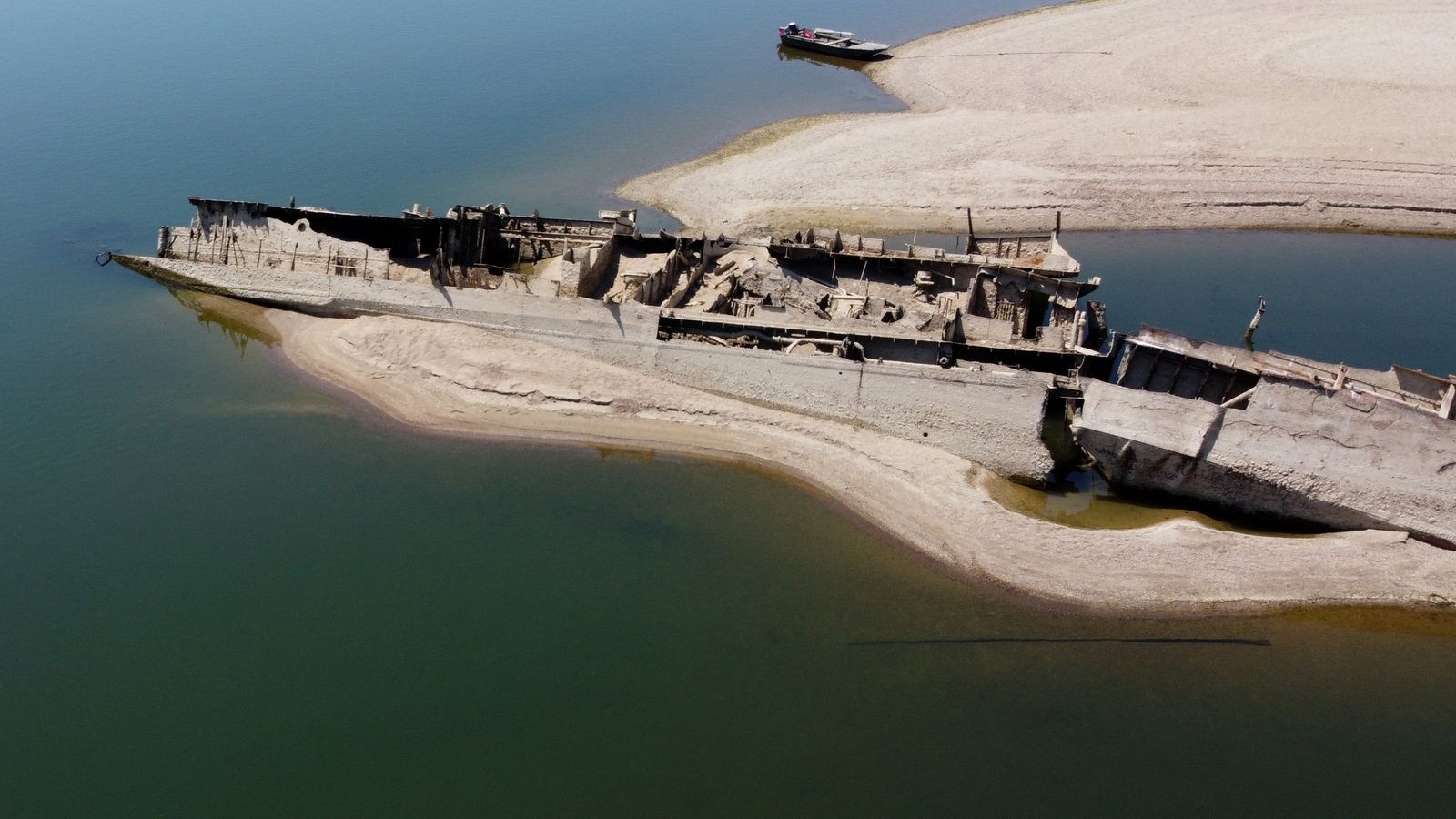
The Danube's low levels have also revealed dozens of German battleships, some still armed, that were scuttled in 1944 as Soviet forces advanced.
Historians estimate that up to 200 warships were sunk near Prahovo, Serbia, as the Nazis retreated.56
As the drought continues, both governments have urged citizens and businesses to limit power consumption, with over 300 businesses voluntarily reducing usage to alleviate pressure on the national grid.
“This week will be critical,” Magyar warned, as the region grapples with the dual challenges of energy supply and historical preservation.
“Romania's Cernavoda and Hungary's Paks nuclear plants rely on Danube water for cooling; one Cernavoda reactor has shut and Paks is running at just over 10% capacity. Magyar said Paks came within a few millimeters of full shutdown before the level rose 1.5cm, and warned this week will be critical.”





