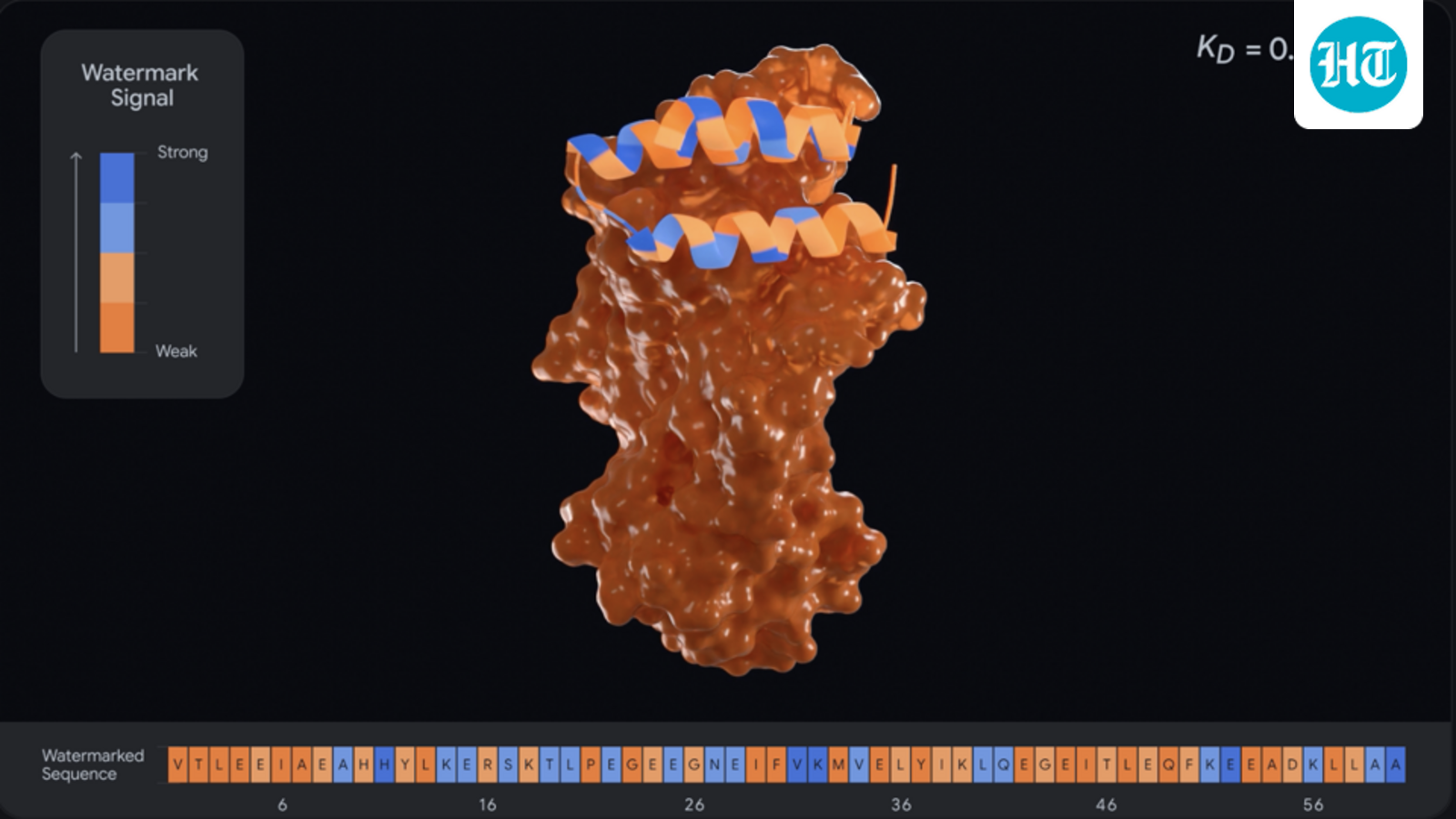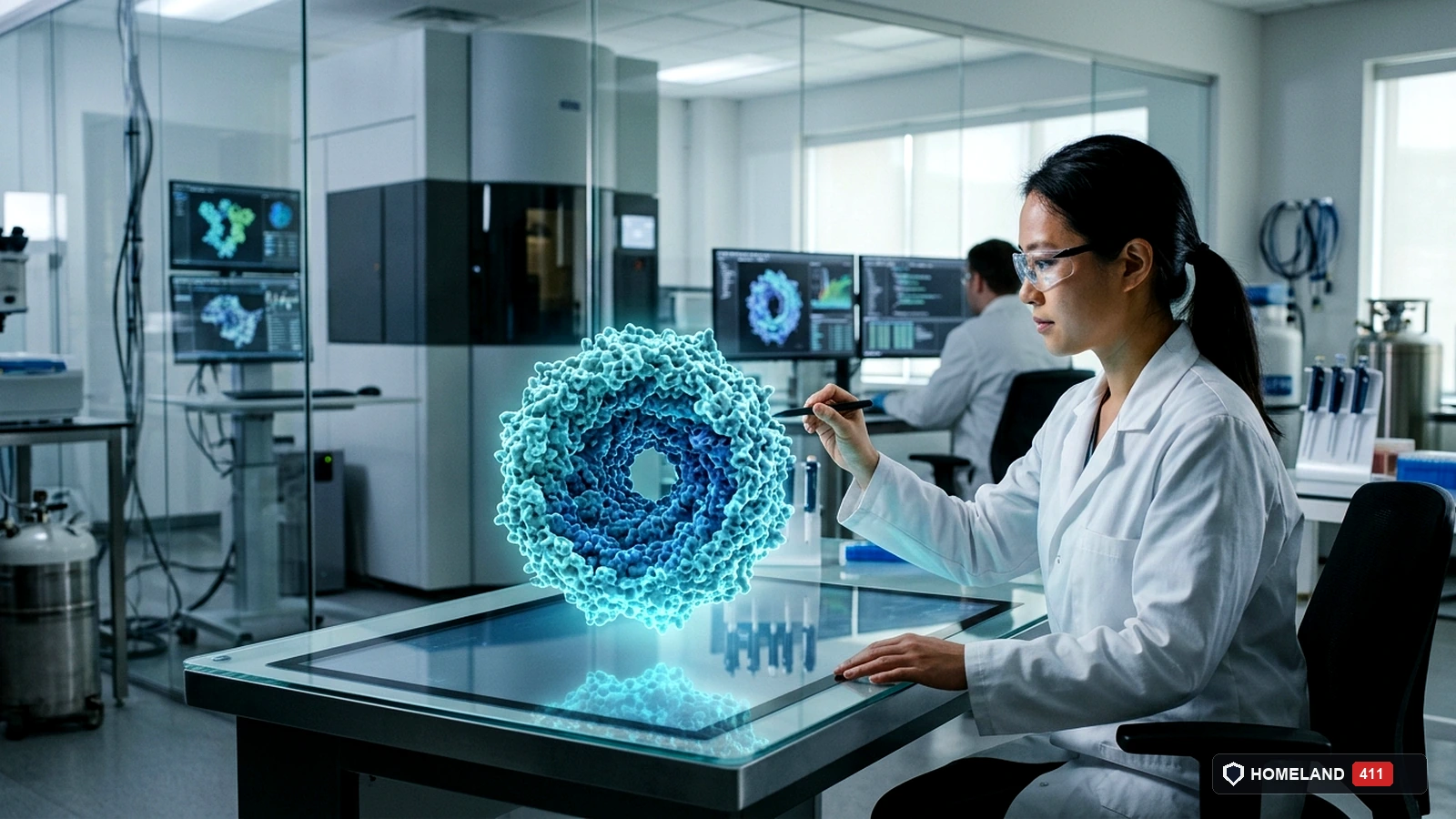
- Anthropic announced Wednesday that its internal biology research team mapped the first three-dimensional structure of a bacterial vault particle. This breakthrough answers a forty-year structural biology mystery by showing that hollow protein barrels exist outside eukaryotes.
- Vault particles were first identified in 1986 in eukaryotic liver tissue by Leonard Rome and Nancy Kedersha, representing the largest non-viral protein complexes in living cells.
- Anthropic's team scanned 15 billion predicted protein sequences with Claude, identifying potential vault proteins across 29 bacterial groups and 4 archaea groups.
- The team selected 44 candidates for lab testing, with 7 of 15 successfully producing proteins that assembled into vault-like particles.
- Cryo-EM confirmed structures of four candidates, including the phage-derived L05 protein.
- The L05 protein assembled into a 96-subunit barrel, measuring 54 nm long and 45 nm wide, with 25% more internal volume than mammalian vaults.
- Atomic coordinates for the bacteriophage L05 vault will be submitted to the open-access bioRxiv preprint server and the Worldwide Protein Data Bank by mid-November 2026.
- Despite their enormous size and widespread presence in complex organisms, researchers still cannot explain their biological purpose.
- Researchers have proposed roles for vault particles in cellular transport, drug resistance, and immune defense, but experiments have yet to establish any of these functions conclusively.
- The discovery of the bacterial vault structure could help scientists trace their evolutionary history and understand their role in living cells.
Anthropic's Claude AI has made a groundbreaking discovery by mapping the first three-dimensional structure of a bacterial vault particle, a feat that has eluded scientists for nearly four decades. This structure, derived from a bacteriophage protein, consists of 96 identical protein subunits and weighs approximately 9.5 megadaltons.1
First identified in 1986, vault particles are the largest non-viral protein complexes found in living cells, yet their biological purpose remains largely unknown. Researchers have proposed various roles for these structures, including cellular transport, drug resistance, and immune defense. Despite extensive biochemical studies, the physiological function and evolutionary origins of vaults have remained a mystery.289
Using Claude, researchers scanned 15 billion predicted protein sequences to identify potential vault proteins across 29 major bacterial groups and four groups of archaea. This innovative approach allowed them to narrow down 44 candidates for laboratory testing, ultimately confirming that the bacteriophage L05 protein self-assembles into a symmetrical nanoscale capsule within *Escherichia coli* cells.34
The resulting vault structure measures approximately 54 nanometers long and 45 nanometers wide, and it encloses about 25 percent more volume than its mammalian counterparts. This expanded internal lumen capacity could facilitate the delivery of therapeutic enzymes and synthetic molecular cargo, paving the way for future applications in drug delivery systems.
Anthropic plans to submit the atomic coordinates of the L05 vault to the open-access bioRxiv preprint server and the Worldwide Protein Data Bank by mid-November 2026, with industrial biomanufacturing trials set to begin in early 2027.7
“The L05 vault, derived from a bacteriophage, measures 54 nm long and 45 nm wide, enclosing 25% more volume than mammalian vaults. Researchers also engineered a larger variant with 20% more volume, suggesting protein duplication drove vault size evolution.”