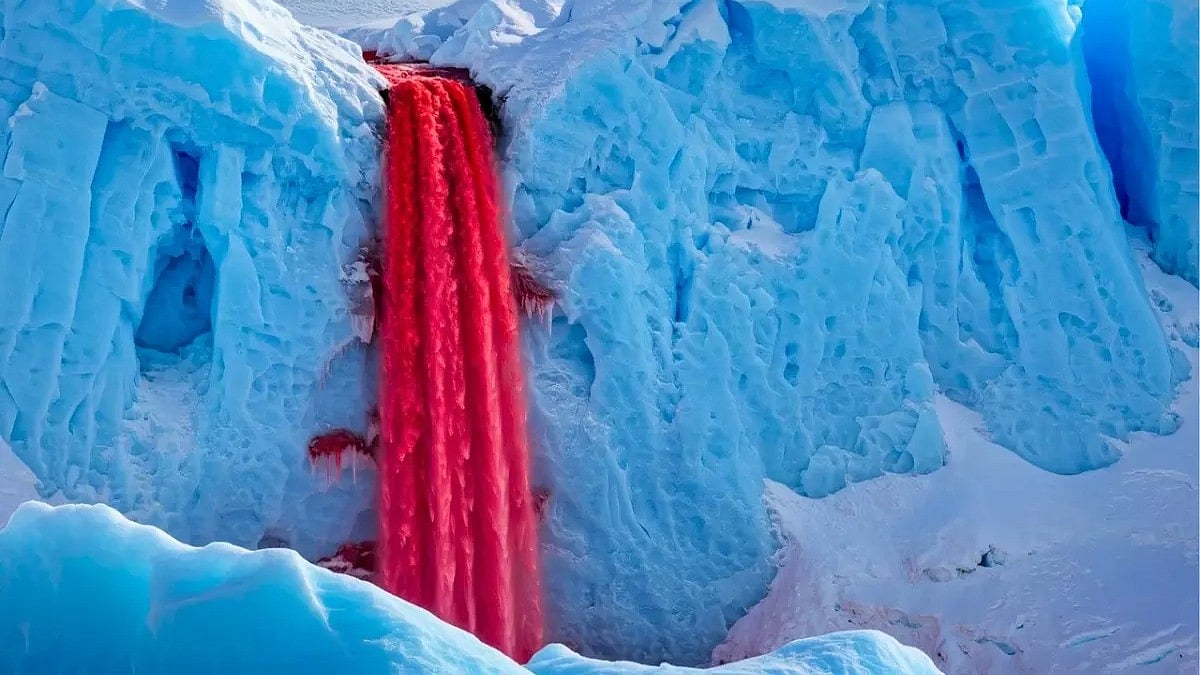
- Blood Falls is a dark red waterfall flowing out of the Taylor Glacier to Lake Bonney, located in the McMurdo Dry Valleys of Antarctica.
- Discovered in 1911 by Griffith Taylor, the rust-coloured waters had mystified the scientific community for over a century.
- Scientists have proven that this fall does not consist of blood; rather, it is created by the flow of iron-containing brine found under Taylor Glacier.
- In 2017, scientists from the University of Alaska Fairbanks employed radar imaging to analyze the glacier and identified a network of channels underneath it.
- A 2018 discharge was recorded and matched to a measurable drop of about 15 millimetres in the glacier's surface.
- A 2026 study confirmed the link between brine discharge and glacier movement, suggesting subtle shifts within the glacier reduce pressure.
- Decades of scientific research have proven that the waterfall is actually caused by iron-rich brine emerging from beneath the glacier.
- The water begins as an ancient, hypersaline brine trapped beneath nearly 400 metres of ice, originating from seawater sealed beneath the advancing glacier around 1.5 million years ago.
- When the iron-rich water reaches the surface and comes into contact with oxygen, the dissolved iron rapidly oxidises, producing the deep reddish colour that gives Blood Falls its name.
- Previous radar surveys revealed a network of pressurised channels carrying the brine through the glacier, explaining how liquid water can move inside one of the coldest known glaciers on Earth.
Antarctica's Blood Falls, flowing from Taylor Glacier, has puzzled scientists since its discovery in 1911. Recent research reveals that the vibrant red color is due to iron-rich brine, not blood. The brine, trapped beneath nearly 400 meters of ice, originates from ancient seawater sealed by the advancing glacier around 1.5 million years ago.123789
When the brine reaches the surface, it oxidizes upon contact with oxygen, producing the deep reddish hue. “When the iron-rich water reaches the surface and comes into contact with oxygen, the dissolved iron rapidly oxidises,” explains a researcher. The 2026 study correlates a Blood Falls discharge with a 15 millimeter drop in the glacier's surface, indicating that subtle shifts within the glacier can reduce pressure, allowing the brine to flow through hidden channels.6
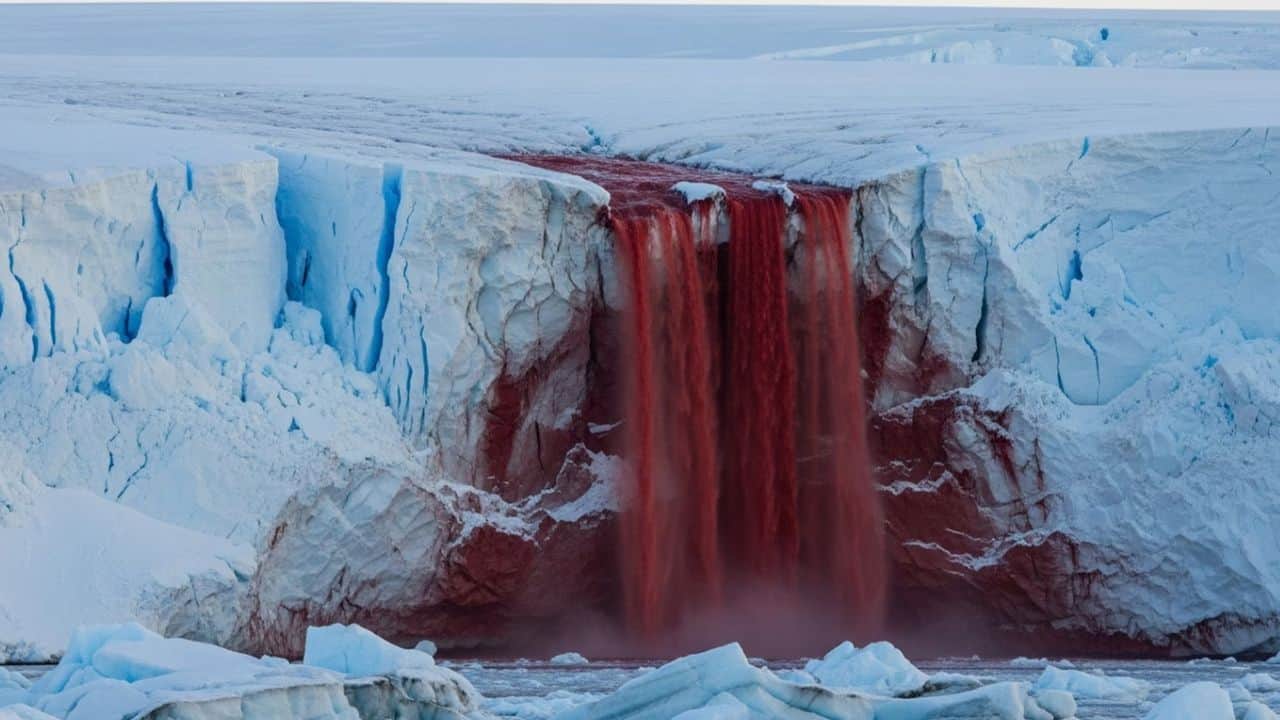
Previous radar surveys had already identified a network of pressurized channels within the glacier, explaining how liquid water can exist in such extreme cold. “Scientists say the latest observations strengthen that model by linking the flow directly to glacier movement,” highlighting the dynamic nature of this icy environment.
Beyond its striking appearance, Blood Falls is of great interest to researchers studying extremophiles—microbes that thrive without sunlight or oxygen, relying on chemical reactions involving iron and sulfur. “Studying these organisms could improve understanding of how life survives in extreme environments on Earth and possibly beneath the icy surfaces of worlds such as Mars or Jupiter's moon Europa,” scientists suggest.
“The brine hosts ancient microbes surviving without sunlight or oxygen, relying on iron and sulfur reactions. Studying these organisms could help scientists search for life on Mars or Jupiter's moon Europa, where similar brine conditions may exist.”




