The Independent
- The Prime Minister has made his choice: social care. He has conceded that the politicians of his generation are guilty of a 'major dereliction of duty' in this field 'and that their collective performance is 'shameful'.
- The Prime Minister is right to try and quicken the pace, and to bring forward the work of the Casey Commission that Sir Keir Starmer set up, so that a framework for reform can be achieved much more quickly.
- Kemi Badenoch has demanded reform be 'fair to those who have made provisions and saved up over the course of their lives'.
- The TUC favours levies on wealth and assets, while Nigel Farage has dismissed the whole project.
- Scotland has developed its own model of reform, separating publicly funded nursing care from the cost of accommodation, under a means-tested system.
- The idea was to cap any costs borne by an individual over their lifetime for care to around £35,000 (equivalent to £55,000 today).
- In addition, the state would be liable for 'extreme' costs over that cap.
- For people in residential care, about £10,000 a year would be charged (up to the cap); for poorer people in care, such fees would be waived under a means-test.
- The cost to the taxpayer would be in the low-single billions, rather than the £18bn that a copy of the NHS would cost.
- Since the Royal Commission on Care was set up in 1999, there have been and sets of recommendations, which have invariably been weakened or abandoned in the face of backlash against a 'death tax' and 'dementia tax'.
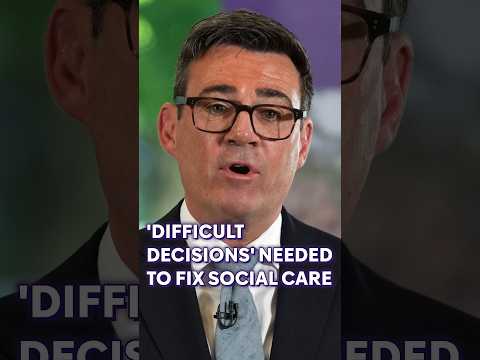
Andy Burnham has called for a consensus on social care reform in the UK, emphasizing the need for immediate action as Prime Minister acknowledges a 'major dereliction of duty' by previous administrations. Since the establishment of the Royal Commission on Care in 1999, numerous recommendations have been proposed but often weakened or abandoned due to public backlash against terms like 'death tax' and 'dementia tax'.121112
Burnham's appeal comes as the government seeks to expedite the Casey Commission work, aiming for a quicker framework for reform. Kemi Badenoch has also stressed the importance of ensuring reforms are fair to those who have saved for their care. Meanwhile, Nigel Farage has dismissed the reform efforts, while the TUC advocates for levies on wealth and assets.345
In Scotland, a different model has emerged, separating publicly funded nursing care from accommodation costs under a means-tested system. This model proposes a cap on individual lifetime care costs at around £35,000, with the state covering extreme costs beyond this cap. For residential care, annual charges would be approximately £10,000, waived for those with lower means. The overall taxpayer cost is projected to be in the low-single billions, significantly less than the £18 billion that a full NHS-style system would entail.679
“The Prime Minister has admitted that past politicians have failed in social care, describing their performance as 'shameful.' Meanwhile, Kemi Badenoch emphasizes the need for reforms that are fair to those who have saved for their care, highlighting the ongoing debate over funding models.”