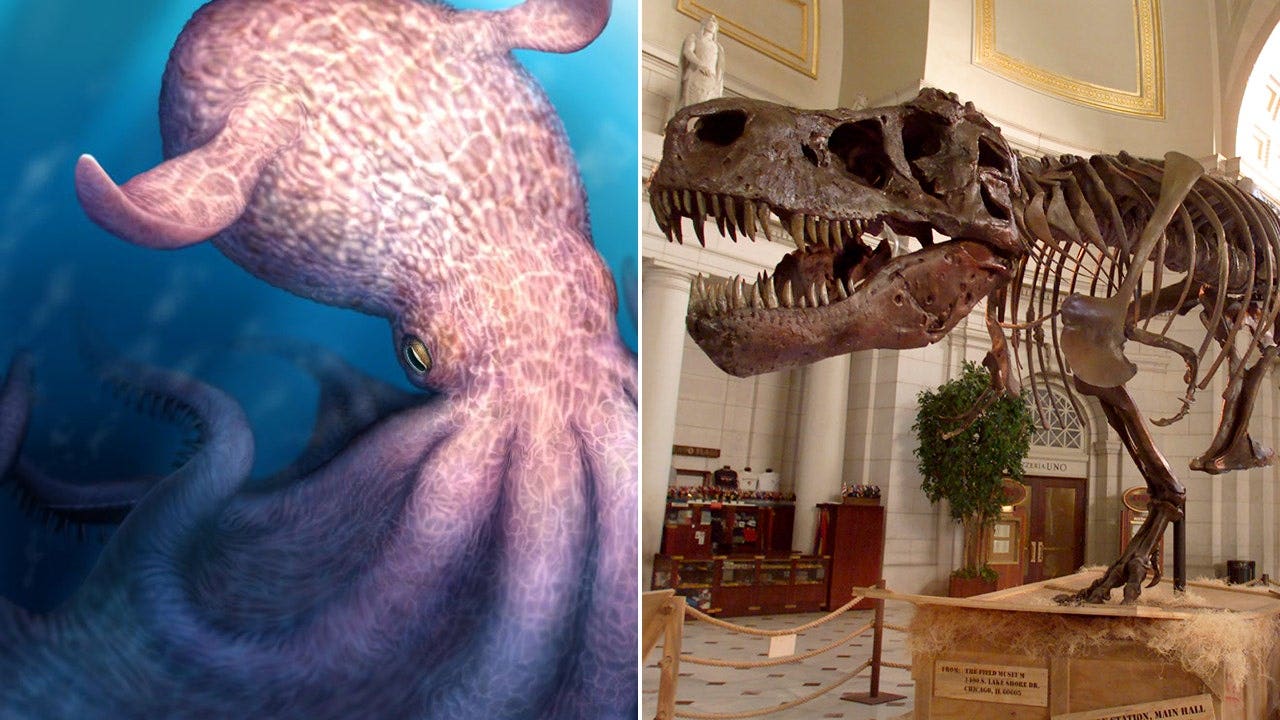
Ancient octopuses reached 19m and functioned as apex predators hunting dinosaurs 100 million years ago, reveals new research.

Research indicates large, Kraken-like octopuses thrived in late Cretaceous seas, competing with other giant predators. Fossil evidence shows they could grow nearly 20 meters long, suggesting they played a significant role in marine ecosystems.

Sources:
NPRFox NewsYahoo
Trending 1h ago
Tab background
Sources: Fox NewsNPRYahoo
Ancient octopuses have been redefined as formidable apex predators that roamed the seas during the Late Cretaceous period, about 100 million years ago. According to a study published in the journal Science, fossilized jaws illustrate these ancient cephalopods could reach lengths of up to 19 meters, significantly larger than many contemporary marine predators.
Research led by Professor Yasuhiro Iba from Hokkaido University uncovered evidence of two species capable of such sizes, Nanaimoteuthis jeletzkyi and Nanaimoteuthis haggarti. Iba noted, "Our findings suggest that the earliest octopuses were gigantic predators that occupied the top of the marine food chain in the Cretaceous."
These colossal creatures not only hunted but actively competed with formidable marine reptiles like mosasaurs, flipping the script on their role within the ecosystem. Prior beliefs held that finned octopuses appeared much later. However, the fossil record shows that well-preserved jaws indicate this apex predator status emerged much earlier: "This study provides the first direct evidence that invertebrates could evolve into giant, intelligent apex predators," Iba further stated.
The analysis of their jaw structure reveals intriguing wear patterns, suggesting these creatures deployed powerful beaks to dismantle shellfish with strength exceeding that of modern cephalopods.
The implications of this research reshape our understanding of predator dynamics in ancient oceans, emphasizing competition rather than mere co-existence among marine giants.
Sources: NPRYahoo
Research reveals that ancient octopuses, reaching lengths of up to 19 meters, functioned as apex predators during the Late Cretaceous period, hunting dinosaurs and competing with other sea giants such as mosasaurs. This study uncovers fossilized jaws indicating these colossal creatures thrived 100 million years ago.
Section 1 background
The Headline

Giant octopuses were apex predators 100M years ago

Key Facts
  • Giant Kraken-like octopuses roamed the oceans 100 million years ago and were large enough to prey on dinosaurs, revealing their role as apex predators of the time.NPRYahoo
  • According to research, the ancient octopuses could reach lengths of up to 19 meters (approximately 60 feet), making them larger than a school bus and capable of competing with other large predators.NPRYahoo
  • The research, published in the journal Science, identified two species of these giant octopuses, Nanaimoteuthis jeletzkyi and Nanaimoteuthis haggarti, both of which were active predators that used powerful jaws to crush prey.Yahoo
  • Fossilized jaw bones analyzed in the study provided insights into the feeding habits of these octopuses, indicating that they used powerful beaks to dismantle their prey.Yahoo

Related Videos

Meet the 19-metre octopus that prowled the ancient seas | BBC News
octopusancient oceansBBC Newsmarine biologypaleontology
Section 2 background
Background Context

Context on ancient octopus evolution

Key Facts
  • Professor Yasuhiro Iba of Hokkaido University stated that these octopuses existed at the top of the marine food chain during the Cretaceous.Fox News
  • The study provides the first direct evidence of how invertebrates could evolve into giant apex predators within ecosystems initially dominated by vertebrates.Fox News
Article not found
CuriousCats.ai

Article

Source Citations