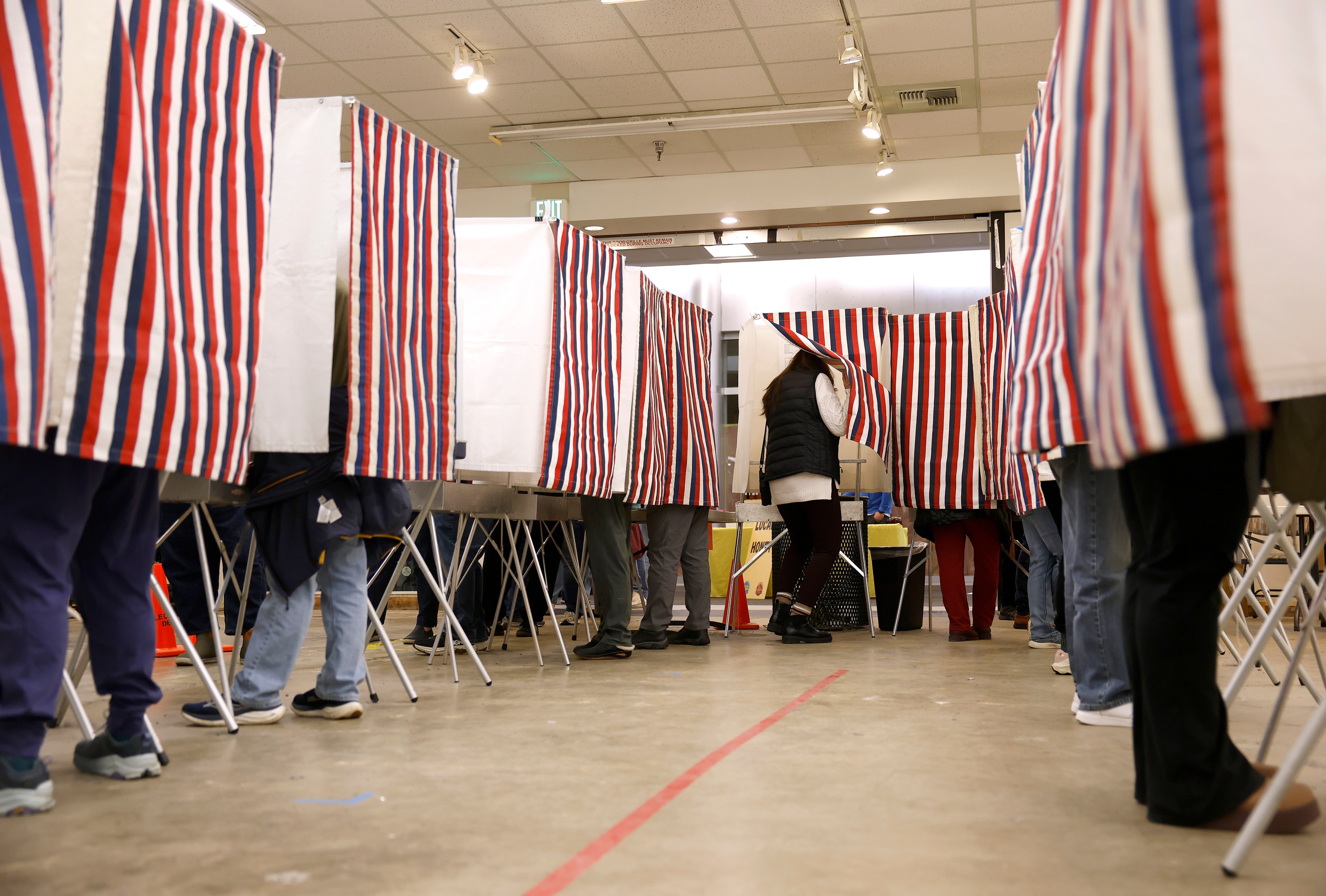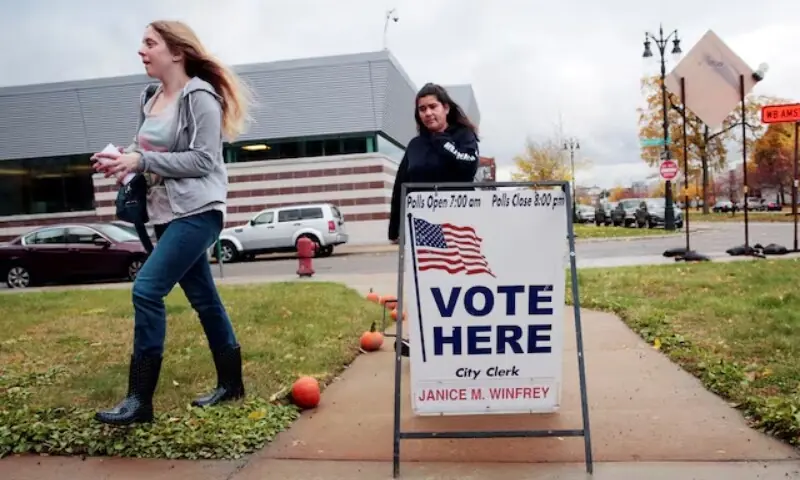
- Americans voted on Tuesday in a midterm election seen as a national referendum on Donald Trump, with the outcome potentially giving Democrats control of Congress.
- Polls project Democrats to win a House majority and possibly the Senate, fueled by voter resentment over the president, high energy costs, and the Iran conflict.
- The Senate battlefield has expanded into GOP strongholds, with Republicans holding a 53-47 majority but facing challenges in states like Kansas, Texas, Iowa, Ohio, and Alaska.
- The election saw record early voting and record spending, with over $11 billion in political ads and significant Republican funding from Elon Musk; legal disputes over mail-in ballots and potential certification challenges have also arisen.
- Recent forecasts predict Democrats taking the House with 241 seats and a narrow Senate majority of 52-48.
Americans voted on Tuesday in a midterm election viewed as a referendum on Donald Trump, with control of Congress at stake. Polls suggest Democrats could gain a majority in the House and possibly the Senate, driven by voter discontent over economic issues and Trump's policies.128
The election features all 435 House seats and 35 of the 100 Senate seats up for grabs, alongside governorships in 36 states. Democrats need only three House gains and a net four seats in the Senate to take control. Currently, Republicans hold a 53-47 Senate majority, but the battleground has expanded into traditionally conservative states like Kansas, Texas, Iowa, Ohio, and Alaska.3
Decision Desk HQ's final forecast projected 241 House seats for Democrats against 194 for Republicans, and a narrower 52-48 Democratic Senate majority. Voter sentiment is heavily influenced by rising costs of living and gas prices, as expressed by Donta Comer, a 38-year-old project manager: "It needs to change for the everyday person and I'm an everyday person."
The campaign has attracted over $11 billion in political advertising, with significant contributions from Trump ally Elon Musk. Additionally, the Justice Department has attempted to block certification of Alaska's Senate race, although a court ruled against this effort. The Supreme Court also rejected a bid to set aside mail-in ballots of over 20,000 people in California.4567
“All 435 House seats and 35 Senate seats are up, with Democrats needing only three House gains and four net Senate seats to flip both chambers. Record spending topped $11 billion, and the Supreme Court rejected a bid to discard over 20,000 California mail-in ballots.”