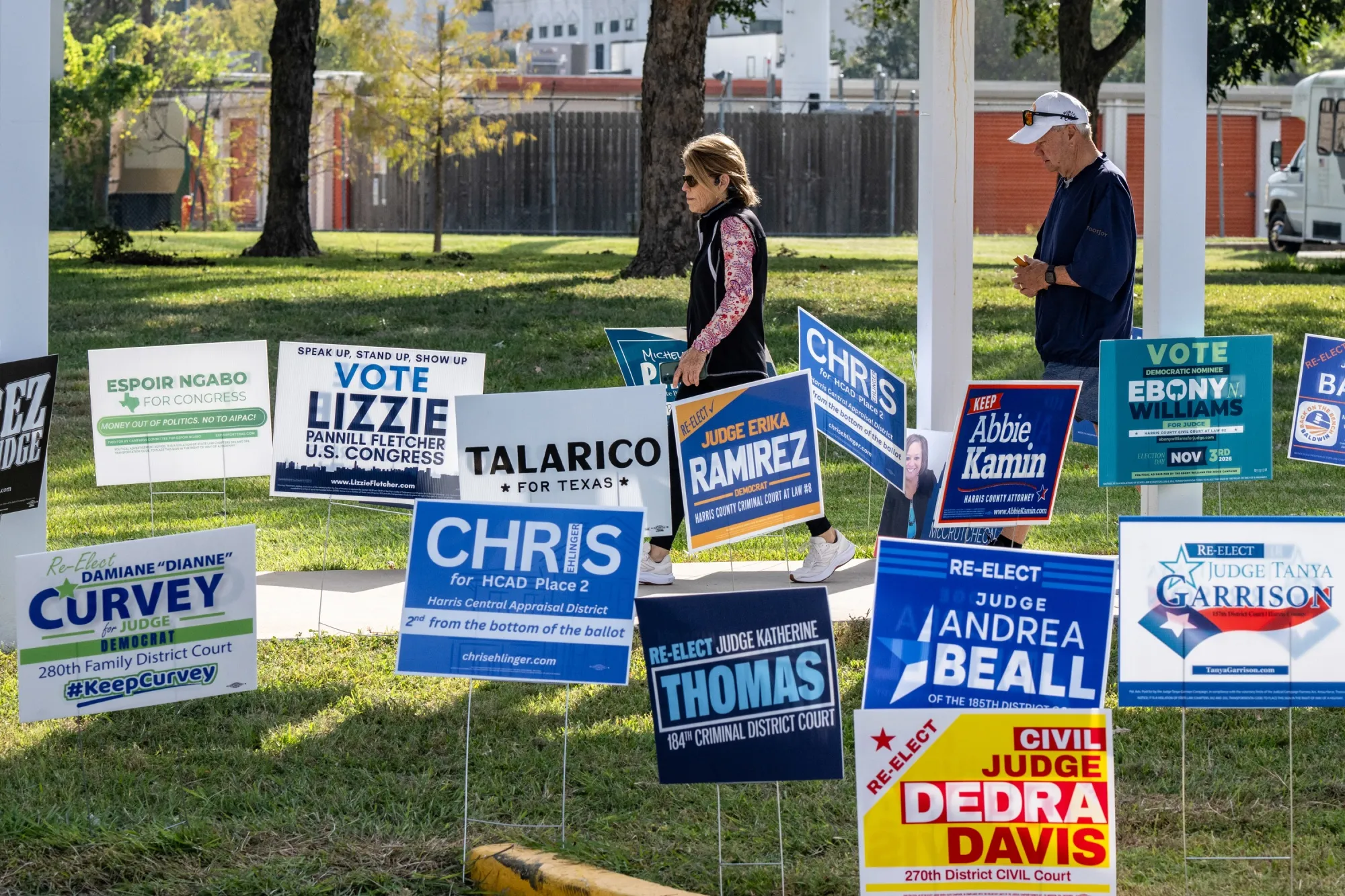
- Americans head to the polls on Tuesday 3 November for the midterm elections that will serve as a referendum on President Donald Trump's chaotic and controversial second term.
- This election is a referendum on Trump's agenda, with the economy and affordability as defining issues.
- Republicans hold the White House and both chambers of Congress, but their majority is thin and at risk.
- The election will determine which party controls Congress for the final two years of Trump's term, with all 435 House seats and about a third of Senate seats contested.
- Trump made his closing arguments by defending his administration’s tariffs and policies and claiming his second term has seen the best economy ever, despite widespread voter disapproval.
- Democrats face an eleventh-hour fracture in Michigan as Haley Stevens endorses Republican Mike Rogers.
- Trump recently made changes to 50 per cent tariffs on an array of Canadian goods to help industries in Maine.
- Polling shows Democrats are close to taking the House, where a net gain of three seats would give them a narrow majority.
- Polling has shown the main issue for voters is affordability, with many Americans angered by Trump policies that have driven up costs.
- Republicans have been on defence throughout this turbulent midterm campaign season, with polls showing Trump's approval plummeting due to rising gas and diesel prices.

Americans head to the polls for the midterm elections, which serve as a crucial referendum on President Donald Trump's controversial second term. The elections will determine control of Congress, with Democrats needing a net gain of four seats to secure a majority.1234
Trump's administration has faced criticism for rising costs of living, with affordability being the primary concern for voters. Many Americans are dissatisfied with Trump's handling of economic issues, leading to a turbulent campaign season for Republicans.1314
Historically, midterm elections have punished the party in power, with the president's party losing House seats in 18 of the past 20 midterm elections. This year, Republicans are defending a narrow majority, while Democrats are close to taking the House, needing a net gain of three seats for a slim majority.

In key races, such as in Michigan and Georgia, Democrats are vying for critical seats. The outcome of these elections will not only shape the legislative agenda but also serve as a check on Trump's executive power for the remainder of his presidency.
Polling shows that many voters are angry about Trump's policies, which have contributed to rising costs at gas stations and grocery stores. As one voter stated, “Affordability and health care are my priorities.”
The stakes are high as Americans cast their votes, with the potential to reshape the political landscape for the next two years.
“Republicans hold a thin majority in both chambers, with Democrats needing a net gain of four Senate seats to take control. Key races in Michigan, Georgia, and Maine are tight, and affordability remains the top voter concern amid rising costs.”



 The Guardian