- American tourist was killed by a lightning strike on Sicily’s Mount Etna while hiking in an area that was closed to visitors due to recent volcanic activity, firefighters said on Monday.
- The 29-year-old man was rescued by helicopter after being struck Sunday evening in an exposed area above the tree line.
- Firefighters and emergency services reached the man via helicopter around 8 p.m. local time and found him in a state of cardiac arrest.
- He was flown to Cannizzaro Hospital in Catania, but doctors were unable to revive him and he was declared dead at 9:30 p.m.
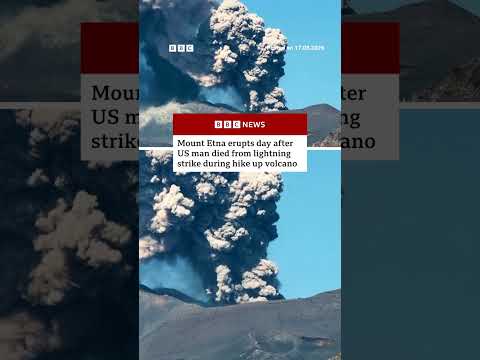
- Authorities have closed vast areas of the volcano’s slope to hikers due to the volcano’s prolonged activity – which forced the closure of the airport in nearby Catania for most of the previous week.
- Officials said more people had died on Etna from lightning strikes over recent decades than from volcanic activity.
- The combination of volcanic activity and sudden weather changes can make conditions on the mountain particularly hazardous.
- According to Italy's Civil Protection agency, as visitors ascend the mountain they encounter high-mountain conditions relatively quickly.
- Authorities have recently restricted access to more areas of the volcano, particularly on the upper slopes where there is little shelter above the tree line, due to the increased volcanic activity.
A 29-year-old American tourist tragically lost his life after being struck by lightning on Mount Etna, which is currently experiencing heightened volcanic activity. The incident occurred on Sunday evening when a powerful thunderstorm swept through the area, where access had been restricted due to safety concerns.1
Firefighters reported that the man had entered an off-limits area in an attempt to reach the summit. He was found in cardiac arrest and was airlifted to Cannizzaro Hospital in Catania, where he was pronounced dead at 9:30 p.m. local time.345
Authorities have noted that more fatalities on Etna have resulted from lightning strikes than from volcanic eruptions, with the last eruption-related deaths occurring in 1987. The volcano, which attracts approximately 1.5 million visitors annually, has been particularly active recently, leading to repeated lava flows and ash eruptions that have disrupted operations at Catania International Airport.9

The Civil Protection agency warns that the transition from sea level to high mountain conditions can lead to sudden weather changes, making the area hazardous for hikers. The combination of volcanic activity and unpredictable weather has prompted authorities to restrict access to more areas of the volcano, especially on the upper slopes where shelter is scarce.78
This incident was one of two fatal lightning strikes reported in Italy on the same day, with another victim in the South Tyrol province.
“The 29-year-old was rescued by helicopter but declared dead at Cannizzaro Hospital; authorities have closed vast areas of the volcano's slope. Officials note more people have died on Etna from lightning strikes than from volcanic activity in recent decades.”
 The Guardian