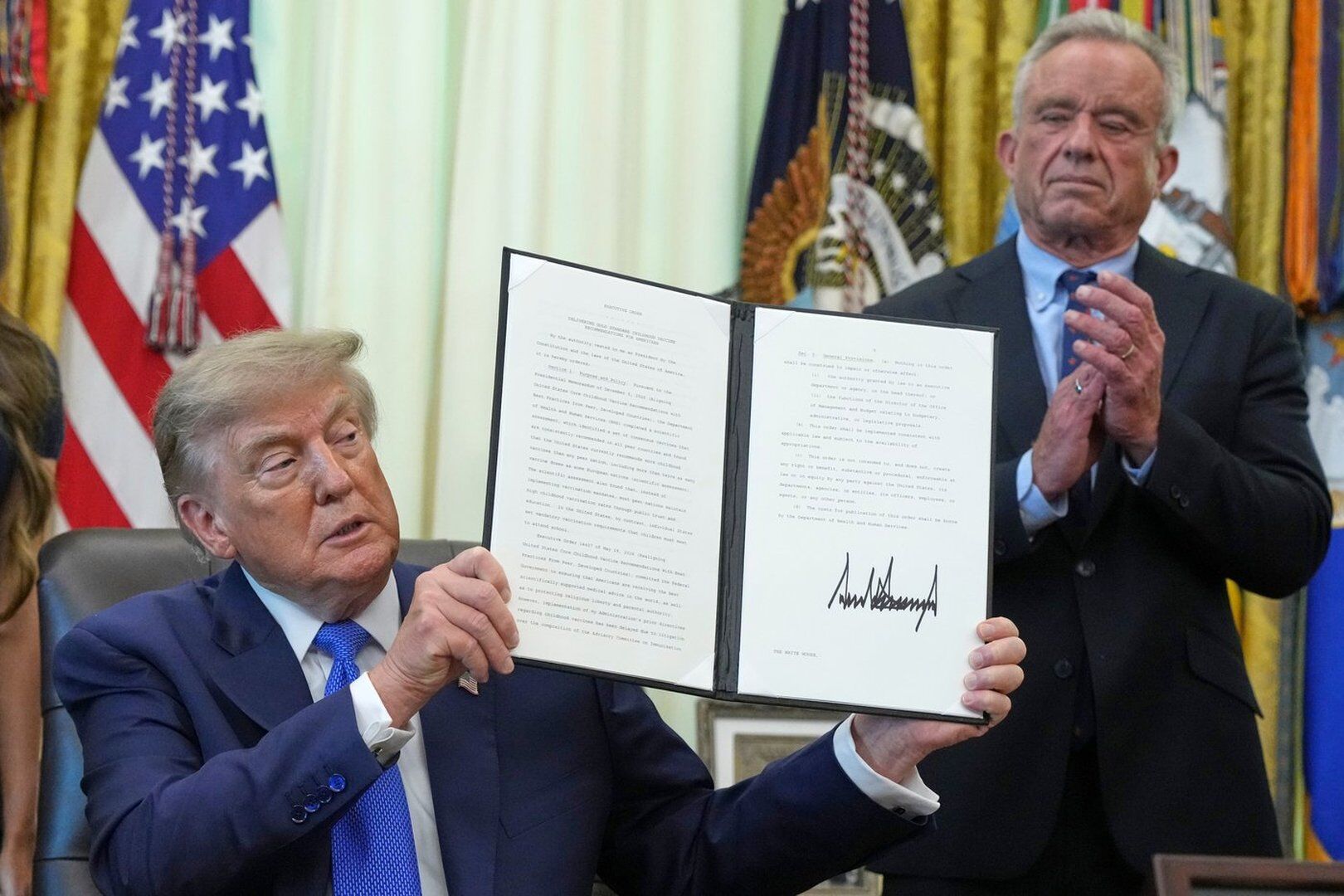
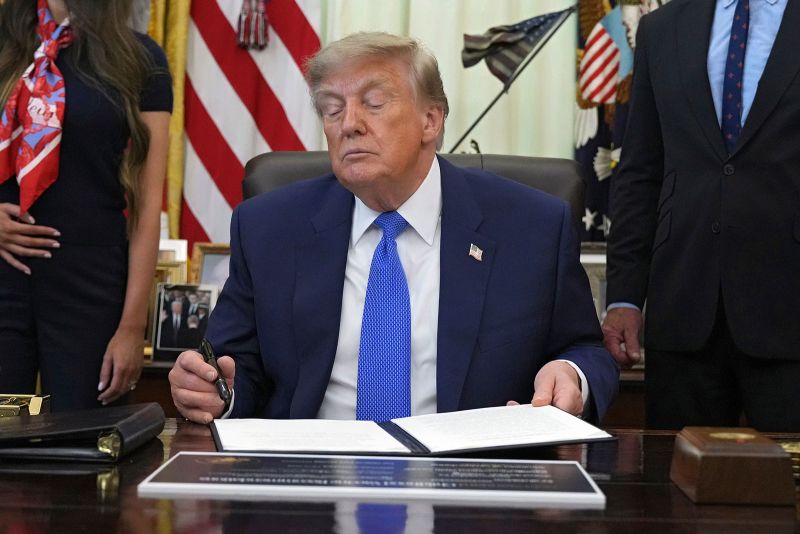
- President Trump signed an executive order on childhood vaccine schedules, which mandates that all children receive separate vaccines for diseases such as measles, mumps, and rubella.
- The order restricts some vaccines to high-risk children only, a change from prior federal guidance.
- Dr. Willie Underwood III, president of the AMA, criticized the order, stating it puts children's health at risk.
- Dr. Underwood emphasized that vaccines are thoroughly studied and decisions should be based on scientific evidence and patient safety.
- Underwood warned that altering the vaccination schedule without credible evidence risks weakening public confidence.
- Trump claimed the order would reduce autism rates, despite no scientific evidence linking vaccines to autism.
- The order also directed HHS to improve vaccine safety monitoring, transparency, and research.
- Dr. Andrew Racine, president of the AAP, called the recommendations dangerous.
- Outgoing Sen. Bill Cassidy criticized Trump for having no expertise to issue the guidelines, stating they would increase hesitancy.
The American Medical Association (AMA) has condemned President Trump's recent executive order regarding childhood vaccinations, asserting it poses significant risks to children's health.
AMA President Dr. Willie Underwood III emphasized that vaccines are critical in preventing serious diseases, stating, “Altering a proven vaccination schedule without credible evidence risks weakening public confidence and putting children’s health at risk.”
The executive order suggests pediatricians administer the measles, mumps, and rubella (MMR) vaccine in three separate doses, diverging from established guidelines. Trump’s order categorizes vaccines into those recommended for all children, high-risk children, or those requiring physician consultation.
While the federal government provides vaccination recommendations, states ultimately determine their own schedules. Trump’s assertion that the new guidelines would reduce autism rates lacks scientific support, as “decades of scientific studies show no link between vaccines and autism,” according to Underwood.7
Dr. Andrew Racine, president of the American Academy of Pediatrics, labeled the recommendations as “not only disheartening but dangerous.” Outgoing Senator Bill Cassidy, a medical doctor, criticized the order, stating, “Breaking up vaccines will mean children have to get more shots to get the same protection, not fewer shots.”9
The order also mandates improvements in vaccine safety monitoring and research, but experts warn that the changes could lead to increased vaccine hesitancy and ultimately compromise child safety.8
“The order mandates separate vaccines for measles, mumps, rubella, and other diseases for all children, but restricts some like hepatitis B and dengue to high-risk children only. AMA president Dr. Willie Underwood III said vaccines are among the most thoroughly studied tools, and altering the schedule without credible evidence risks weakening public confidence.”