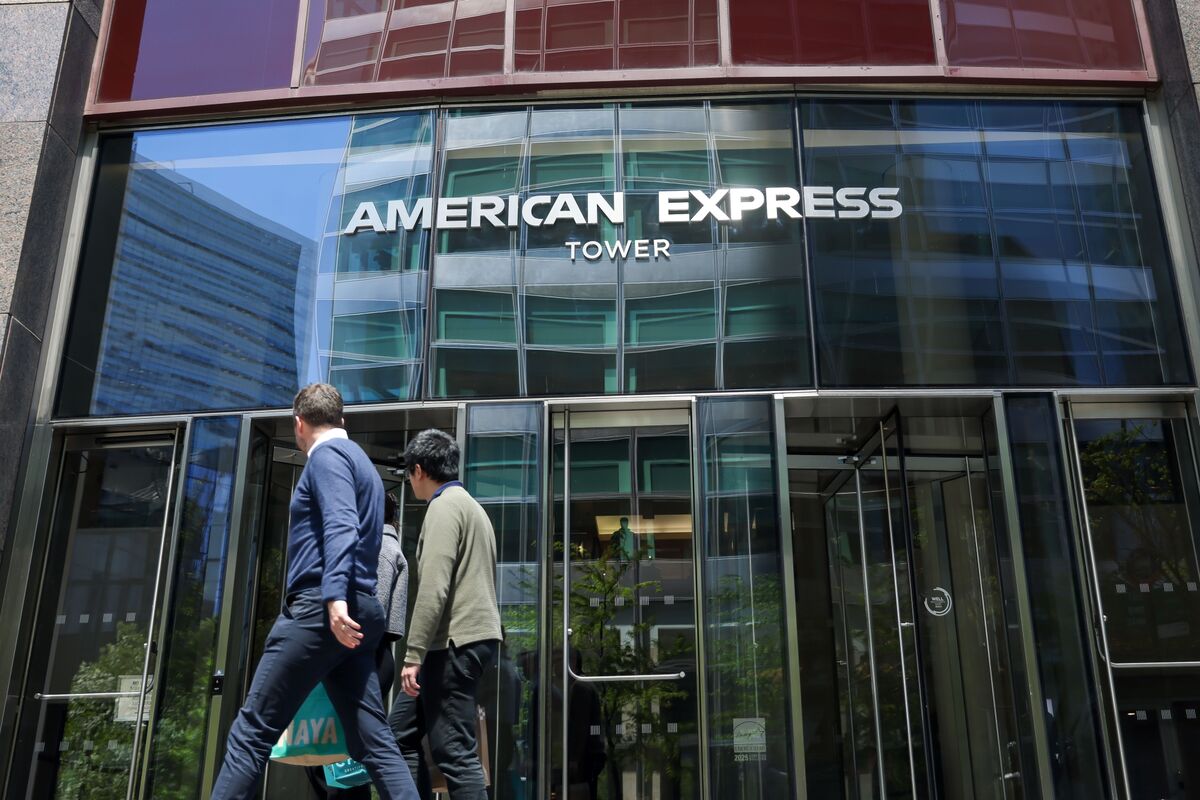
- American Express reported a 12% surge in second-quarter expenses, reaching $14.5 billion, primarily due to increased marketing costs aimed at attracting premium cardholders.
- Despite the expense increase, American Express raised its 2026 revenue forecast, expecting a 10% rise in line with Wall Street expectations.
- American Express maintained its profit outlook for the year, projecting earnings per share between $17.30 and $17.90.
- Shares of American Express fell 6.4% in morning trading as investors reacted to the unchanged profit outlook despite a strong earnings report.
- American Express posted a profit of $4.53 per share for the three months ended June 30, exceeding expectations of $4.40 per share.
- Revenue rose 10% to $19.6 billion in the quarter, driven by a 9% increase in billed business, totaling $455.8 billion.
- Travel and Entertainment billed business increased 10% in the second quarter, reflecting growth in key categories such as restaurants, hotels, and airlines.
- CEO Stephen Squeri explained the decision to maintain the profit outlook, stating that the company chose to invest in growth rather than prioritize immediate profits.
- Analysts noted that investors were hoping for accelerating growth, which did not materialize, contributing to the stock's decline.
American Express reported a Q2 profit of $4.53 per share, surpassing expectations of $4.40, yet shares fell 6% as investors reacted to rising marketing costs and an unchanged profit outlook.12
The company’s expenses surged 12% to $14.5 billion, attributed to increased customer engagement and marketing efforts aimed at attracting premium cardholders.
Despite raising its 2026 revenue forecast due to strong spending from affluent customers on travel, entertainment, and dining, the unchanged full-year profit forecast of $17.30 to $17.90 per share disappointed investors.
CEO Stephen Squeri explained, “We can either drop the overperformance to the bottom line and buy back more shares, or we can invest to grow the business. We've chosen the latter because, in the long run, it is the one that creates the most value for our shareholders.”
Analysts noted that the company’s decision to maintain its profit outlook indicated that driving higher top-line growth would require more expense burn, which would not immediately translate to profits.11
“Everyone has their individual explanation for the stock being down, but big picture they all tie back to the same theme — investors were hoping for accelerating growth this quarter and they didn't really get it,” said Brian Foran, a Truist analyst.
Billed business rose 9% to $455.8 billion, with travel and entertainment spending increasing 10%, marking the highest growth in three years, according to CFO Christophe Le Caillec.78
“CEO Stephen Squeri said the company chose to invest in growth rather than drop overperformance to the bottom line, as expenses surged 12% to $14.5 billion. Meanwhile, billed business rose 9% to $455.8 billion, with travel and entertainment spending up 10%.”




