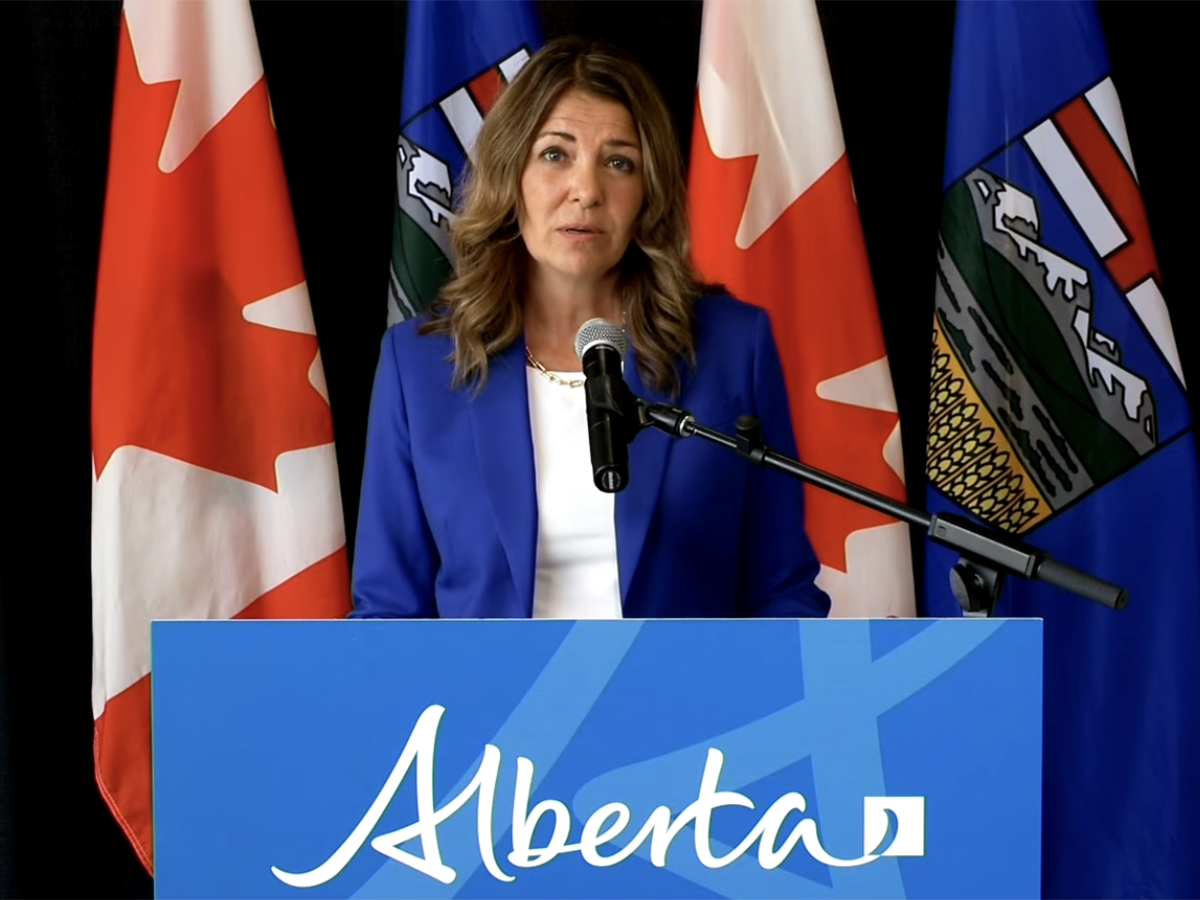
- Premier Danielle Smith is set to provide an update on tariffs amid the escalating Canada-U.S. trade war during a news conference in Grande Prairie on Wednesday.
- Smith has been urging the federal government to return to negotiations before Canadian tariffs on $27.6-billion worth of U.S. goods take effect in about two weeks.
- In a social media post, Smith emphasized the need for the federal government to negotiate before counter-tariffs take effect on Sept. 8.
- On Wednesday, Smith rejected the idea of using oil exports as leverage, calling it a 'disastrous' move that would 'devastate the Canadian economy'.
- Smith is scheduled to deliver brief remarks on the ongoing tariff dispute at a news conference in Grande Prairie just after 3 p.m. MT on Wednesday.
- Political scientist Elizabeth Smythe noted that Alberta's reliance on the U.S. for oil exports is influencing Smith's diplomatic approach to the trade war.
- Smith's rejection of using oil as leverage comes amid calls from Alberta NDP Leader Naheed Nenshi and former premier Jason Kenney to consider energy exports in retaliation against U.S. tariffs.
- Smith warned that using oil exports as leverage could lead to fresh levies from the U.S. on Canadian energy products, crippling eastern provinces reliant on U.S. energy.
- Smith emphasized the need for a measured approach to the U.S. trade war, advocating for diplomacy over escalating tariffs.
Alberta Premier Danielle Smith is set to provide an update on the escalating Canada-U.S. trade war, particularly regarding tariffs on $27.6 billion worth of U.S. goods, during a news conference in Grande Prairie on Wednesday.1
In a statement, Smith emphasized the urgency of returning to negotiations with the U.S. before counter-tariffs take effect on September 8, warning that “tariffs and counter-tariffs ultimately risk escalation to even higher and broader tariffs that will impact even more Canadians.”
Political scientist Elizabeth Smythe noted that Alberta's dependence on U.S. oil exports is influencing Smith's diplomatic stance. “The U.S. is not going to stop importing those fossil fuels,” Smythe remarked, highlighting the complexity of the situation.57
Smith firmly rejected the notion of leveraging Alberta's oil exports in the trade dispute, stating that it would “devastate the Canadian economy” and lead to increased energy prices for consumers. She warned that such actions could provoke the U.S. to impose new tariffs on Canadian energy products, severely affecting provinces like Ontario and Quebec.
“I cannot think of a more disastrous policy decision than cutting off or taxing Alberta’s oil to the United States,” Smith asserted. She advocates for a diplomatic approach, stating, “We need to be wise, patient, careful and deliberate to overcome the economic attacks our country is facing.”
The Canadian and U.S. energy sectors are closely linked, with over 80 percent of Canada’s oil exports going to the U.S., making the stakes particularly high in this trade conflict.
Smith concluded by emphasizing the historical ties between the two nations, stating, “Make no mistake, the United States has betrayed a special trust between friends and allies.”
“Smith urges Ottawa to negotiate before counter-tariffs on $27.6B of U.S. goods take effect Sept. 8, warning escalation risks 'even higher and broader tariffs.' She also faces pressure from Nenshi and Kenney, who argue energy exports are a key bargaining chip.”






