- Airbus has announced a plan to test folding wings for the next generation of its bestselling planes, aiming to innovate in commercial aircraft design by the end of the decade.
- Airbus has launched a new flight test programme called Wing of Tomorrow, which will evaluate the performance of high-span wings for next-generation single-aisle aircraft.
- Next year, Airbus aims to begin tests of broader-span wings on an A321neo, fitting extensions of about four or five metres to the wings to assess their performance in real-world conditions.
- Folding wingtips present a solution to the challenge of fitting longer, thinner wings into existing airport infrastructure, which is often at or near full capacity.
- Sue Partridge, head of Airbus’s Wing of Tomorrow programme, emphasized the significant value of being able to fold the wings, which has not yet been implemented on single-aisle planes.
- Airbus is currently using advanced digital modelling and wind tunnel testing to finalize the designs of the wing extensions before they are tested in a representative flying environment.
Airbus has initiated the Wing of Tomorrow flight test program, focusing on broader-span folding wings for the A321neo, with tests commencing in the second half of 2027. This program aims to enhance aerodynamic efficiency and fuel savings for future aircraft designs, as the company prepares for the next generation by 2030.126
The wing extensions, measuring about 4-5 meters, will be fitted to the A321neo to evaluate performance in real-world conditions. Sue Partridge, head of the program, emphasized the significance of this initiative, stating, “The value of being able to fold the wings is huge.”5
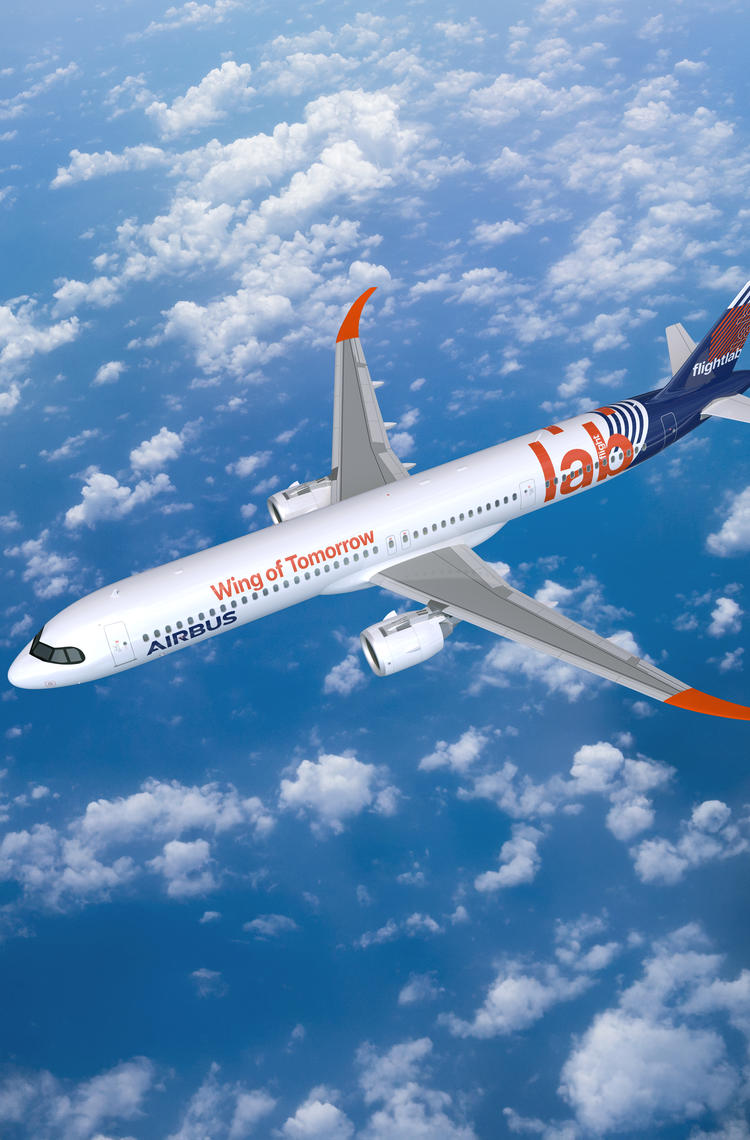
Airbus plans to challenge traditional design limits, exploring the benefits of longer wings. The Wing of Tomorrow program has received £227 million in funding from the Aerospace Technology Institute, supporting the UK’s aerospace leadership. “This flight-test campaign will allow us to safely challenge traditional design limits and explore the benefits of longer wings,” Partridge added.

The program will utilize advanced digital modeling and wind tunnel testing to finalize designs before flight tests. “Ultimately, all of this flight-test data that we will gather will be absolutely critical to de-risk the technology of folding wings in flight,” Partridge noted. The assembly of the wing extensions is underway in the UK, with comprehensive testing equipment to capture flight behavior.
Airbus has already built three 17-meter ground-based wing demonstrators to explore the advantages of increased wingspan. The company aims to finalize the shape of its new aircraft by 2030, with the flight data being crucial to unlocking the potential of longer wings for next-generation aircraft.
“Sue Partridge, head of Airbus's Wing of Tomorrow programme, said the value of being able to fold wings is 'huge' as longer wings improve efficiency but face airport size constraints. The programme has received £227 million in UK funding since 2014 and will use wing extensions assembled at Broughton, UK.”
 The Guardian
 Airbus



