
- AI model designs functional synthetic CRISPR-like nucleases that show activity in cells.
- The findings highlight AI's ability to expand the CRISPR toolbox to include RNA-guided nucleases with novel properties beyond those found in nature.
- The team includes scientists from Innovative Genomics Institute and the California Institute for Quantitative Bioscience, both at the University of California, Berkeley.
- As part of the study, the scientists screened the activity of the designed proteins, dubbed SynTnpBs, first in bacterial cells and then selected the most active ones for further testing in plant and human cells.
- Their analysis showed that many AI-designed nucleases either retained or surpassed the activity of natural TnpB in multiple cell types.
Researchers have successfully harnessed artificial intelligence to design synthetic RNA-guided nucleases, known as SynTnpBs, that exhibit superior activity compared to their natural counterparts.4
The study, published in *Science*, details a novel approach that integrates the ESM Inverse Folding model with evolutionary constraints, allowing for the creation of proteins with enhanced functionalities.
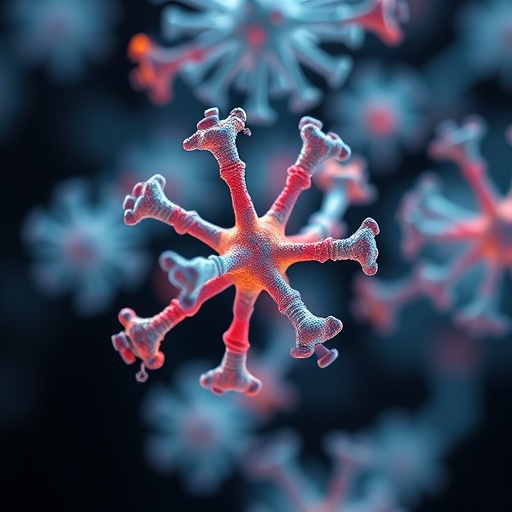
The scientists noted that traditional protein design methods struggle with the complexity of multi-domain proteins, which require coordinated RNA and DNA recognition, activation, and cleavage. Their new strategy addresses these challenges by generating proteins that maintain 83% and 72% identity to their closest natural counterparts, significantly lower than the over 99% identity typically produced by sequence-based models.

In testing, the AI-designed nucleases were screened in bacterial cells, with the most active variants subsequently evaluated in plant and human cells. The results indicated that many of these engineered proteins either retained or surpassed the activity of natural TnpB nucleases across various cell types.5
Additionally, cryo-electron microscopy revealed that the new nucleases formed unique electrostatic and hydrogen-bonding networks, enhancing stability at the RNA-DNA interface. This innovative approach not only expands the designable protein space but also paves the way for future advancements in synthetic biology and gene editing technologies.
“Observations of exoplanet LHS 1140b reveal it loses about 100,000 kilograms of helium per second, suggesting a helium-rich upper atmosphere with little hydrogen left. Meanwhile, Barnard's Star's four planets are likely dry and airless, locked in a 9:12:16 orbital resonance and baked by their star's radiation.”
 Bioengineer.org
 the-scientist.com



