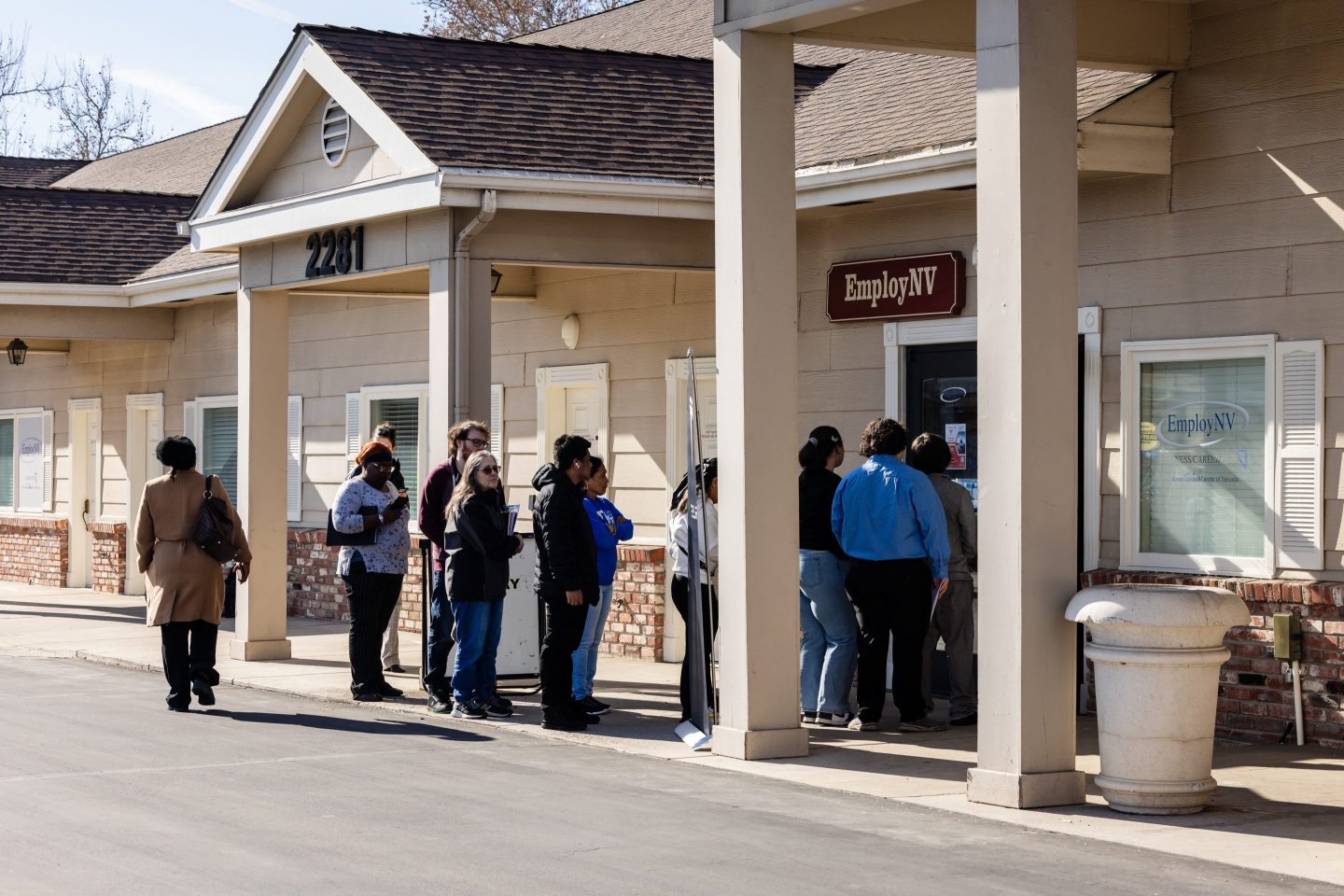
- Nearly 75% of unemployed people didn’t even apply for unemployment benefits, according to the BLS.
- Experts who spoke to Fortune confirm that this trend persists today.
- Only about 55% of people who apply for benefits actually receive them, according to the BLS.
- Many people mistakenly believe that quitting automatically makes them ineligible for benefits, but eligibility depends on the reason for leaving.
- Individuals who belonged to unions in their previous jobs are twice as likely to apply for benefits.
- Experts warn that the current system is not prepared for widespread, long-term unemployment.
Nearly 75% of unemployed individuals do not apply for unemployment benefits, a statistic that remains consistent according to experts.1
The Bureau of Labor Statistics (BLS) indicates that only about 55% of those who apply for benefits actually receive them, which raises questions about the effectiveness of the current system.6
Many unemployed individuals mistakenly believe that quitting their jobs disqualifies them from receiving benefits, although eligibility can depend on the circumstances surrounding their departure.4
Furthermore, people who were part of unions in their previous jobs are twice as likely to apply for benefits, suggesting that union membership may play a significant role in navigating the unemployment system.5
Experts warn that the current system is not prepared for widespread, long-term unemployment, particularly as AI continues to disrupt job markets.
This trend of non-application for benefits could exacerbate the challenges faced by those affected by job loss, especially in an era where AI is increasingly replacing traditional jobs.
Addressing these issues is crucial for ensuring that unemployed individuals receive the support they need during these turbulent times.
“Nearly 75% of unemployed individuals do not apply for unemployment benefits, according to the BLS. Experts indicate that this statistic remains accurate today, highlighting potential issues in the current system.”
